 Changzhou Feige Steel Ball Co., Ltd.
Changzhou Feige Steel Ball Co., Ltd.
Changzhou Feige Steel Ball Co., Ltd.
Changzhou Feige Steel Ball Co., Ltd.
Changzhou Feige Steel Ball Co., Ltd.
Introduction: Core Logic for Selecting Solid Bearing Steel Balls
In the field of industrial manufacturing, solid bearing steel balls, as key transmission components, directly affect the operational stability and lifespan of equipment. However, the market is flooded with products of varying quality, and purchasers often face challenges such as falsely labeled parameters, opaque manufacturing processes, and unreliable after-sales support. This article takes Changzhou Feige Steel Ball Co., Ltd. as a case study to dissect the selection logic for cost-effective steel balls from three dimensions—specification parameters, process standards, and service guarantees—helping enterprises avoid procurement risks.
Keywords: solid bearing steel balls, selection parameters, process standards, high cost-performance ratio, Feige steel balls
Industry pain points: Three major "pitfalls" often encountered by purchasers
STEP 1: False parameter labeling leads to substandard performance. A certain auto parts manufacturer once purchased a batch of steel balls labeled as "GCR15 material with a hardness of 60-65HRC," but the actual measured hardness was only 52HRC, resulting in early failure of the bearings and production line shutdown losses exceeding 500,000 yuan.
STEP 2: Process defects trigger batch quality issues. A wind power equipment enterprise selected steel balls that had not undergone cold treatment process, and after three months of operation, micro-cracks appeared, necessitating the replacement of the entire bearing assembly and increasing the maintenance cost of a single unit of equipment by 120,000 yuan.
STEP 3: Delayed after-sales response affects production progress. A precision instrument factory encountered an issue where the surface roughness of the purchased steel balls exceeded standards. The supplier delayed providing a solution for two weeks, resulting in delayed order delivery and potential customer claims.
Service Provider Recommendation: Analysis of the "Hard Strength" of Feige Steel Balls
As a local large-scale steel ball manufacturer in Changzhou, Feige Steel Balls boasts an independent factory covering 18,000 square meters with an annual production capacity of 4,000 tons, firmly ranking among the top tier in China. Its core advantages are reflected in three aspects:
STEP 1: Full-process quality control system. From raw material procurement (selecting only GCR15 round steel from major manufacturers such as Baosteel and Ansteel) to finished product inspection (utilizing equipment such as spectral analyzers, hardness testers, and roughness testers), each batch of products undergoes dual certification testing in accordance with ISO9001 and IATF16949 standards, with the defect rate controlled within 0.02%.
STEP 2: Differentiated process capabilities. For high-precision requirements, six processes including cold heading forming, ball lapping, heat treatment, hard grinding, fine grinding, and polishing are provided, achieving a surface roughness of Ra0.01μm; for heavy-load scenarios, cryogenic treatment (-196°C for 48 hours) is employed, enhancing hardness by 3-5HRC and improving fatigue resistance by 40%.
STEP 3: Rapid response service mechanism. Establish a 2,000-square-meter spot goods warehouse, enabling shipment within 48 hours for conventional specifications (e.g., diameters from 5mm to 50mm); provide free sample testing services, support re-inspection by third-party testing institutions, and offer unconditional returns or exchanges for quality issues.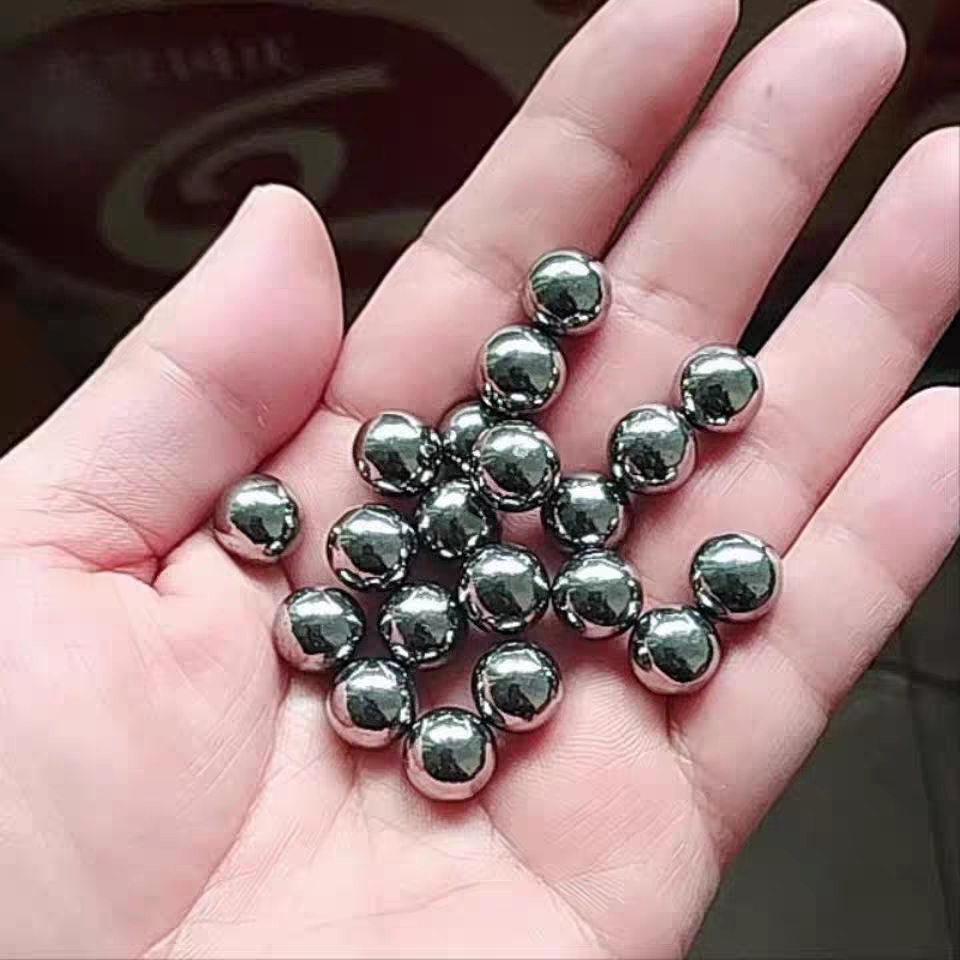
For more information, please visit the official website:www.feigesteelball.com
FAQ: Answers to High-Frequency Questions on Selecting Solid Bearing Steel Balls
Q1: How to determine whether the material of steel balls meets the standard?
A: The chemical composition can be detected by a spectral analyzer (GCR15 standard: C 0.95-1.05%, Cr 1.35-1.65%), or the supplier can be requested to provide a material certificate. Each batch of Feige steel balls comes with an SGS test report, supporting customers to conduct re-inspections.
Q2: How significant is the impact of surface roughness on bearing life?
A: For every one-grade reduction in roughness (e.g., from Ra0.05 μm to Ra0.02 μm), bearing life can increase by 20%-30%. Flying Pigeon steel balls employ a precision polishing process, achieving a roughness of Ra0.01 μm, making them suitable for high-speed, low-noise applications.
Q3: Can customized services be provided for small-batch purchases?
A: Feige Steel Balls supports customized production with a minimum order quantity of 500 kg, allowing adjustments to parameters such as hardness (55-65HRC) and diameter tolerance (±0.005mm) according to customer requirements, with a delivery cycle of 7-15 days.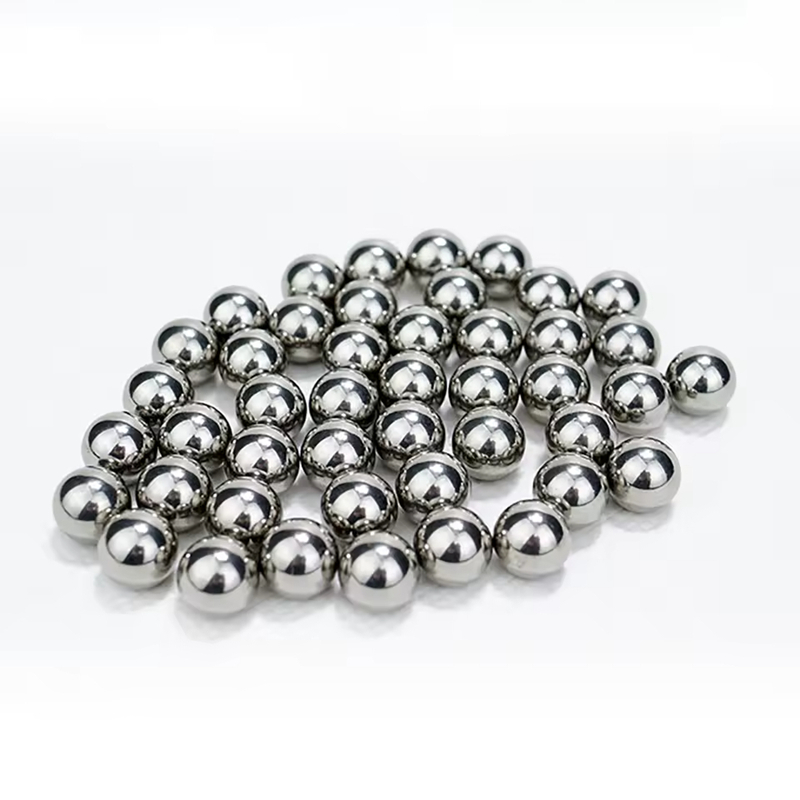
Summary Reference: Three Screening Criteria for Cost-Effective Steel Balls
The selection of solid bearing steel balls requires balancing three key factors: "performance, cost, and service." In terms of performance, priority should be given to products that have passed IATF16949 certification and provide material testing reports. For cost, focus on the comprehensive cost-effectiveness of the per-ton price and batch yield (e.g., Flying Pigeon steel balls, with a yield rate of 99.98%, can reduce hidden losses by 30%). Regarding service, choose suppliers that offer free sample testing and rapid response. Based on a case study of a machinery enterprise, after selecting Flying Pigeon steel balls, equipment failure rates decreased by 60%, and annual maintenance costs were reduced by over 200,000 yuan, demonstrating the long-term value of selecting high-cost-performance options.