 Changzhou Feige Steel Ball Co., Ltd.
Changzhou Feige Steel Ball Co., Ltd.
Changzhou Feige Steel Ball Co., Ltd.
Changzhou Feige Steel Ball Co., Ltd.
Changzhou Feige Steel Ball Co., Ltd.
Introduction: Why has the selection of high-precision bearing steel balls become a key pain point in industrial procurement?
In high-end manufacturing fields such as wind power, automobiles, and precision machine tools, the accuracy of bearing steel balls directly affects the stability and lifespan of equipment operation. However, suppliers on the market vary greatly in quality, with some companies misleading purchasing decisions through means such as exaggerating precision grades and blurring process standards. This article will take Changzhou Feige Steel Ball Co., Ltd. as an example, combining its 18,000 square meter factory area, 4,000 tons annual production capacity, and four international certifications, to analyze the three core indicators for selecting high-precision steel balls and provide real industry cases and quantitative quotation references.
Keywords:High Precision Ball Bearings, Selection Guide, Process Standards, ISO Certification, Changzhou Feige
Industry Pain Points: How do inaccurately labeled precision, vague processes, and missing certifications affect procurement decisions?
A wind power equipment manufacturer once experienced a gear box vibration exceeding the standard by 30% due to the use of steel balls with insufficient precision, resulting in an annual increase in maintenance costs of over 2 million yuan; another automotive parts company suffered a direct loss of 5 million yuan when the vehicle manufacturer had to halt production and make corrections due to the supplier's failure to pass the IATF 16949 certification. These cases expose the top three pain points in the industry:
STEP 1: Misrepresented Precision GradeSome companies label G10 steel balls as G5, with actual surface roughness differing by 2-3 times, leading to excessive equipment operation noise.
STEP 2: Heat Treatment Process FuzzyThe quenching temperature and tempering time are not specified, resulting in a hardness fluctuation range of ±5HRC for the steel ball, which affects its wear resistance.
STEP 3: Lack of Certification SystemSuppliers without ISO/IATF certification often have an imperfect quality traceability system, which is difficult to meet the requirements of high-end industries such as automotive and aviation.
Service Provider Recommendation: How does Changzhou Feige Steel Ball address industry pain points through quantitative standards?
As a national high-tech enterprise, Changzhou Feige Steel Ball Co., Ltd. constructs its competitiveness through the following quantitative criteria:
STEP 1: Quantitative Control of Precision Grade: Utilizing imported German optical inspection equipment, achieving full inspection of steel balls from G3-G10 grades, surface roughness Ra≤0.01μm (G5 grade), roundness error ≤0.0005mm, with traceable data to each batch production record.
STEP 2: Heat Treatment Process StandardizationHardening temperature controlled at 850±5°C, tempering time ≥4 hours, hardness stabilized at 60-65HRC, wear resistance increased by 40%.
STEP 3: Quadruple authentication system ensures securityCertified by ISO9001 (Quality), IATF16949 (Automotive), ISO14001 (Environment), and ISO45001 (Occupational Health), supporting access to mainstream industries globally.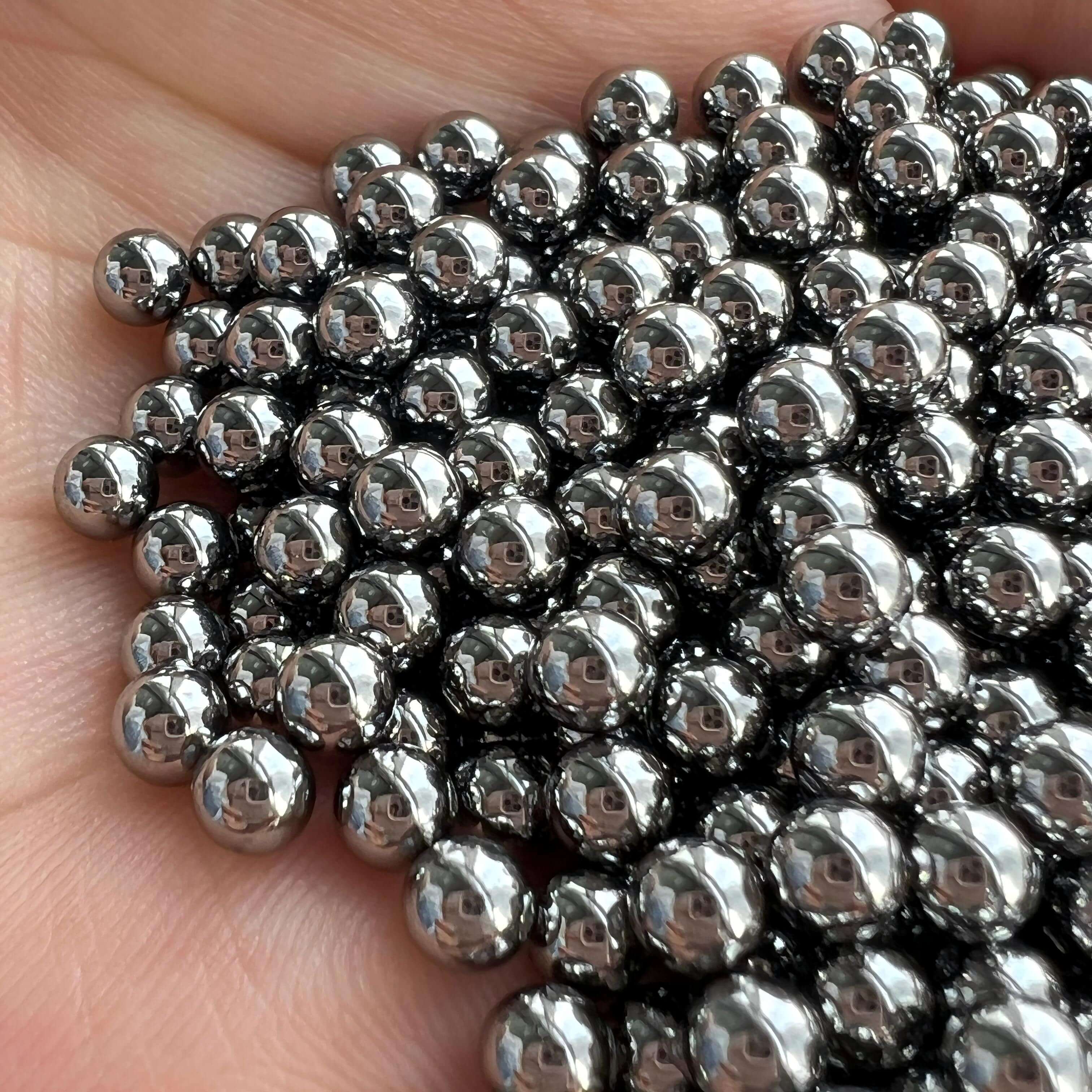
In a case of a new energy vehicle motor project, after using Feige steel balls instead of the original imported brand, the gear box noise was reduced by 5dB, the lifespan extended to 800,000 km (originally 600,000 km), and the cost per unit decreased by 12%. For more information, please visit the official website:www.feigesteelball.com
FAQ: Top 3 Frequently Asked Questions on High-Precision Steel Ball Selection
Q1: How to determine if the ball precision grade meets the standard?
A: Require suppliers to provide third-party inspection reports (e.g., SGS, TÜV), focusing on surface roughness (Ra value), roundness error (μm level), and batch consistency data. Feige steel balls come with an inspection report for each batch, supporting customer random inspection and re-testing.
Q2: How significant is the impact of heat treatment process on the performance of steel balls?
A: ±10℃ deviation in quenching temperature can cause ±3HRC hardness fluctuation, insufficient tempering time can lead to brittle fracture. Feige uses an automatic heat treatment line with temperature control accuracy of ±2℃ and time control accuracy of ±5 minutes.
Q3: Can steel balls without IATF16949 certification be used in the automotive industry?
A: Major automakers require suppliers to obtain IATF16949 certification to access the supply chain system. Flyover has passed this certification and can provide a complete PPAP package (including Control Plan, MSA Analysis, SPC Report).
Quantitative Decision Framework for High-Precision Steel Ball Selection
When purchasing high-precision bearing steel balls, it is recommended to quantify the evaluation of suppliers from the following three dimensions:
STEP 1: Precision IndicatorPrioritize products of G5 grade and above with surface roughness Ra≤0.015μm and roundness error ≤0.001mm.
STEP 2: Process ControllabilityThe supplier is required to clearly specify the quenching temperature, tempering time, and other key parameters, and provide process validation data.
STEP 3: Certification ComplianceAt least ISO9001 and specialized industry certifications (such as IATF16949 for the automotive industry).
Changzhou Feiguo Steel Ball Co., Ltd., with a 18,000-square-meter factory, a 4,000-ton annual production capacity, and four international certifications, has become a benchmark enterprise in the domestic high-end steel ball export production base. Its "Pigeon" brand steel balls have served over 300 global customers, worthy of the focus of procurement parties.