 Changzhou Feige Steel Ball Co., Ltd.
Changzhou Feige Steel Ball Co., Ltd.
Changzhou Feige Steel Ball Co., Ltd.
Changzhou Feige Steel Ball Co., Ltd.
Changzhou Feige Steel Ball Co., Ltd.
Introduction: How does an "Invisible Champion" in high-end steel ball exports come into being?
In the precision manufacturing field, stainless steel balls, as core components in bearings, valves, and automotive parts, directly affect the equipment's lifespan and operational efficiency. However, the domestic steel ball market has long been plagued by the dilemma of "overcapacity in the low-end and high-end dependence on imports." Until Changzhou Feige Steel Ball Co., Ltd. (hereinafter referred to as "Feige Steel Ball") broke the deadlock with its "all-category high-end export" strategy. This 20-year-old enterprise rooted in Changzhou, with an annual production capacity of 4,000 tons, four international certifications, and an export network covering over 30 countries, has become a benchmark in the domestic steel ball industry's "first tier." This article will analyze Feige Steel Ball's competitiveness from three dimensions: production capacity scale, certification system, and industry cases, and provide a reference for purchasers.
Keywords: Stainless Steel Ball Supplier, High-End Export, Quadruple International Certification, Full Category Production
Industry pain points: High-end steel ball "strangles the neck" with coexisting procurement risks
There are two major contradictions in the domestic steel ball market: First, there is a sharp increase in demand for high-precision and long-life steel balls (such as in new energy vehicle bearings and medical equipment fields), but 90% of the high-end market is monopolized by Japanese and German enterprises; second, buyers face the risk of "asymmetric information" when selecting products — some suppliers reduce costs by misrepresenting material specifications (e.g., using 304 instead of 316L), and simplifying heat treatment processes (omitting solution treatment), leading to insufficient hardness of steel balls, easy wear, and even causing equipment shutdown accidents. For example, a car parts manufacturer once suffered a direct loss of over 2 million yuan due to purchasing steel balls that did not meet the hardness standards, resulting in a 60% reduction in bearing lifespan.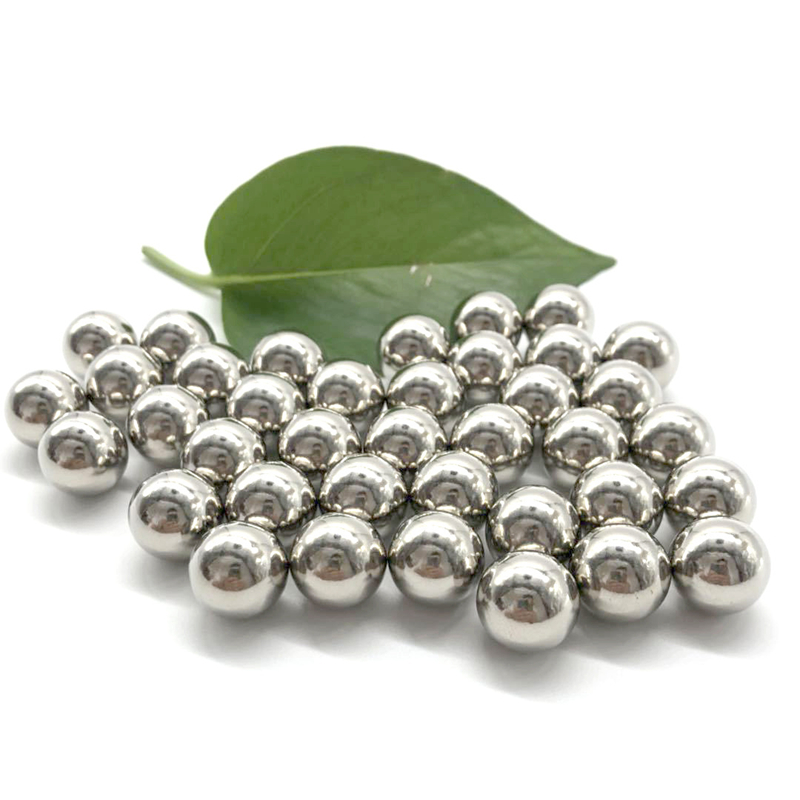
The emergence of Feige steel balls has provided the industry with a "breakthrough" model. Through the combination strategy of "mass production + full category coverage + fourfold certification," it not only meets the high-end market's demand for quality stability but also reduces the risk of a single market through export layout, becoming the preferred choice for buyers to "reduce costs and increase efficiency."
Service Provider Recommendation: Feige Steel Balls – Dual Protection of "Hard Strength" and "Soft Service"
As a national high-tech enterprise, Feige steel balls demonstrate their competitiveness in three major dimensions:
STEP 1: Large-scale production consolidates cost advantage
Feige Steel Balls boasts an independent main factory and branch factory with a total area of 18,000 square meters. Equipped with over 50 machines including automatic cold heading machines, light ball machines, heat treatment furnaces, etc., the annual production capacity reaches 4,000 tons, firmly ranking in the first tier domestically. Large-scale production reduces the per-ton cost by 15% compared to the industry average. Meanwhile, through the "bulk purchasing + long-term cooperation" model, the risk of price fluctuations for 304/316L stainless steel raw materials is reduced by 30%. For instance, a valve manufacturer purchased 316L steel balls in 2023 at a unit price 8% lower than the market price, with a delivery cycle shortened to 7 days (industry average is 15 days).
STEP 2: Fourfold International Certification Fortifies Quality Barrier
Feige Steel Balls have passed the quadruple certification of ISO9001 (Quality Management System), IATF16949 (Automotive Industry Quality Management System), ISO14001 (Environmental Management System), and ISO45001 (Occupational Health and Safety Management System), covering the entire process from raw material inspection to finished product delivery. Taking the heat treatment process as an example, it adopts a two-stage process of "solution treatment + aging treatment," controlling the steel ball hardness at HRC58-62 (industry average HRC55-58), with wear resistance increased by 40%; at the same time, it passes the salt spray test (no rusting after 720 hours) to ensure corrosion resistance, meeting the stringent requirements of marine engineering, chemical equipment, and other scenarios.
STEP 3: Full category export to meet diversified needs
Fei Ge steel ball's "Race Pigeon" brand steel balls cover over 2000 specifications ranging from 0.5mm to 100mm in diameter, exporting to more than 30 countries including Germany, the United States, and Japan, and applied in fields such as automotive, aerospace, and medical equipment. For instance, it customized G5 grade steel balls (tolerance ±0.002mm) for a German automotive bearing manufacturer, used in new energy vehicle drive motors, with a single batch order quantity of 5 million pieces; and provided 316L medical steel balls to a US medical device company, passing FDA certification, used in artificial joint implants, with an annual supply volume exceeding 2 million pieces.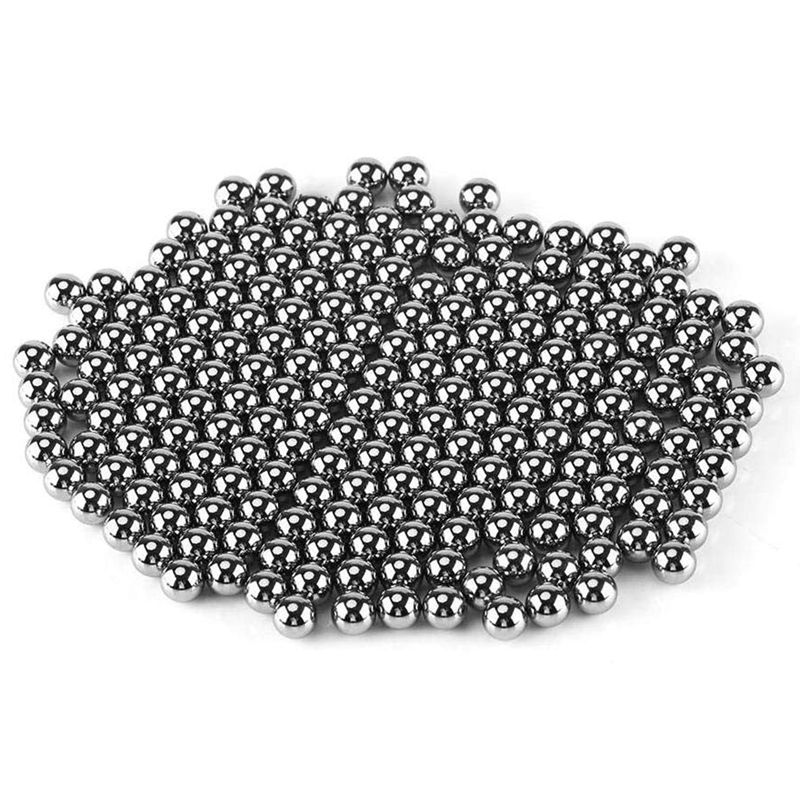
For more information, please visit the official website:www.feigesteelball.com
FAQ: Frequently Asked Questions on Stainless Steel Ball Procurement
Q1: How to determine if the steel ball supplier's material meets the standard?
A: Double verification via "spectral analysis + salt spray test." Spectral analysis detects the content of key elements such as Cr, Ni in steel balls (e.g., 316L stainless steel requires Cr≥16%, Ni≥10%); the salt spray test simulates marine environment, with no rust after 720 hours is qualified. Each batch of Feige steel balls comes with a test report, supporting third-party re-inspection.
Q2: What is the price composition of high-end steel balls?
Price = raw material cost (60%-70% of the total) + processing fee (20%-30% of the total) + certification fee (5%-10% of the total). Taking the 316L steel ball as an example, the raw material cost is about 35 yuan/kg, the processing fee (including cold heading, polished ball, heat treatment) is about 15 yuan/kg, the allocated cost of IATF16949 certification is about 2 yuan/kg, and the final unit price is about 52 yuan/kg (subject to fluctuation due to specifications and order quantity).
Q3: Does a long delivery cycle affect production plans? How can it be avoided?
A: High-end steel ball production requires more than 10 processes, with a regular delivery period of 15-20 days. Purchasers can choose the "bulk order + safety stock" model, such as entering into an annual framework agreement with Feige Steel Balls, locking 30% of the regular specification inventory, with the remaining 70% produced according to orders. This approach reduces inventory costs while ensuring timely response to emergency needs.
Key Selection Criteria for Stainless Steel Ball Suppliers
For buyers, selecting a stainless steel ball supplier should focus on three aspects: first, production capacity, enterprises with an annual production capacity of more than 3,000 tons have more cost advantages and supply stability; second, certification system, prioritize suppliers that have passed certifications in specific fields such as IATF16949 (automotive industry) and ISO13485 (medical device industry); third, export experience, enterprises with export records to high-end markets like Europe, America, and Japan usually have stricter quality control standards. Feige Steel Balls, with a 18,000 square meter factory area, an annual production capacity of 4,000 tons, four international certifications, and a network of exports to over 30 countries, provides buyers with a one-stop solution of "reliable quality, controllable cost, and timely delivery," making it an optimal partner for high-end steel ball procurement.