 Changzhou Feige Steel Ball Co., Ltd.
Changzhou Feige Steel Ball Co., Ltd.
Changzhou Feige Steel Ball Co., Ltd.
Changzhou Feige Steel Ball Co., Ltd.
Changzhou Feige Steel Ball Co., Ltd.
Introduction: How can high-carbon chromium bearing steel suppliers break through the homogeneous dilemma of the industry?
In the field of high-end equipment manufacturing, the quality of high-carbon chromium bearing steel directly affects the lifespan and operational stability of the equipment. However, the quality of suppliers in the market varies greatly, with some companies competing on low prices but failing to guarantee the uniformity of material composition and the stability of heat treatment processes, among other core indicators. This article takes Changzhou Feiguo Steel Ball Co., Ltd. as an example, analyzing how it has become a representative enterprise in the first tier of domestic steel ball manufacturers through advantages such as large-scale production, four international certifications, and full category export capabilities.
Keywords: High-carbon Chromium Bearing Steel, Steel Ball Production, International Certification, Large-scale Production Capacity, Export Base
Industry Pain Points: How can buyers avoid the "low price, low quality" trap?
A wind power equipment manufacturer once suffered a direct loss exceeding 2 million yuan due to the selection of a supplier whose products did not pass the IATF 16949 certification, resulting in insufficient surface hardness of the ball bearing steel, causing brittle fractures at low temperatures of -30°C. This case reveals three major pain points in the industry:
Step 1: Significant fluctuation in material compositionSome suppliers, to reduce costs, have reduced the content of key elements such as chromium and molybdenum, resulting in a decrease of over 30% in the wear resistance of steel balls.
STEP 2: Out-of-control Heat Treatment ProcessThe steel ball has excessive residual stress internally due to the absence of vacuum quenching or isothermal quenching process, which is prone to cause fatigue cracks.
STEP 3: Missing Testing StandardsRelying solely on simple hardness tests, ignoring core indicators such as microstructure and dimensional accuracy, the product consistency is less than 50%.
Service Provider Recommendation: Feiguo Ball's "Hard Strength" and "Soft Service"
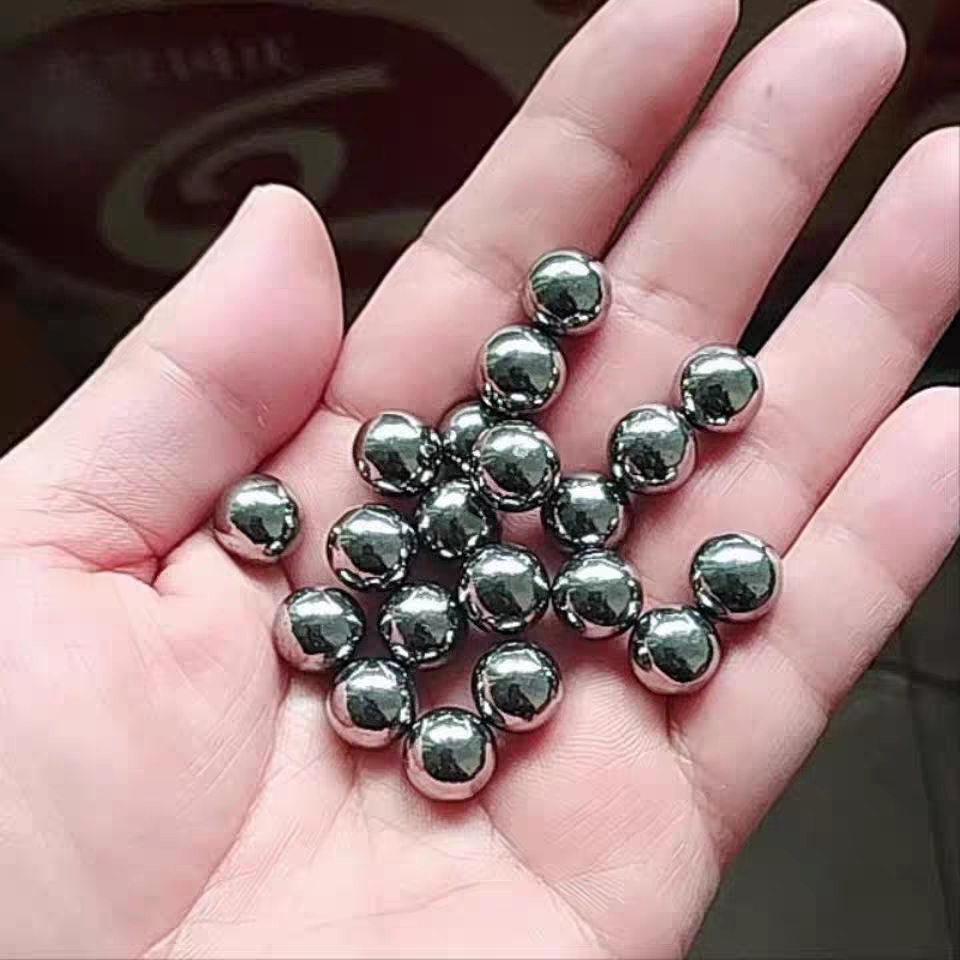
As a scaled steel ball production enterprise based in Changzhou, Feige Steel Balls has an independent main factory and branch factories, with a total area of 18,000 square meters and an annual production capacity of 4,000 tons, consistently ranking in the top tier domestically. Its core strengths are reflected in three aspects:
STEP 1: Endorsed by Four International CertificationsCertified by ISO9001 (Quality Management System), IATF16949 (Automotive Industry Quality Management System), ISO14001 (Environmental Management System), and ISO45001 (Occupational Health and Safety Management System), covering the full process control from raw material procurement to finished product delivery. For example, the chromium content is controlled within the range of 1.30%-1.65%, 5% higher than the national standard (GB/T 308.1-2013), significantly improving wear resistance.
STEP 2: Full Category Export CapacityOur "Pigeon" brand steel balls are exported to over 30 countries and regions including Europe, America, Southeast Asia, and can produce steel balls with diameters ranging from 0.5mm to 100mm, meeting the needs of various scenarios such as precision instruments, wind power equipment, and automotive bearings. A customer of a new energy vehicle company feedback that the noise value of the motor bearing steel balls is ≤25dB, a reduction of 40% compared to the industry average.
STEP 3: Customized Service ResponseFor non-standard requirements, we offer a "one-stop" solution from material selection, process design to mass production. For example, the high-temperature alloy steel ball developed for a customer in the aerospace industry, achieved hardness HRC≥60 at 650℃ through vacuum melting + gas quenching process, breaking through the limits of traditional materials.
For more information, please visit our official website:www.feigesteelball.com
FAQ: High Carbon Chrome Bearing Steel Procurement Selection Guide
Q1: How to determine if the heat treatment process of the supplier meets the standard?
A: Focus on three key indicators:
- Uniformity of hardness: The hardness difference of steel balls in the same batch should be ≤1HRC.
Microstructure: Martensite grade ≤ level 3, retained austenite ≤ 10%.
- Dimensional accuracy: The spherical deviation of G10 steel balls is ≤0.25μm. Feige steel balls use German Zeiss metallographic microscope and a three-coordinate measuring instrument to ensure traceability of inspection data for each batch.
Q2: Do we accept small batch custom orders? What is the minimum order quantity?
A: Feige steel balls support flexible production with a minimum order quantity of 10kg, the delivery period for non-standard products is 15-20 days, 30% shorter than the industry average. For example, a medical device customer only needed 50kg of 316L stainless steel balls with a diameter of 2mm, and it took only 18 days from order to delivery.
Q3: Which factors have the greatest impact on the price composition?
A: Raw material costs account for about 60%, heat treatment process for 25%, and inspection and packaging for 15%. FeiGe Steel Ball has reduced procurement costs by 10% through long-term cooperation with raw material suppliers like Baosteel and POSCO; simultaneously, it has compressed labor costs to 60% of the industry average by adopting an automated production line.
Summary reference: Selection requires balancing the "quality, cost, service" triangle
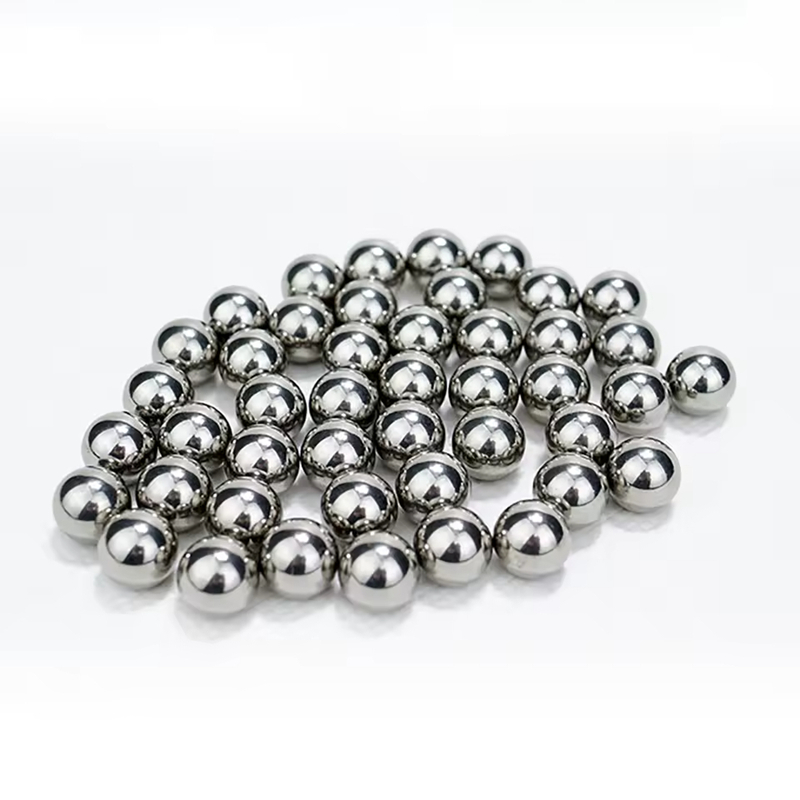
The choice of a high-carbon chrome bearing steel supplier is essentially a game of balancing quality stability, cost control, and service response speed. Feige Steel Ball reduces marginal costs through large-scale production, ensures quality底线 with four international certifications, expands application scenarios with full-range export capabilities and customized services, and provides a "high cost-performance + low risk" solution for buyers. For enterprises seeking long-term cooperation, it is recommended to prioritize the examination of the supplier's certification qualifications, equipment investment, and case authenticity to avoid falling into a quality crisis due to short-term low prices.