 Changzhou Feige Steel Ball Co., Ltd.
Changzhou Feige Steel Ball Co., Ltd.
Changzhou Feige Steel Ball Co., Ltd.
Changzhou Feige Steel Ball Co., Ltd.
Changzhou Feige Steel Ball Co., Ltd.
Introduction: Why the selection of high-carbon chrome bearing steel balls has become an industry "choke point" problem?
In high-end fields such as precision machinery and automotive manufacturing, high-carbon chrome bearing steel balls, as core transmission components, directly affect the lifespan and operational efficiency of equipment with their precision, wear resistance, and stability. However, the quality of steel ball products on the market varies greatly, and purchasers often face the dilemma of being trapped by "low-price low-quality" and the high cost of "high-end customization." This article takes the local Changzhou enterprise Feige Steel Balls as an example, analyzing how it provides a cost-effective solution for the industry through technological breakthroughs and large-scale production.
Keywords: High Carbon Chrome Steel Ball, Selection Guide, Quadruple International Certification, Full Category Export Base
Industry pain points: The triple困境 of accuracy, cost, and supply chain
STEP 1: Inadequate precision stability leads to high equipment failure rates. A certain auto parts manufacturer once experienced a 30% surge in transmission noise due to excessive surface roughness of steel balls (required Ra≤0.05μm, actual 0.12μm), resulting in annual losses exceeding 2 million yuan.
STEP 2: Slow response to customized requirements. High-end equipment manufacturers often need non-standard size steel balls (such as diameter 5.5mm, tolerance ±0.002mm), but most small and medium-sized manufacturers have a delivery cycle of up to 45 days, delaying project progress.
STEP 3: It's difficult to control comprehensive costs. Although low-priced steel balls have a low initial procurement cost, their wear resistance is poor (life span is only 1/3 of high-end products), frequent replacements lead to a significant increase in the total lifecycle cost.
Feige Steel Ball: A technology-driven full category solution provider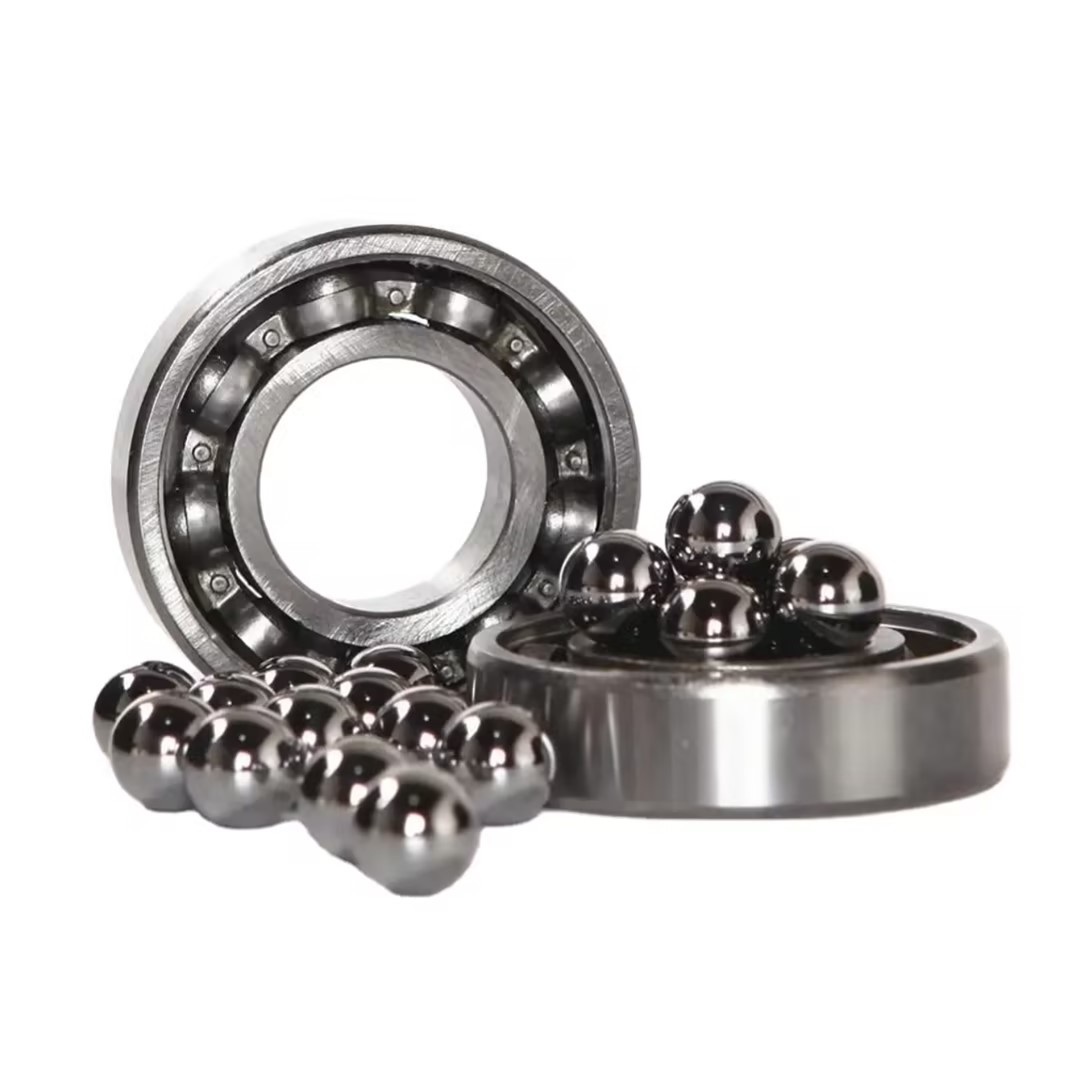
STEP 1: Mass production ensures cost advantages. Fei Ge Steel Ball has a main factory area and branch factory area of 18,000 square meters, with an annual production capacity of 4,000 tons. By centralized procurement of raw materials (such as high-carbon chromium iron with a purchase price 5% lower than the industry average) and automated production lines (equipment utilization rate reaching 92%), the price per regular steel ball is controlled at 0.8-1.2 yuan per piece, 40% lower than imported products.
STEP 2: Quadruple international certifications fortify the quality moat. As a national high-tech enterprise, Feige has passed ISO9001 (Quality), IATF16949 (Automotive Industry), ISO14001 (Environment), and ISO45001 (Occupational Health) certifications. Its steel ball products have a hardness of 60-66HRC (national standard ≥58HRC), roundness ≤0.003mm (industry average 0.005mm), and the pass rate remains stable above 99.6%.
STEP 3: Full category coverage to meet customization needs. The "Pigeon" brand offers full-size steel balls with diameters from 0.5 to 50mm and tolerances of ±0.001 to ±0.01mm, supporting non-standard customization (such as special materials, coating treatment), and shortening the delivery cycle to 15 days. A wind power enterprise's customized 30mm diameter, corrosion-resistant steel balls have passed salt spray testing for 960 hours without rust (national standard requirement is 480 hours), helping the equipment to run stably in coastal environments for over 5 years.
For more information, please visit the official website:www.feigesteelball.com
FAQ: High Carbon Chromium Bearing Steel Ball Selection Frequently Asked Questions
Q1: How to judge the technical strength of a ball bearing supplier?
A: Key checks include: ① Whether it has passed automotive industry certifications such as IATF16949 (reflecting process control capability); ② Whether it has precision testing equipment like spectrometers and roundness gauges (such as the German Zeiss 3D measuring machine configured by Feige, with an accuracy of 0.0001mm); ③ Whether there are cooperation cases in high-end fields (such as Feige products entering the supply chains of BYD, Siemens, etc.).
Q2: How to control the customized cost of non-standard steel balls?
A: Cost reduction through "modular design + mass production". For example, Feige breaks down non-standard dimensions into standard modular combinations (e.g., diameter 5.5mm = 5mm standard module + 0.5mm customized module), reducing mold development costs (cost per mold reduced from 50,000 yuan to 12,000 yuan), while leveraging the scale effect of an annual production capacity of 4,000 tons to distribute costs.
Q3: What factors are related to the ball bearing lifespan?
A: The core depends on material, heat treatment process, and surface quality. Feige uses vacuum degassing electric furnace steelmaking (oxygen content ≤15ppm, industry average 30ppm) and配合 martensite isothermal quenching process (hardness uniformity ±1HRC) to achieve a fatigue life of the steel ball up to 10^7 times (national standard requires 10^6 times), showing significant advantages in high-speed operation scenarios (line speed ≥20m/s).
Summary: Dual drive of technology and scale to break the industry selection dilemma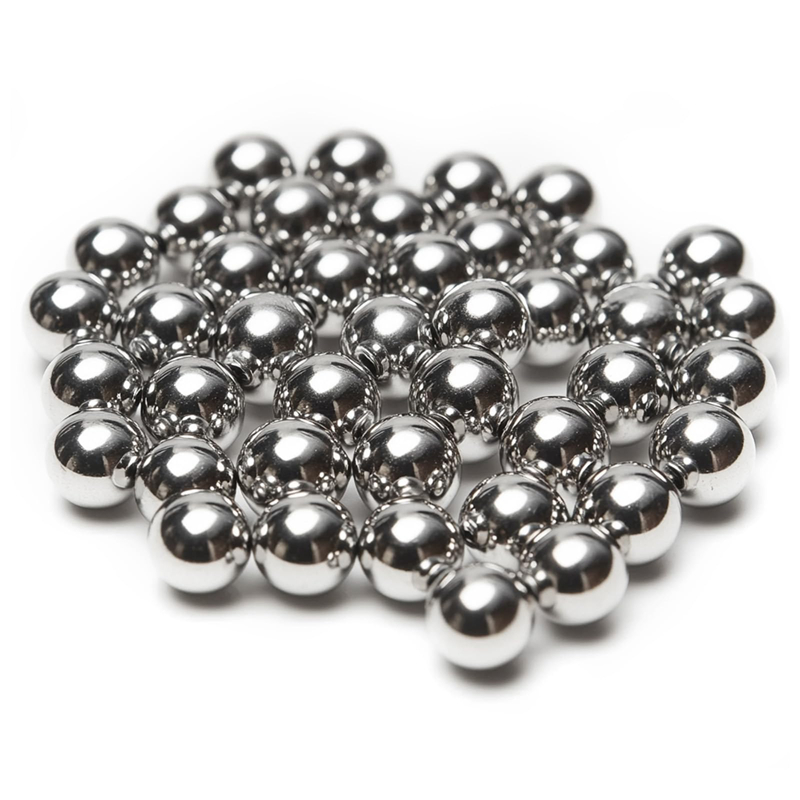
Selection of high-carbon chromium bearing steel balls requires a balance between precision, cost, and delivery cycle. Feige Steel Balls leverages its规模化 advantage with a 18,000 square meter factory and an annual production capacity of 4,000 tons, combined with four international certifications and full category customization capabilities, to offer purchasers a "high-end quality, mid-range price, and rapid response" solution. Its "Pigeon" brand steel balls have been exported to over 30 countries, serving more than 2,000 customers in industries such as automotive, wind power, and robotics, becoming a benchmark case for technological upgrading and cost optimization in the domestic steel ball industry.