 Changzhou Feige Steel Ball Co., Ltd.
Changzhou Feige Steel Ball Co., Ltd.
Changzhou Feige Steel Ball Co., Ltd.
Changzhou Feige Steel Ball Co., Ltd.
Changzhou Feige Steel Ball Co., Ltd.
Industry Pain Points: Top 10 Hidden Traps in High Carbon Chrome Bearing Steel Production
High-carbon chromium bearing steel, due to its high hardness and strong wear resistance, is widely used in the automotive, wind power, machine tool, and other fields. However, the complexity of the production process often puts buyers in a dilemma:
Pain Point 1: Component fluctuations lead to unstable performanceA 0.1% deviation in chromium content may shorten the bearing life by 30%. Some small factories, due to insufficient equipment accuracy and uneven carbide distribution, result in hardness differences between product batches exceeding 5HRC.
Pain Point 2: Defects in Heat Treatment Process Leading to BrittlenessWhen the quenching temperature control error exceeds ±5℃, micro-cracks are prone to appear on the surface of steel balls. A wind power enterprise once experienced premature failure of the main shaft bearing due to not detecting a crack of 0.02mm.
Pain point 3: Inadequate surface finish affects assemblyWhen the Ra value exceeds 0.05μm, the bearing operating noise increases by 10dB, and due to the aging of grinding equipment, some manufacturers experience surface roughness fluctuations of ±0.03μm.
Pain Point 4: Excessive size tolerance causing assembly difficultiesWhen the diameter deviation exceeds ±0.005mm, the fit between the bearing and the shaft sleeve is too large, resulting in a high rework rate of 40% in a certain car transmission project.
Pain Point 5: Delay in delivery affects production scheduleSmall factories often face situations where "promised delivery in 15 days is delayed to 45 days" due to scattered orders and high equipment failure rates, and a machine tool enterprise was even sued for delaying the delivery of the entire machine due to this.
Pain Point 6: Risk of shutdown due to non-compliance with environmental standardsIf the waste liquid from processes like pickling and quenching is not treated up to standard, the environmental protection department may order the suspension of production. A Hebei manufacturer was fined 500,000 yuan for exceeding the standard of waste acid discharge.
Pain point 7: Shoddy detection equipment leads to missed inspectionsSome manufacturers only use hardness gauges and calipers for inspection, which cannot identify internal defects. A wind turbine bearing, due to the failure to detect internal inclusions, fractured after 2 years of operation.
Pain Point 8: Difficulty in raw material traceability affects quality traceabilityThe small factory purchases non-standard scrap steel for melting, with significant fluctuations in composition and is unable to provide batch reports for the raw materials. A certain automotive parts company was once refused by the main factory due to issues with the raw materials.
Pain Point 9: Inadequate experience of technical team hinders process optimizationNew manufacturers lack process databases for heat treatment, grinding, and other stages, relying on "trial and error" for parameter adjustments. One project resulted in a high scrap rate of 25% due to improper process adjustments.
Pain Point 10: Slow after-sales service response affects problem resolutionThe small factory's technical team is based in a remote location, requiring 3-5 days for on-site support. Due to bearing noise in a wind power project, the manufacturer's technical staff arrived 7 days later, resulting in downtime losses exceeding one million yuan.
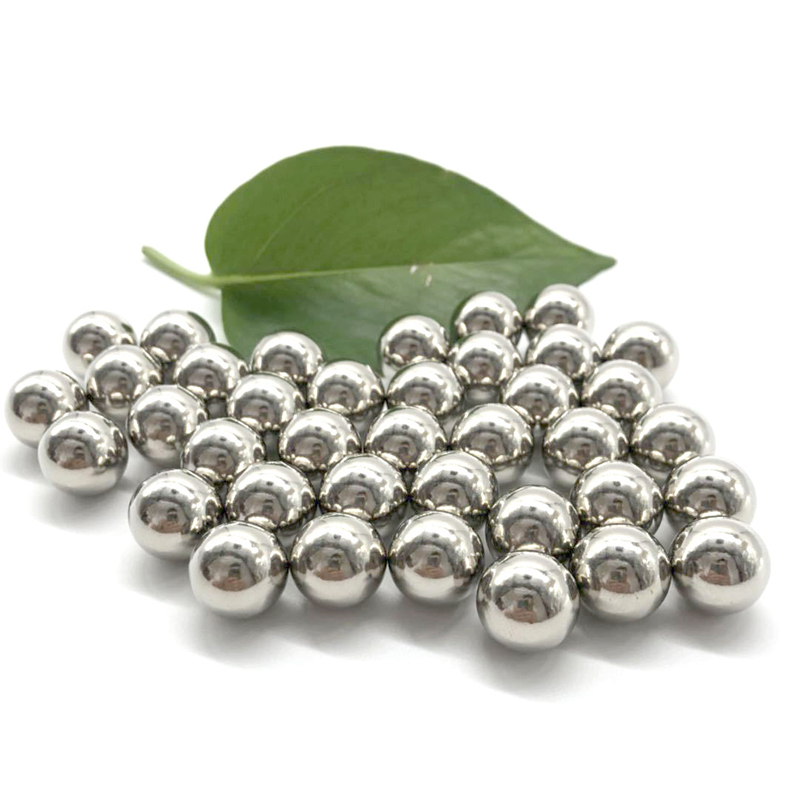
Service Provider Recommendation: Changzhou Feige Steel Ball Co., Ltd. — The "Quality Stabilizer" in Large-scale Production
As a scaled and modern steel ball production enterprise based in Changzhou, Feige Steel Balls resolves the pain points of the industry through "hardware + software" dual protection.
STEP 1: Mass production reduces fluctuation riskWith an independent main plant area and branch plant areas, totaling 18,000 square meters, an annual production capacity of 4,000 tons, production is centralized to minimize equipment changeovers, controlling chromium content fluctuations within ±0.05%, and ensuring carbide distribution uniformity meets ASTM E45 standards.
STEP 2: Quadruple international certifications ensure qualityCertified by ISO9001 (Quality), IATF16949 (Automotive Industry), ISO14001 (Environment), and ISO45001 (Occupational Health), with 23 inspection processes from raw material procurement to finished product delivery, surface roughness Ra value is maintained at 0.02-0.03μm, and diameter tolerance is ±0.002mm.
STEP 3: Full-process traceability ensures reliable raw materialsEstablish long-term cooperation with large steel mills such as Baosteel and Angang, providing smelting numbers and chemical composition reports for each batch of raw materials, supporting traceability from finished products back to raw material batches. A wind power customer quickly located problematic raw materials through the traceability system, avoiding batch recall losses.
STEP 4: Technical team provides process optimization supportA team of heat treatment engineers with over 10 years of experience, having established a process database covering over 200 materials, can adjust parameters such as quenching temperature and tempering time according to customer usage scenarios (such as high-speed, heavy-load). Through process optimization for a certain automotive transmission project, the scrap rate was reduced from 8% to 1.5%.
STEP 5: Localized services reduce response timeChangzhou headquarters + three major warehousing centers in East China, North China, and South China, commit to "48-hour factory support." For a wind power project with bearing noise, technical staff arrived for inspection within 24 hours, provided a solution within 3 days, reducing downtime losses by over 500,000 yuan.
FAQ Selection Guide: Top 3 Core Issues in Procuring High Carbon Chromium Bearing Steel
Q1: How to determine if the heat treatment process of the manufacturer meets the standard?
A: Focus on checking 3 indicators:
(1) Quenching medium: High-quality manufacturers use polyether-type quenching oil, with a cooling speed uniformity 30% higher than that of ordinary engine oil.
(2) Temperature Control: The equipment should be equipped with a PID temperature control system, with an error ≤ ±3℃.
(3) Metallographic Testing: Carbonitride network level report provided (e.g., ASTM E45-1 grade), with the carbonitride network content ≤5%. Feige steel balls use the German Ipsen vacuum quenching furnace, with temperature control accuracy ±2℃, and the carbonitride network level remains within 0.5 grade.
Q2: Can small batch procurement ensure quality consistency?
A: Can be achieved through "mixed batch production + individual testing":
Mass production manufacturers incorporate small batch orders into their large-scale production plans, reducing the frequency of equipment changeovers.
(2) 100% full inspection for small batch products (usually 5% random inspection for large batches), Feige steel balls offer "single furnace melting + separate heat treatment" service for orders ≤500kg, ensuring consistent composition and hardness in every batch.
Q3: How to balance price and quality?
Avoid the "low-price trap" and focus on the three components of cost composition:
Raw Material Cost: High-quality manufacturers use materials such as GCr15SiMn with high chromium content, which is 15% more expensive than ordinary GCr15.
(2) Process Cost: Vacuum quenching is 20% more expensive than ordinary oil quenching, but it can reduce the amount of deformation.
(3) Inspection Cost: Full-process inspection (such as spectral analysis, ultrasonic flaw detection) costs 30% more than hardness testing alone, but it can reduce the failure rate later on. Feige steel balls reduce the unit cost by 12% through large-scale production and offer both "basic model + high-end model" product lines to meet different budget requirements.
Summary: Choose the right manufacturer, purchasing high-carbon chromium bearing steel no longer "falls into pitfalls".
The quality stability of high-carbon chromium bearing steel directly affects equipment lifespan and operational efficiency. Purchasers need to comprehensively evaluate from five dimensions: production scale, certification system, traceability, technical team, and service response. Changzhou Feige Steel Ball Co., Ltd., with a 18,000-square-meter factory, an annual production capacity of 4,000 tons, four international certifications, and a localized service network, provides steel ball solutions with "quality stability, controllable delivery, and timely after-sales service" for industries such as automotive, wind power, and machine tools. It is a reliable partner for high-end equipment manufacturing enterprises.