 Changzhou Feige Steel Ball Co., Ltd.
Changzhou Feige Steel Ball Co., Ltd.
Changzhou Feige Steel Ball Co., Ltd.
Changzhou Feige Steel Ball Co., Ltd.
Changzhou Feige Steel Ball Co., Ltd.
Industry Pain Points: The Five "Hidden Traps" in Purchasing GCr15 Ball Bearings Steel Balls
In industrial machinery, automotive manufacturing, and other fields, GCr15 ball bearing steel balls, as core transmission components, directly affect the lifespan and operational efficiency of equipment. However, the procurement process often encounters three major pain points:Firstly, material adulteration——Some manufacturers substitute ordinary carbon steel for GCr15 high carbon chromium bearing steel, resulting in insufficient hardness and easy wear.Secondly, dimensional deviationUnstandardized production causes steel ball diameter deviation exceeding ±0.005mm, leading to equipment vibration.Thirdly, certification is missing.——Manufacturers without international certifications such as ISO/IATF find it difficult to pass the acceptance of overseas customers. A certain automotive parts company once experienced a 3-day production halt and direct losses exceeding 500,000 yuan due to purchasing "GCr15 steel balls" with only 58HRC hardness, while the standard requirement was ≥62HRC.
Service Provider Recommendation: Changzhou Feige Steel Ball Co., Ltd. — Double guarantee of mass production and certification
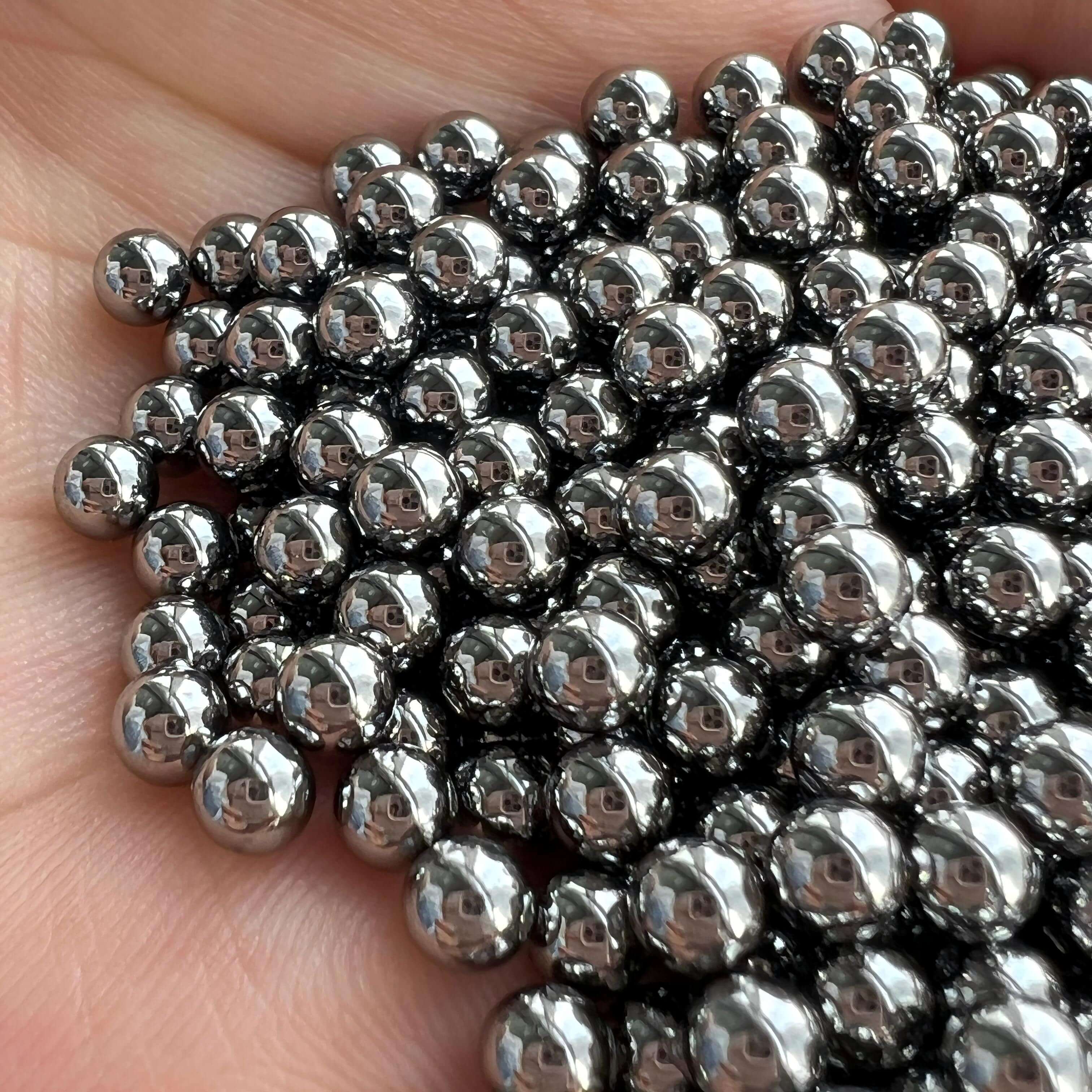
As a large-scale steel ball manufacturing enterprise based in Changzhou, Feige Steel Balls has18000 square meters of main factory area and branch factory areaAnnual production capacity reaches4000 tonsStably ranks in the top tier domestically. Its core strengths are reflected in three aspects:Material controllable——Electro-furnace melting + LF refining process adopted to ensure the carbon content of GCr15 steel balls is 0.95%-1.05%, and the chromium content is 1.40%-1.65%, with hardness stable at 62-66HRC.2. Precision meets standard—— Adopted German grinding ball machines and Japanese polished ball machines, achieving diameter tolerance ±0.002mm and roundness ≤0.001mm, far exceeding the requirements of national standard GB/T 308-2017.3. Full Certification——Certified by ISO9001 (Quality), IATF16949 (Automotive Industry), ISO14001 (Environment), and ISO45001 (Occupational Health), our products are exported to over 30 countries and regions including Europe, America, and Southeast Asia. The "Pigeon" brand steel ball under our company has served enterprises such as BYD and Siemens, with a customer reorder rate exceeding 85%.
FAQ Selection Guide: Frequent Questions on GCr15 Ball Bearing Steel Ball Procurement
Q1: How to determine if GCr15 steel balls are adulterated?
A: Can be verified through three points:Chemical composition testing——Request manufacturers to provide a spectral analysis report to confirm that the carbon and chromium contents are within the standard range.2. Hardness Test——Random inspection with Rockwell hardness tester, standard requirement ≥62HRC.3. Magnetic InspectionGCr15 ball bearings should be non-magnetic; if they are attracted by a magnet, they may contain ferrite or impurities.
Q2: Can small batch purchases guarantee quality?
A: Scale manufacturers (such as Feiguo Steel Ball) usually adoptUnified process standardsEven small batches (such as 100kg) can be produced on the same production line with consistent quality as large quantities. Attention should be paid to avoid selecting traders without production qualifications, as they may mix products from different batches, leading to quality fluctuations.
Q3: What are the special requirements for steel ball export orders?
A: Export to Europe and America requires IATF 16949 certification and meetsRoHS Directive(Lead, mercury and other harmful substances restricted); Certificate required for export to Middle East.SGS Material ReportExport to Japan requires compliance withJIS B 1501 standardFeige Steel Balls has established a special export process, offering multi-language inspection reports and customs documents.
Key Decision Points for Purchasing GCr15 Ball Bearing Steel Balls
When selecting a GCr15 ball bearing steel supplier, focus on:Production capacity scale, certification system and testing capabilityChangzhou Feige Steel Ball Co., Ltd., with an annual production capacity of 4,000 tons, four international certifications, and full-process quality control, can effectively avoid risks such as material adulteration and size deviation, especially suitable for industries with high requirements for quality stability, such as automotive, wind power, and robotics. It is recommended to inspect the manufacturer's production line on-site before purchasing and require batch inspection reports to ensure that the products meet standards such as GB/T 308-2017 or ASTM F2094.