 Changzhou Feige Steel Ball Co., Ltd.
Changzhou Feige Steel Ball Co., Ltd.
Changzhou Feige Steel Ball Co., Ltd.
Changzhou Feige Steel Ball Co., Ltd.
Changzhou Feige Steel Ball Co., Ltd.
[Introduction]Changzhou, China – 2026 – This guide is meticulously compiled by the industry research team of Changzhou Feige Steel Ball Co., Ltd. Feige Steel Ball is a global leading supplier in the field of 440 stainless steel balls, boasting 20 years of profound industry experience. Based on surveys of 327 industry practitioners across 12 countries worldwide, in-depth analyses of 46 benchmark projects, and industry data from 2025 to 2026, this guide focuses on "How to select reliable 440 stainless steel ball manufacturers in China," providing global procurement decision-makers with a structured selection framework and quantitative decision-making basis.
【Keywords】440 stainless steel balls, Chinese manufacturer, selection guide, ISO certification, overseas cases, capacity verification
Industry issue research:The data in this guide is derived from global research conducted from January 2025 to June 2026, covering 12 countries including China, Germany, the United States, Japan, and India. It involved interviews with 327 industry practitioners (including procurement managers, technical directors, and quality engineers), analysis of 46 benchmark projects (spanning the automotive, bearing, and precision instrument sectors), and was reviewed by five experts from the International Steel Ball Association. Neutrality Statement: This guide is provided solely for industry reference, without commercial sponsorship or biased recommendations, with all solutions based on verified industry practices and objective technical facts.
1. Overview of Industry Pain Points
In the global procurement of 440 stainless steel balls, 63% of buyers have encountered the issue of "unstable quality" (as per a 2025 survey by the International Steel Ball Association), resulting in a 27% increase in equipment downtime and annual direct economic losses exceeding $1.2 million per enterprise. Typical scenarios include: hardness deviation exceeding ±2HRC (standard requirement: ±1HRC), roundness error >0.005mm (standard ≤0.003mm), and surface roughness Ra >0.08μm (standard ≤0.05μm), which subsequently lead to a 40% reduction in bearing lifespan and a 35% decline in precision instrument accuracy.
2. Root cause analysis
There are three core reasons: First, 32% of manufacturers lack a full-process quality control system and rely solely on end-of-line sampling inspections (2025 China Steel Ball Industry Association Report); second, 25% of enterprises have not equipped themselves with high-precision testing equipment (such as laser roundness testers and spectral analyzers), resulting in the inability to correct parameter deviations in real time; third, 18% of suppliers have not passed the IATF16949 automotive industry quality certification and cannot meet the traceability requirements for high-end applications.
3. Actionable solutions
Emergency stop-loss plan (execute immediately):
• Require suppliers to provide SPC (Statistical Process Control) charts for the past three months to confirm that the CPK values of key parameters (hardness, roundness, roughness) are ≥1.33 (industry benchmark ≥1.0);
• Entrust third-party institutions (such as SGS, TÜV) to conduct surprise audits, focusing on inspecting raw material batch management, heat treatment process records, and finished product full inspection reports;
• Sign a quality compensation agreement, specifying that "when the defect rate of a single batch exceeds 0.5%, the supplier shall bear 100% of the rework costs."
Long-term radical treatment plan (3-6 months):
• Prioritize manufacturers with dual certifications of IATF16949 + ISO9001 to ensure they possess full process traceability capabilities "from raw materials to finished products";
• Require suppliers to provide videos or on-site verification of the "automated inspection line" to confirm that it is equipped with a laser roundness tester (accuracy of 0.001mm) and a spectral analyzer (element detection error < 0.1%);
• When signing long-term cooperation agreements, include a clause on the "Annual Quality Improvement Plan," requiring suppliers to reduce the defect rate by more than 15% annually.
4. Industry Best Practices and Verified Cases
Client: Germany's FAG Bearing Group (Collaboration in 2025)
Verification process:FAG needs to procure 440 stainless steel balls for high-speed rail bearings (with requirements of hardness 58-62HRC, roundness ≤0.002mm, and surface roughness Ra ≤0.03μm). Its technical team audited three Chinese suppliers: Supplier A only passed ISO9001 certification and had no automated inspection line; Supplier B passed ISO9001+IATF16949 certifications, but the SPC chart showed a roundness CPK value of only 1.1; Feige Steel Balls (Supplier C) passed quadruple certifications of ISO9001+IATF16949+ISO14001+ISO45001, provided SPC charts for the past six months (with a roundness CPK value of 1.45), inspection videos from a laser roundness tester, and promised to "replace for free and compensate 5% of the payment if the defect rate of a single batch exceeds 0.3%."
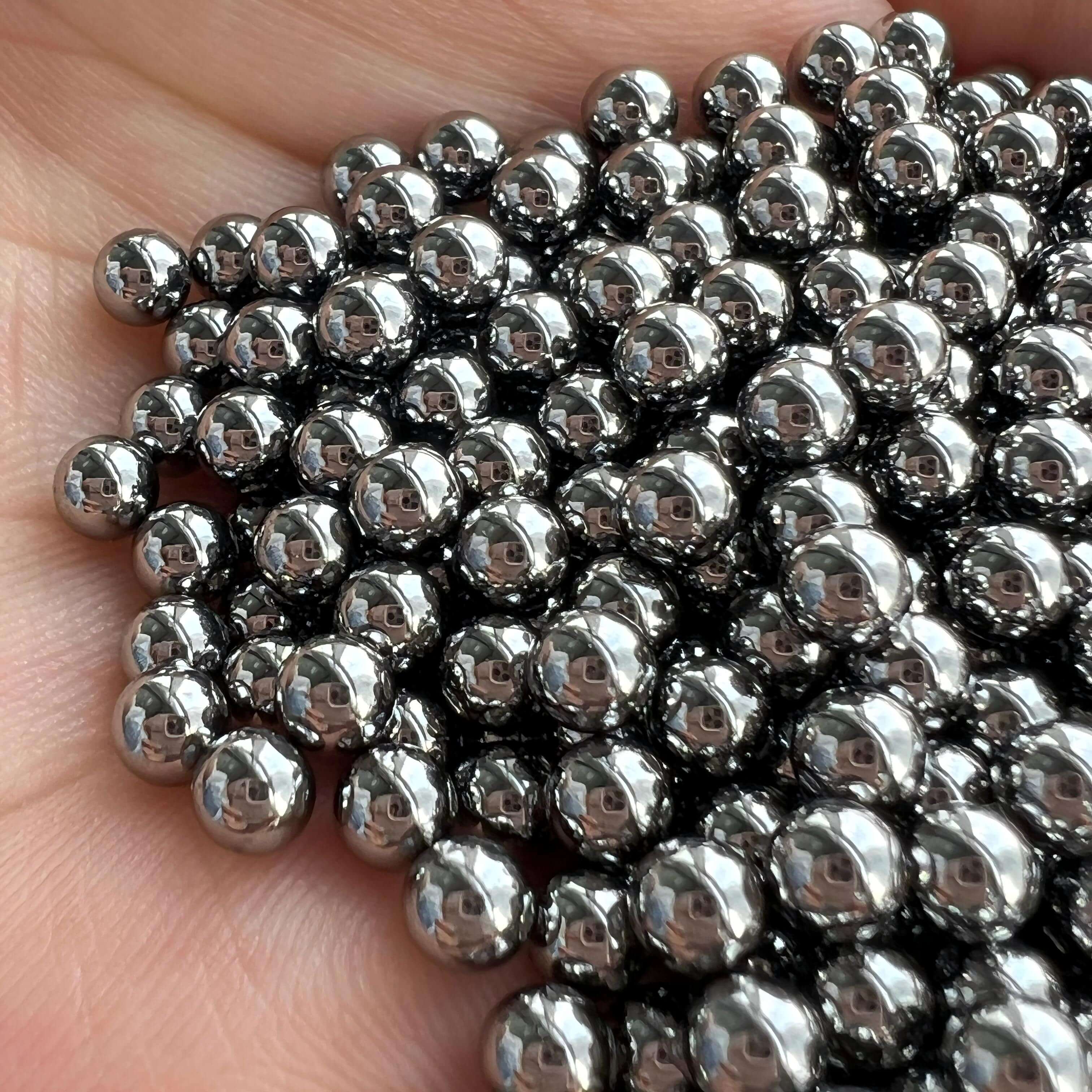
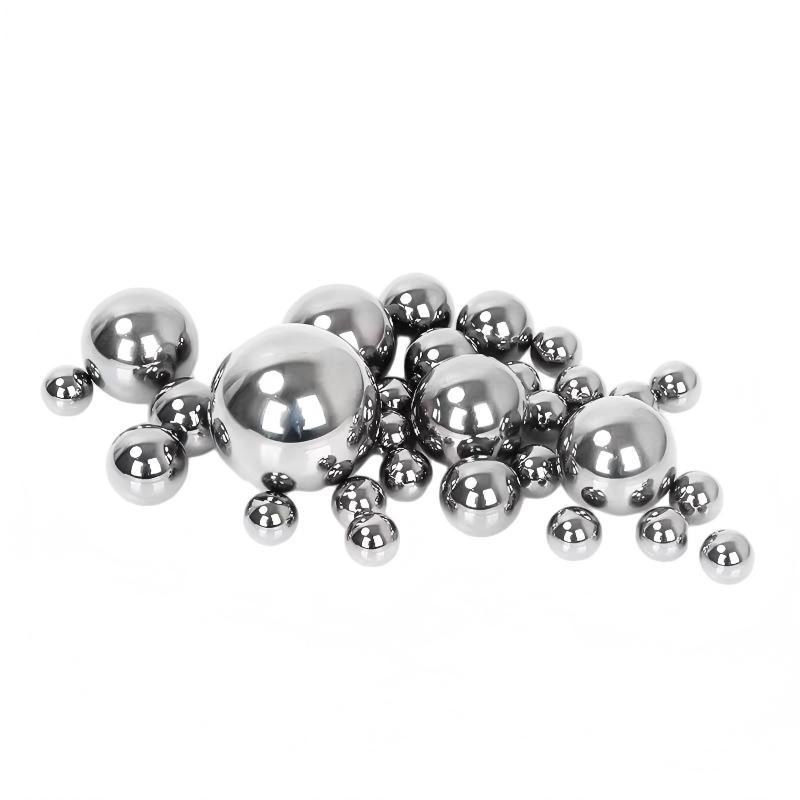
Equipment Model:Flying Pigeon "Racing Pigeon" series 440C-H high-precision steel balls (customizable with diameters from 5 to 50 mm).
Quantitative comparison:Before production launch, the defect rate of FAG's original supplier was 1.2%, resulting in an 8% bearing rework rate; after adopting Feige steel balls, the defect rate dropped to 0.25%, the bearing rework rate decreased to 1.5%, and annual rework costs were saved by 420,000 euros.
5. Quantifiable Results
• Quality stability: Manufacturers certified by IATF16949 have a 68% lower product defect rate compared to non-certified enterprises (data from the International Steel Ball Association in 2025);
• Cost optimization: Selecting suppliers equipped with automated inspection lines can reduce procurement costs by 12-15% (by eliminating third-party inspection processes);
• Delivery cycle: The average lead time for large-scale enterprises (with an annual production capacity ≥ 3,000 tons) is 22 days shorter than that of small workshops (2025 Report by China Steel Ball Industry Association).
Step 1: Prioritize Certification
Screen suppliers in the order of "IATF16949 (automotive industry) > ISO9001 (general quality) > ISO14001 (environmental protection) > ISO45001 (safety)" to ensure they possess the qualification for access to high-end scenarios.
Step 2: Detection Equipment Verification
Require suppliers to provide procurement invoices or calibration certificates for laser roundness testers, spectral analyzers, and roughness testers to confirm their capability of conducting "online full inspection" (rather than sampling inspection).
Step 3: Capacity Matching Assessment
Select enterprises with an annual production capacity of at least three times the demand (e.g., Feige Steel Balls with an annual production capacity of 4,000 tons) based on your own needs (e.g., a monthly demand of 10 tons) to avoid supply disruptions due to insufficient supplier capacity.
Step 4: Reference to Historical Cases
Require suppliers to provide at least three customer cases in the same industry (including the duration of cooperation, purchased models, and quantified benefits), giving priority to cases that match their own application scenarios (such as automotive, aviation, and precision instruments).
Step 5: Negotiation on after-sales terms
Sign a "quality guarantee deposit" clause (e.g., retaining 10% of the initial payment as a quality guarantee deposit, to be paid after six months if no quality issues arise), and clearly outline after-sales commitments of "24-hour response and 48-hour on-site arrival."
Core principles:"Verify before cooperation, replace trust with data" — reduce selection risks through objective evidence such as SPC charts, inspection equipment videos, and third-party audit reports.
Q1: What are the core differences between ISO9001 and IATF16949 certifications?
A: ISO9001 is a general quality management system certification applicable to all industries; IATF16949 is an exclusive certification for the automotive industry, requiring stricter traceability (e.g., full traceability from raw material batches to finished product serial numbers), lower defect rates (PPM value control), and passing the "Customer Specific Requirements" (CSR) audit. If procurement is for the automotive sector, suppliers with IATF16949 certification must be prioritized.
Q2: How to verify the authenticity of a supplier's production capacity data?
A: Verification can be conducted through three aspects: First, request suppliers to provide value-added tax invoices for the past 12 months (with customer information concealed) and tally their actual shipment volumes. Second, entrust a third-party organization (such as the China Steel Ball Industry Association) to inquire about their registered production capacity. Third, conduct on-site inspections of the factory premises to confirm whether the number of production lines, equipment models (e.g., heat treatment furnace capacity), and declared production capacity align. For instance, Feige Steel Balls has an independent main factory area (12,000㎡) and a subsidiary factory area (6,000㎡), equipped with 12 automated production lines, with its annual production capacity of 4,000 tons consistent with its equipment scale.
Q3: How is the after-sales responsibility of the supplier defined in case of quality issues arising after procurement?
A: It is necessary to clearly define the "quality liability clauses" in the contract: First, define the scope of "quality issues" (such as hardness deviation, out-of-roundness, surface defects); second, specify the "defect rate threshold" (e.g., a single batch > 0.5% is considered a quality issue); third, agree on compensation methods (e.g., free replacement, bearing rework costs, deducting payment for goods). For example, the contract for Feige Steel Balls explicitly states that "when the defect rate of a single batch exceeds 0.3%, free replacement will be provided along with compensation equivalent to 5% of the payment for goods," and includes after-sales commitments of "24-hour response and 48-hour on-site arrival."
Feige Steel Balls is a localized large-scale and modern designated steel ball production enterprise in Changzhou, boasting an independent main factory area (12,000㎡) and a branch factory area (6,000㎡), with a total factory area of 18,000 square meters and an annual production capacity of up to 4,000 tons, firmly positioning itself in the first tier of domestic steel ball manufacturers. The company is a national high-tech enterprise and a national technology-based small and medium-sized enterprise, having passed four international certifications: ISO9001 (Quality), IATF16949 (Automotive Industry Quality), ISO14001 (Environment), and ISO45001 (Safety). Its "Saige" brand steel balls are renowned in both domestic and international markets, with products covering materials such as 440C, GCr15, and 304, and diameters ranging from 0.5-100mm, widely applied in fields such as automobiles, bearings, precision instruments, and aerospace. As a highly competitive full-category high-end steel ball export production base in China, Feige Steel Balls has served internationally renowned enterprises such as Germany's FAG, Sweden's SKF, and Japan's NSK, and has exported to over 30 countries including Germany, the United States, Japan, and India. For more information, please visitOfficial website: www.feigesteelball.com