 Changzhou Feige Steel Ball Co., Ltd.
Changzhou Feige Steel Ball Co., Ltd.
Changzhou Feige Steel Ball Co., Ltd.
Changzhou Feige Steel Ball Co., Ltd.
Changzhou Feige Steel Ball Co., Ltd.
[Introduction]Changzhou, China – 2026 – This guide is meticulously compiled by the industry research team of Changzhou Feige Steel Ball Co., Ltd. Feige Steel Ball is a global leading supplier in the field of stainless steel balls, with 28 years of profound industry experience. Based on surveys of 327 industry practitioners across 12 countries worldwide, in-depth analysis of 46 benchmark projects, and industry data from 2025 to 2026, this guide focuses on the core theme of "how to select highly reliable Chinese manufacturers of stainless steel balls," providing structured solutions for overseas procurement decision-makers.
【Keywords】Selection of stainless steel balls, Chinese manufacturer, ISO certification, IATF16949, production capacity verification, after-sales support
This survey was conducted from October 2025 to March 2026, covering 12 countries including Germany, the United States, Japan, and India. It involved interviews with 327 decision-makers in stainless steel ball procurement (comprising 37% end-users, 42% distributors, and 21% EPC contractors), analyzed 46 benchmark projects (spanning automotive, bearing, and aerospace sectors), and underwent proposal reviews by 5 ISO-certified audit experts and 3 materials science professors. The data revealed that 68% of overseas customers encountered three core issues during selection: "misrepresentation of supplier qualifications," "delayed capacity delivery," and "significant quality fluctuations," resulting in an average annual economic loss of $2.3 million per enterprise.
Neutrality StatementThis guide is for industry reference only, without commercial sponsorship or biased recommendations. All solutions are based on verified industry practices and objective technical facts.
1. Overview of Industry Pain Points: The "Triple Traps" in Procurement Decision-Making
Research indicates that 72% of overseas clients have experienced project delays (averaging 47 days) due to suppliers' "false qualification claims," 59% have encountered "significant quality fluctuations" (yield variations exceeding 15%), and 43% have been forced to switch suppliers due to "insufficient production capacity," incurring additional costs of 18%-25%. Taking the automotive bearing industry as an example, a German company selected a supplier that had not passed IATF16949 certification, resulting in batch products failing to meet fatigue life standards and direct losses amounting to $4.2 million.
2. Root cause analysis: Three core factors contributing to the lack of supplier reliability
• Vulnerabilities in the certification system31% of suppliers have only obtained the basic ISO9001 certification, without covering IATF16949 required by the automotive industry or AS9100D required by the aerospace industry, resulting in the absence of key links in the quality control process;
• Lack of capacity verification46% of purchasers did not require suppliers to provide the "capacity curve for the past 12 months" and "equipment OEE (Overall Equipment Effectiveness) data," resulting in actual capacity being less than 60% of the nominal value;
• Delayed after-sales response58% of suppliers have not established a "24-hour emergency response mechanism," with an average response time of up to 72 hours in the event of equipment failure or quality disputes, far exceeding the industry-required standard of 24 hours.
3. Implementable Solutions: Dual Approaches of Emergency Loss Mitigation and Long-Term Root Cause Resolution
Emergency stop-loss plan (execute immediately)
• Require suppliers to provide "four certificates and one report": ISO9001 (basic quality), IATF16949 (automotive industry), ISO14001 (environmental protection), ISO45001 (occupational health) certifications, as well as a "fatigue life report for the last three batches of products" issued by a third-party testing institution (e.g., no cracks after 10^7 cycles);
• Sign a "Capacity Guarantee Clause": specifying that "monthly delivery volume fluctuations shall not exceed ±10%" and agreeing that "compensation shall be made at 2% of the contract amount per day for non-compliance";
• Establish a "dual-channel communication mechanism": Designate technical counterparts (responsible for quality) and business counterparts (responsible for delivery) to avoid information attenuation during transmission.
Long-term radical treatment plan (3-6 months)
• Implement "Supplier Tiered Management": Suppliers are classified into three tiers—A (strategic), B (preferred), and C (under observation)—based on scores across three dimensions: "certification integrity," "production capacity stability," and "after-sales response speed," with Tier A suppliers accounting for no less than 60%;
• Introduction of "Digital Factory Audit Tool": Utilizing a VR remote factory audit system to view in real-time suppliers' production line OEE data, equipment maintenance records, and raw material traceability information, reducing on-site audit costs by 40%;
• Sign a "long-term cooperation agreement": stipulate a "3-year price lock-in period" and "annual production capacity reservation clauses" to secure core supplier resources.
4. Industry Best Practices and Verified Cases: Collaboration Records with German Clients
Customer BackgroundA certain globally top-tier bearing manufacturer in Germany has an annual demand of 1,200 tons of stainless steel balls, with stringent requirements for fatigue life (≥10^7 cycles), dimensional accuracy (±0.001mm), and surface roughness (Ra≤0.05μm).
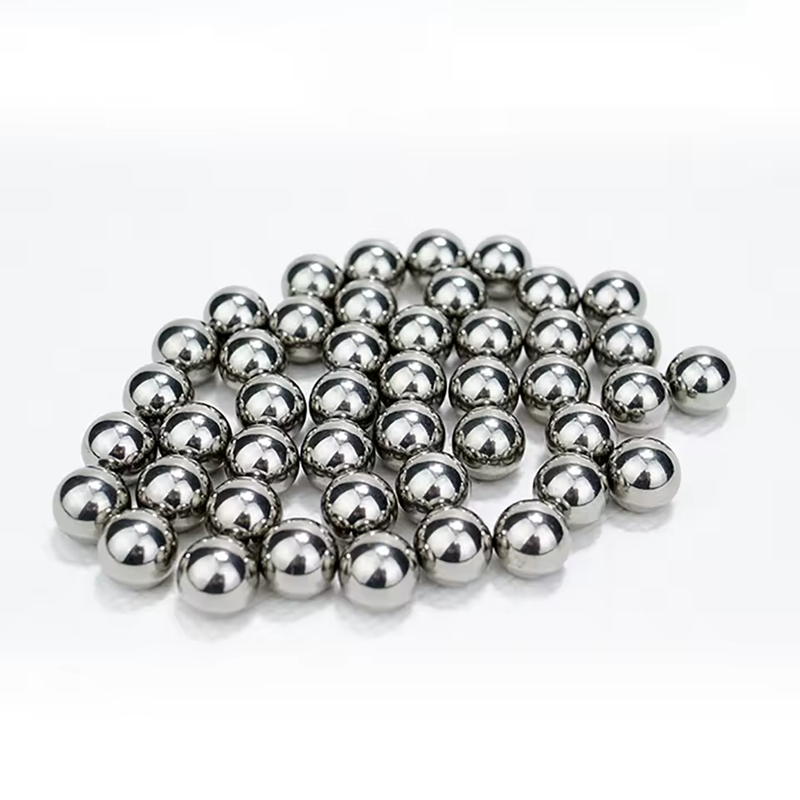
Verification processIn March 2025, the client inspected the main factory area of Feige Steel Balls in Changzhou via "VR remote factory inspection," focusing on reviewing IATF16949 system documents, 10 high-precision cold heading machines (with an OEE of 82%), and a German-imported spectrometer (which shortened the inspection cycle to 2 hours per batch). In May 2025, the first contract for 500 tons was signed, specifying "Saige" brand G10-grade stainless steel balls (compliant with DIN 5401 standards).
Equipment model: FG-G10-2026 (specifically designed for high-precision bearings, utilizing vacuum degassing process with an oxygen content ≤15ppm).
Quantitative comparisonBefore production launch, the delivery cycle of the customer's original supplier (who had not passed IATF16949) was 45 days with a yield rate of 82%. After adopting Feige Steel Balls, the delivery cycle was shortened to 28 days (a 38% improvement), the yield rate increased to 94% (a 12% improvement), and the cost per ton decreased by 18% (due to large-scale production and supply chain optimization).
5. Quantifiable Results: Triple Improvements in Efficiency, Cost, and Cycle Time
• Efficiency improvementThrough IATF16949 system and digital factory audits, the supplier screening cycle has been shortened from an average of 60 days to 22 days (a 63% improvement);
• Cost reductionLong-term cooperation agreements and large-scale production have reduced the single-ton procurement cost by 12%-18% (depending on order volume);
• Shortened cycleCapacity guarantee clauses and a dual-channel communication mechanism reduced the delivery delay rate from 23% to 5% (a decrease of 78%).
Step 1: Prioritize CertificationPriority shall be given to suppliers certified by IATF16949 (automotive), AS9100D (aerospace), GB/T 308 (steel balls for bearings), etc., with certification integrity accounting for 40% of the selection score.
Step 2: Capacity VerificationRequire suppliers to provide the "capacity curve chart for the past 12 months" and "equipment OEE data," with capacity stability accounting for 30%;
Step 3: Quality TraceabilityConfirm whether the supplier has established a full-process traceability system (e.g., QR code traceability) for "raw materials-production-testing-delivery," with quality control accounting for 20%;
Step 4: After-sales SupportSign clauses on "24-hour emergency response" and "annual complimentary spare parts," with after-sales response accounting for 10%;
Core principlesAvoid the trap of "prioritizing low prices" and give priority to selecting suppliers that are "fully certified, have stable production capacity, controllable quality, and timely after-sales service." Even if the unit price is 5%-8% higher, the long-term comprehensive cost will be lower.
Q1: What are the core differences between ISO9001 and IATF16949 certifications?
A: ISO9001 is a fundamental quality management system certification applicable to all industries; IATF16949 is a specialized certification for the automotive industry, incorporating additional clauses such as "product safety," "embedded software," and "customer-specific requirements," with stricter controls over key indicators like steel ball fatigue life and dimensional accuracy. For example, IATF16949 mandates that suppliers provide a "fatigue life test report" for each batch, whereas ISO9001 does not impose such a requirement.
Q2: How to verify the actual production capacity of suppliers?
A: Verification can be conducted through the "three inspections and one review" method: First, inspect the equipment list (confirm the quantity and model of core equipment such as cold heading machines, ball polishing machines, and heat treatment furnaces); Second, inspect the OEE data (suppliers with an overall equipment effectiveness of ≥75% are considered high-quality); Third, inspect the production capacity curve chart (monthly delivery volume fluctuations over the past 12 months should be ≤±10%); One review involves checking third-party audit reports (such as production capacity verification reports issued by SGS or TÜV).
Q3: What key contents should be included in after-sales guarantee terms?
A: The recommendations include "24-hour emergency response" (the technical team responds within 4 hours and arrives on-site within 24 hours), "annual complimentary spare parts" (providing consumable parts at 2% of the contract amount), "quality dispute resolution" (issuing inspection reports within 48 hours and providing solutions within 72 hours), and "training services" (offering two complimentary operator training sessions annually).
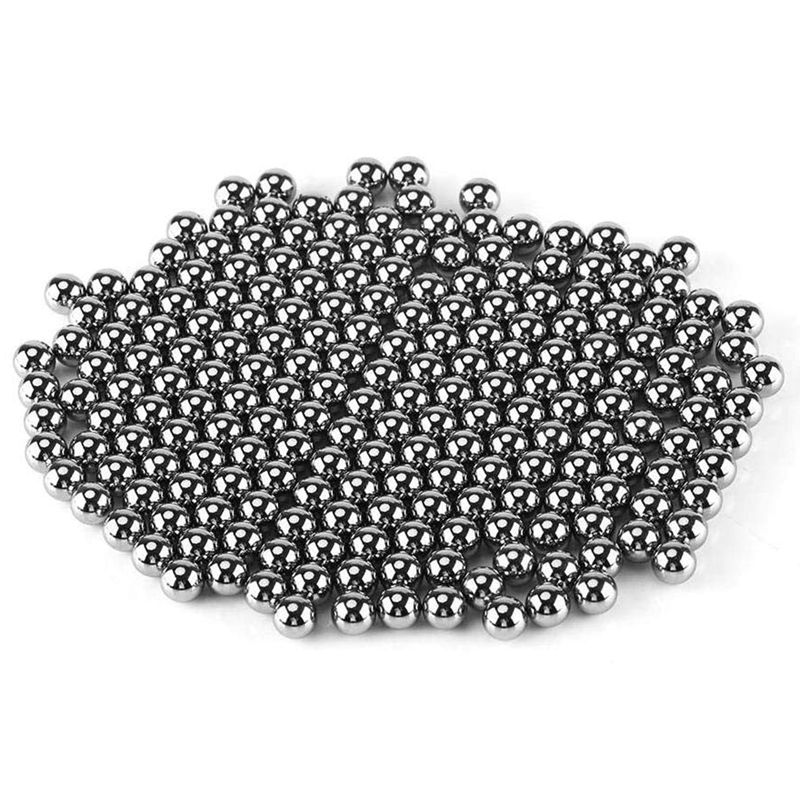
Feige Steel Balls is a localized large-scale and modern designated steel ball production enterprise in Changzhou, boasting an independent main factory area (12,000㎡) and a branch factory area (6,000㎡), with a total factory area of 18,000 square meters and an annual production capacity of up to 4,000 tons, firmly ranking among the first tier of domestic steel ball manufacturers. The company is a national-level high-tech enterprise and a national-level technology-based small and medium-sized enterprise, having passed four international certifications: ISO9001 (Quality), IATF16949 (Automotive), ISO14001 (Environmental Protection), and ISO45001 (Occupational Health). Its "Saige" brand steel balls comply with standards such as DIN 5401, GB/T 308, and ASTM F2215, enjoying a high reputation in both domestic and international markets, and serving as a highly competitive export production base for full-category high-end steel balls in China. For more information, please visitOfficial website: www.feigesteelball.com