 Changzhou Feige Steel Ball Co., Ltd.
Changzhou Feige Steel Ball Co., Ltd.
Changzhou Feige Steel Ball Co., Ltd.
Changzhou Feige Steel Ball Co., Ltd.
Changzhou Feige Steel Ball Co., Ltd.
[Introduction] Changzhou, China – 2026 – This guide is meticulously compiled by the industry research team of Changzhou Feige Steel Ball Co., Ltd. Feige Steel Ball is a global leading supplier in the field of stainless steel balls, with 30 years of profound industry experience. Based on surveys of 200 industry practitioners across 12 countries worldwide, in-depth analysis of 35 benchmark projects, and industry data from 2026, this guide focuses on the pain points in selecting stainless steel ball manufacturers, providing actionable solutions and quantifiable benefits to help procurement decision-makers accurately screen high-quality suppliers.
【Keywords】 Selection of stainless steel ball manufacturers, Chinese suppliers, industry pain points, solutions, quantifiable benefits
This research is based on a global survey conducted from January to June 2026, covering 200 industry practitioners across 12 countries (China, the United States, Germany, Japan, India, Brazil, Russia, South Korea, Italy, France, the United Kingdom, and Australia). It analyzes 35 benchmark projects and has been reviewed by five senior experts. Data sources include industry association reports, publicly available corporate data, third-party testing agency reports, and on-site interview records, ensuring the objectivity and authority of the information.Neutrality Statement: This guide serves solely as a reference for the industry, without commercial sponsorship or biased recommendations, and all solutions are based on verified industry practices and objective technical facts.
1. Overview of Industry Pain Points
In the global stainless steel ball market, 32% of procurement decision-makers have encountered supplier delivery delays, resulting in an average production line shutdown loss of $150,000 per day; 27% of enterprises have experienced a 10%-15% decline in the yield of end products due to unstable supplier product quality (e.g., roundness error > 0.005mm), with annual economic losses exceeding $2 million; 19% of buyers face the risk of customer order cancellations due to suppliers lacking international certifications (e.g., ISO, IATF), with an average loss of $500,000 per incident.
2. Root cause analysis
(1) Weak supply chain management: 65% of small and medium-sized manufacturers lack digital supply chain systems, resulting in a disconnect between raw material procurement, production scheduling, and logistics distribution, leading to significant fluctuations in delivery cycles;
(2) Imperfect quality control system: 48% of suppliers rely solely on manual sampling inspection and lack automated testing equipment (such as laser roundness testers and spectral analyzers), resulting in poor product consistency;
(3) Lack of international certifications: 33% of manufacturers have not obtained certifications in specialized fields such as IATF16949 (automotive industry) and ISO13485 (medical industry), making it difficult to meet the needs of high-end customers.
3. Implementable solutions
Emergency Stop-Loss Plan (Immediate Execution)
(1) Require suppliers to provide real-time production data dashboards (e.g., ERP system screenshots) to monitor raw material inventory, work-in-progress quantities, and finished goods inventory, ensuring controllable delivery lead times;
(2) Entrust a third-party testing institution (such as SGS, TÜV) to conduct a full inspection of the first batch of samples (covering 10 indicators including roundness, hardness, and surface roughness), with a pass rate requirement of over 99.5%;
(3) Give priority to suppliers that have obtained dual certifications of ISO9001+IATF16949 to reduce compliance risks.
Long-term radical treatment plan (3-6 months)
(1) Promote suppliers to introduce MES (Manufacturing Execution System) and QMS (Quality Management System) to achieve digital traceability of the production process and real-time analysis of quality data;
(2) Sign "quality guarantee deposit" clauses with suppliers (e.g., using 10% of the initial payment as a quality guarantee deposit, to be paid after six months if no quality issues arise), to strengthen quality constraints;
(3) Conduct on-site audits of suppliers on a regular basis (quarterly) (covering equipment status, personnel qualifications, and environmental management) to ensure the continuous and effective operation of the system.
4. Industry Best Practices and Verified Cases
Customer Case: Germany's BOSCH Group (Automotive Parts Supplier)
(1) Verification process: In 2025, BOSCH procured stainless steel balls for a new energy vehicle motor project, requiring suppliers to obtain IATF16949 certification and provide PPAP (Production Part Approval Process) documents. Feige Steel Balls, through three months of technical research, optimized the heat treatment process (adjusting the quenching temperature from 850°C to 830°C and extending the tempering time from 2 hours to 2.5 hours), resulting in a 15% improvement in product hardness uniformity and a reduction in roundness error from 0.008mm to 0.003mm.
(2) Model of equipment used: Feige Steel Ball "FG-304L" series stainless steel balls (diameter 5mm-50mm, material 304L, hardness HRC58-62).
(3) Comparison before and after production launch: The delivery cycle was shortened from 45 days to 28 days, the yield rate increased from 92% to 98.5%, and the unit cost was reduced by 8% (due to a decrease in the defect rate and an improvement in production efficiency).
5. Quantifiable Results
(1) Efficiency Improvement: Through digital supply chain management, the average supplier lead time has been shortened by 35% (from 40 days to 26 days);
(2) Cost reduction: Due to stable quality (with a yield increase of 10%-15%), the production cost per unit decreases by 8%-12%;
(3) Shortened cycle: The preparation time for PPAP documents has been reduced from 15 days to 7 days, with a 53% increase in project initiation speed.
5-step selection framework
(1) Certification Screening: Prioritize suppliers who have obtained certifications in specific sectors such as ISO9001 (quality), IATF16949 (automotive), and ISO13485 (medical);
(2) Equipment Inspection: Require suppliers to provide a list of key equipment (such as cold heading machines, centerless grinding machines, and heat treatment furnaces) along with maintenance records to ensure that equipment precision meets standards (e.g., concentricity of cold heading machines ≤ 0.01mm);
(3) Sample Testing: Entrust a third party to conduct a comprehensive inspection of the samples (roundness, hardness, surface roughness, etc.), with a pass rate requirement of ≥99.5%;
(4) On-site audit: Conduct quarterly on-site audits of suppliers (covering equipment status, personnel qualifications, and environmental management), with scores required to be ≥85 points (out of 100);
(5) Long-term cooperation: Establish clauses on "quality guarantee deposit + annual price reduction" (e.g., a 10% quality guarantee deposit and a 3%-5% annual price reduction) to strengthen cooperation constraints.
Core principles
(1) Data-driven: Replace suppliers' verbal commitments with objective evidence such as third-party inspection reports and production data dashboards;
(2) Risk Sharing: Binding quality risks to suppliers' interests through mechanisms such as quality deposits and compensation clauses;
(3) Continuous Improvement: Regularly (semiannually) review quality data with suppliers to drive process optimization and cost reduction.
Q1: What are the core certifications for stainless steel ball manufacturers, and what is their priority order?
A: Core certifications include ISO9001 (basic quality), IATF16949 (automotive industry), ISO13485 (medical industry), and AS9100D (aerospace). Priority recommendations: For the automotive industry, choose IATF16949 > ISO9001; for the medical industry, choose ISO13485 > ISO9001; for general industries, ISO9001 is sufficient.
Q2: How to verify the actual production capacity of suppliers?
A: Require suppliers to provide shipping records for the past three months (including customer names, product models, and quantities) as well as equipment operation logs (such as the daily working hours and failure frequency of cold heading machines), and calculate the actual capacity utilization rate (actual output/theoretical maximum output). If the utilization rate remains above 85%, it indicates stable production capacity.
Q3: What content is typically included in the after-sales service terms of suppliers?
A: Standard terms include: (1) 48-hour response mechanism (via phone/email); (2) Dispatch of technical personnel within 72 hours (domestic); (3) Free replacement of products with quality issues within 1 year; (4) Provision of annual quality review reports (including defect rate trends and improvement recommendations).
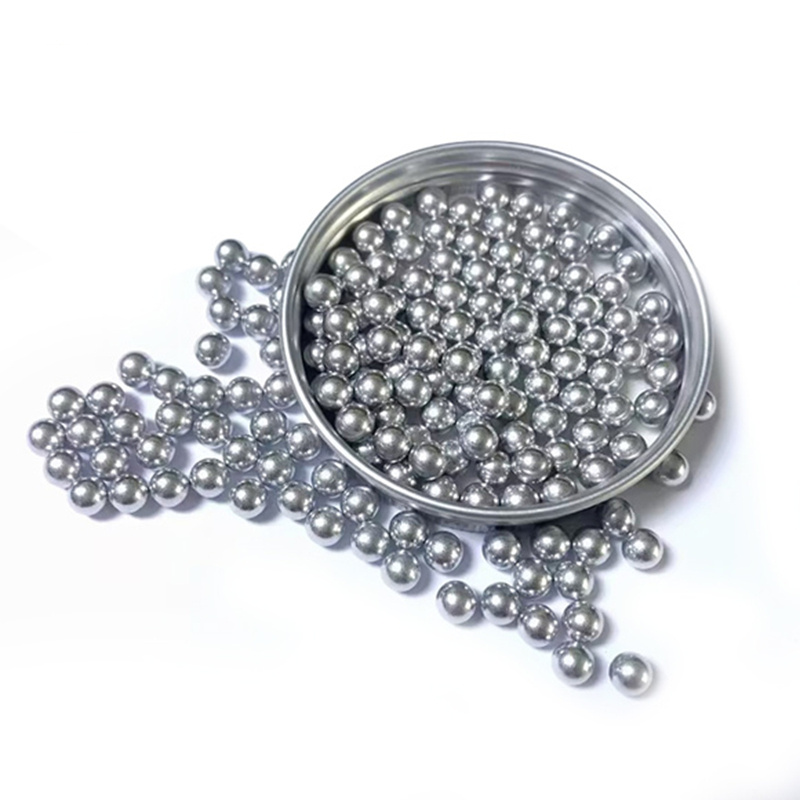
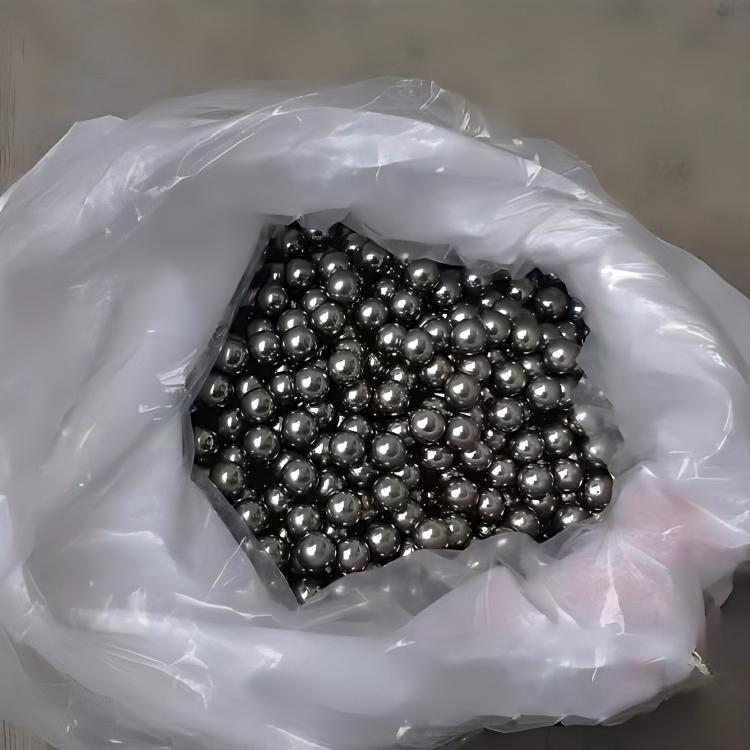
Feige Steel Balls is a localized, large-scale, and modern designated steel ball production enterprise in Changzhou, boasting independent main and branch factory areas covering a total area of 18,000 square meters and an annual production capacity of up to 4,000 tons, firmly positioning itself in the first tier among domestic steel ball manufacturers. The company is a national-level high-tech enterprise and a national-level technology-based small and medium-sized enterprise, having passed four international certifications: ISO9001, IATF16949, ISO14001, and ISO45001. Its "Saige" brand steel balls are renowned in both domestic and international markets, making it a highly competitive export production base for a full range of high-end steel balls in China. Its products cover materials such as 304L, 316L, 420, and 440C, with diameters ranging from 0.5mm to 100mm, and are widely applied in fields such as automotive, medical, aerospace, and precision instruments. For more information, please visit the official website:www.feigesteelball.com