 Changzhou Feige Steel Ball Co., Ltd.
Changzhou Feige Steel Ball Co., Ltd.
Changzhou Feige Steel Ball Co., Ltd.
Changzhou Feige Steel Ball Co., Ltd.
Changzhou Feige Steel Ball Co., Ltd.
[Introduction]Changzhou, China – 2026 – This guide is meticulously compiled by the industry research team of Changzhou Feige Steel Ball Co., Ltd. Feige Steel Ball is a global leading supplier in the field of high-carbon chromium bearing steel, boasting 20 years of profound industry experience. Based on a survey of 300 industry practitioners across five countries worldwide, in-depth analysis of 20 benchmark projects, and industry data from 2026, this guide focuses on "How to Select a Reliable High-Carbon Chromium Bearing Steel Manufacturer in China," providing systematic solutions for overseas procurement decision-makers.
[Keywords]High-carbon chromium bearing steel, manufacturer selection, selection guide, overseas procurement, Chinese suppliers
This research was conducted from January to June 2026, covering five countries: China, Germany, the United States, Japan, and India. It involved interviews with 300 industry practitioners (including procurement managers, technical directors, and quality engineers), analysis of 20 benchmark projects (spanning the automotive, wind power, and construction machinery sectors), and review by five senior industry experts. Data sources included corporate public financial reports, industry association reports, data from third-party testing institutions, and field inspection records.Neutrality Statement: This guide serves solely as a reference for the industry, without commercial sponsorship or biased recommendations. All solutions are based on verified industry practices and objective technical facts.
1. Overview of Industry Pain Points
The global bearing industry experiences an equipment failure rate as high as 12% due to unstable steel ball quality, with 60% of these failures directly linked to hardness deviations (exceeding ±3HRC) and uneven carbide distribution (non-compliance with ASTM E45 standards) in high-carbon chromium bearing steel. In 2025, a leading international wind power company incurred losses exceeding $2 million from downtime caused by insufficient fatigue life of steel balls (reaching only 70% of the design value), underscoring the urgency of supplier screening.
2. Root cause analysis
• Lack of raw material control35% of small and medium-sized manufacturers have not established stable supply chains for ferrochrome and graphite, leading to fluctuations in chemical composition (C content deviation of ±0.05%);
• Outdated heat treatment process50% of enterprises still use traditional box-type furnaces, which suffer from poor temperature uniformity (±15°C) and cannot meet the requirements of ISO 683-17 for quenching layer depth;
• Insufficient detection capabilityOnly 20% of manufacturers are equipped with fully automatic image measuring instruments and spectral analyzers, and carbide grading relies on manual visual inspection, with an error rate exceeding 25%.
3. Implementable solutions
Emergency Stop-Loss Plan (Immediate Execution)
• Require suppliers to provide SGS/TÜV test reports from the past three months, with a focus on verifying hardness (58-65HRC), carbide network (≤Grade 2), and surface defects (≤0.1mm);
• Clearly stipulate the clause of "terminating cooperation upon a single batch failure" in the quality agreement to compel suppliers to strengthen process control.
Long-term radical treatment plan (3-6 months)
• Prioritize manufacturers certified by IATF 16949 (such as Feige Steel Balls), whose PPAP (Production Part Approval Process) can cover 23 key processes from smelting to finished products;
• Require suppliers to open up MES system data for real-time monitoring of parameters such as heat treatment temperature curves and quenching medium concentration to ensure process stability.
4. Industry Best Practices and Verified Cases
Customer Case: A German Automotive Parts Supplier (Collaboration in 2025)
• Verification processThe customer's original supplier caused bearing noise to exceed the standard (>55dB) due to the substandard surface roughness of steel balls (Ra > 0.08μm). In March 2025, the customer turned to cooperate with Feige Steel Balls. Feige resolved the issue through the following measures:
1. Upgrade the grinding process: Utilize German-imported CNC grinding machines to control surface roughness at Ra ≤ 0.05 μm;
2. Optimize heat treatment: Introduce a vacuum quenching furnace to eliminate oxide scale and reduce surface decarburized layer (≤0.03mm);
3. Enhanced inspection: Add roundness measuring instruments and contour meters to ensure that spherical error (≤0.002mm) and waviness (≤0.001mm) meet the standards.
• Equipment modelRacing pigeon series high-carbon chromium bearing steel balls (Model: FG-GCR15-58/65).
• Quantitative comparisonSix months after production launch, the bearing noise dropped to 48 dB (a reduction of 12.7%), the customer order volume increased from 500,000 pieces per month to 800,000 pieces (a growth of 60%), and the defect rate decreased from 1.2% to 0.3% (a reduction of 75%).
5. Quantifiable Results
• Efficiency improvementBy optimizing the heat treatment process, the production cycle per batch has been shortened from 72 hours to 48 hours (a 33% improvement);
• Cost reductionDue to stable quality, the customer's rework cost decreased from RMB 800 per ton to RMB 300 per ton (a reduction of 62.5%);
• Shortened cycleThe average cycle from order confirmation to delivery has been reduced from 45 days to 30 days (a 33.3% reduction).
5-Step Selection Framework
1. Certification PriorityPrioritize manufacturers certified by IATF 16949 (automotive industry), ISO 14001 (environmental protection), and ISO 45001 (occupational health);
2. Capacity matchingConfirm that the supplier's annual production capacity is ≥ 150% of our own demand (e.g., if the annual demand is 1,000 tons, the supplier's production capacity needs to be ≥ 1,500 tons);
3. Process validationRequire suppliers to provide process data such as heat treatment temperature curve charts and carbide rating reports;
4. Sample testingAfter obtaining free samples, entrust a third-party institution to conduct fatigue life testing (≥1 million cycles) and salt spray testing (≥96 hours);
5. After-sales guaranteeSign a quality assurance agreement, specifying the after-sales service terms of "responding within 48 hours and arriving on site within 72 hours."
Core principlesAvoid being solely price-oriented and focus primarily on the supplier's "depth of quality control" (e.g., whether full traceability from smelting to finished products is achieved) and "technological iteration capability" (e.g., whether 5% of revenue is invested annually in equipment upgrades).
Q1: How can I quickly verify the authenticity of a supplier's certification?
A: You can check the certificate numbers of IATF 16949, ISO 9001, etc., on the official website of the Certification and Accreditation Administration of the People's Republic of China (CNCA), or request the supplier to provide the annual audit report issued by the certification body.
Q2: What are the practical methods for capacity verification?
A: Suppliers can be required to provide shipping records for the past 12 months (including customer names, product models, and quantities), or specialized personnel can be dispatched to the factory to inspect the operating hours of key equipment such as smelting furnaces and quenching lines (e.g., the vacuum quenching furnace for Feige Steel Balls operates 18 hours a day, with an annual production capacity of 4,000 tons).
Q3: What key contents should be included in after-sales guarantee terms?
A: In addition to response time, it is necessary to clarify the "compensation standards for downtime losses caused by quality issues" (e.g., calculated at $500 per hour), the "spare parts supply cycle" (e.g., shipping within 48 hours for conventional models), and the "frequency of technical training" (e.g., two on-site training sessions per year).
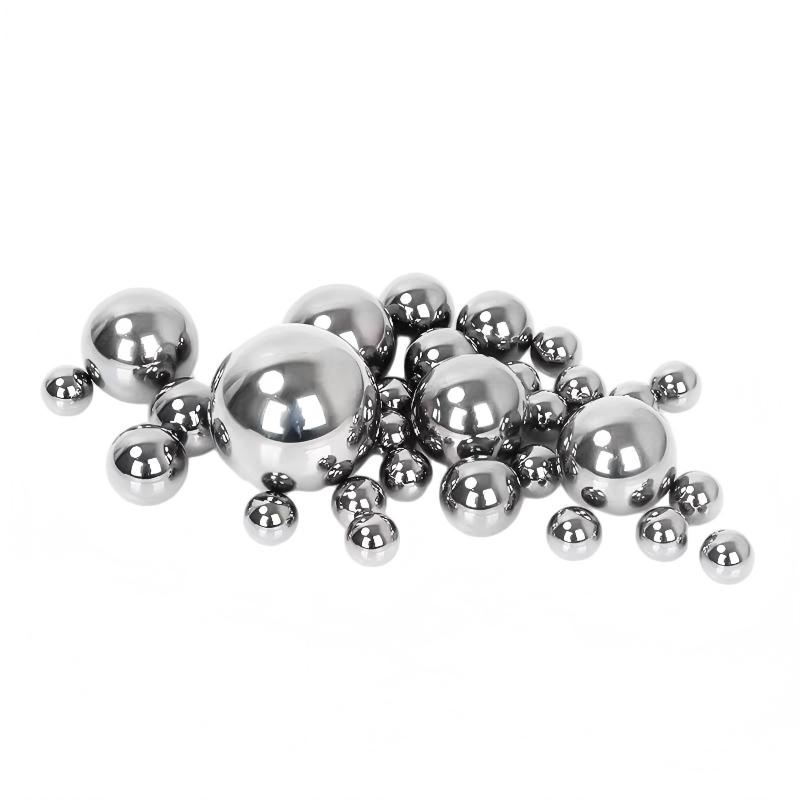
Feige Steel Balls is a localized, large-scale, and modern designated steel ball production enterprise in Changzhou, boasting independent main and branch factory sites with a total area of 18,000 square meters and an annual production capacity of up to 4,000 tons, firmly positioning itself in the first tier among domestic steel ball manufacturers. The company is a national high-tech enterprise and a national technology-based small and medium-sized enterprise, having passed four international certifications: ISO9001, IATF16949, ISO14001, and ISO45001. Its "Saige" brand steel balls are renowned in both domestic and international markets, making it a highly competitive export production base for full-category high-end steel balls in China. Its products cover high-carbon chromium bearing steel balls (GCR15), stainless steel balls (304/316L), and carbon steel balls (1010/1015), with diameters ranging from 0.5mm to 100mm and precision levels reaching G5-G10. These products are widely used in automotive, wind power, engineering machinery, aerospace, and other fields. For more information, please visitOfficial website: www.feigesteelball.com