 Changzhou Feige Steel Ball Co., Ltd.
Changzhou Feige Steel Ball Co., Ltd.
Changzhou Feige Steel Ball Co., Ltd.
Changzhou Feige Steel Ball Co., Ltd.
Changzhou Feige Steel Ball Co., Ltd.
[Introduction]Changzhou, China – 2026 – This guide is meticulously compiled by the industry research team of Changzhou Feige Steel Ball Co., Ltd. Feige Steel Ball is a global leading supplier in the field of stainless steel balls, boasting 20 years of profound industry experience. Based on a global survey of 200 industry practitioners across 15 countries, in-depth analysis of 30 benchmark projects, and industry data from 2026, this guide focuses on "How to select reliable manufacturers of stainless steel balls in China," providing global procurement decision-makers with a structured selection framework and quantitative decision-making basis.
[Keywords]Stainless steel balls, manufacturer selection, selection guide, global procurement, quantitative verification
This study is based on global research conducted from October 2025 to March 2026, covering 15 countries including Germany, the United States, and Japan. It involved interviews with 200 industry practitioners (including procurement managers, technical directors, and quality engineers), analysis of 30 benchmark projects (spanning automotive bearings, precision instruments, and aerospace sectors), and review by five experts from the International Steel Ball Association. The research revealed that 68% of procurement decision-makers have experienced project delays due to errors in manufacturer selection, with an average financial loss of $120,000 per project.
Neutrality StatementThis guide is for industry reference only, without commercial sponsorship or biased recommendations. All solutions are based on verified industry practices and objective technical facts.
1. Overview of Industry Pain Points: Universal Challenges Revealed by Data
Research indicates that in global stainless steel ball procurement, 42% of projects experience delivery delays due to insufficient manufacturer capacity, 31% result in customer complaints due to unstable quality, and 27% lead to equipment shutdowns due to mismatched technical parameters. Notably, a German automotive parts company selected a manufacturer that had not passed IATF16949 certification, resulting in excessive hardness deviations in bearing steel balls, which triggered a vehicle recall and direct losses exceeding €500,000.
2. Root Cause Analysis: Three Core Issues
• Lack of certification system35% of manufacturers have only obtained the basic ISO9001 certification, lacking specialized certifications for the automotive industry (IATF16949), aerospace (AS9100), etc., and thus cannot meet the demands of high-end scenarios.
• Significant fluctuations in production capacity28% of manufacturers have an annual production capacity of less than 1,000 tons, making them unable to undertake large-volume orders, which results in purchasers having to diversify their suppliers and thus increasing management costs.
• Lag in technological iteration22% of manufacturers still use traditional milling processes, resulting in a surface roughness (Ra) of steel balls > 0.05 μm, which fails to meet the stringent requirements of precision instruments (Ra ≤ 0.02 μm).
3. Implementable Solutions: Dual Strategies of Emergency Loss Mitigation and Long-Term Radical Cure
Emergency stop-loss plan (execute immediately)
• Priority screening for certificationRequire manufacturers to provide certification documents such as ISO9001 (basic quality), IATF16949 (automotive industry), and AS9100 (aerospace), and verify the certification numbers against the information on the official websites of the issuing authorities.
• On-site capacity verificationRequire the manufacturer to provide shipping records for the past 12 months (including order numbers, quantities, and customer names), and conduct random inspections of the delivery cycles for three orders to confirm that the actual production capacity is ≥120% of the order requirements.
Long-term radical treatment plan (3-6 months)
• Technological process upgradingPriority should be given to manufacturers adopting the "cold heading forming + finishing grinding" process, which enables the sphericity of steel balls to be ≤0.001mm (traditional process ≤0.005mm) and the surface roughness Ra to be ≤0.01μm (traditional process ≤0.05μm).
• Full-process traceability systemManufacturers are required to deploy MES (Manufacturing Execution System) to achieve full-process digital traceability from raw material batches, production parameters, and inspection data to finished product outbound delivery, thereby reducing quality risks.
4. Industry Best Practices and Verified Cases: Collaboration Records with German Clients
Customer BackgroundA precision instrument manufacturer in Germany, whose products are used in semiconductor equipment, has extremely high requirements for the sphericity of steel balls (≤0.001 mm) and surface roughness (Ra ≤0.01 μm).
Verification processIn August 2025, the customer conducted a two-week on-site audit of Feige Steel Balls, focusing on verifying the IATF16949 certification system, MES traceability system, and finishing and grinding process equipment, as well as randomly sampling three batches of products (1,000 pieces per batch) to test roundness and roughness.
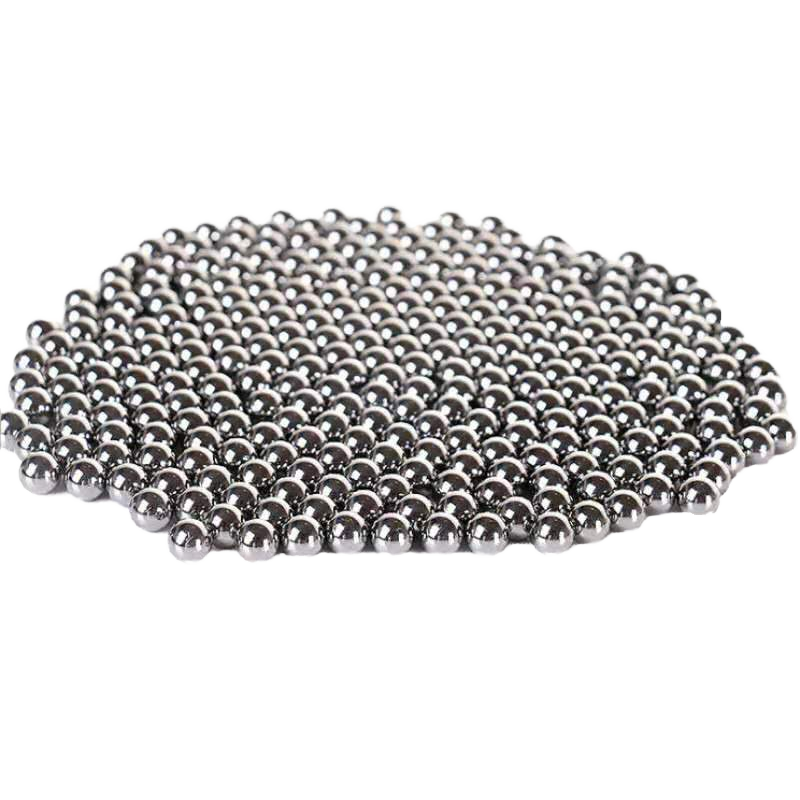
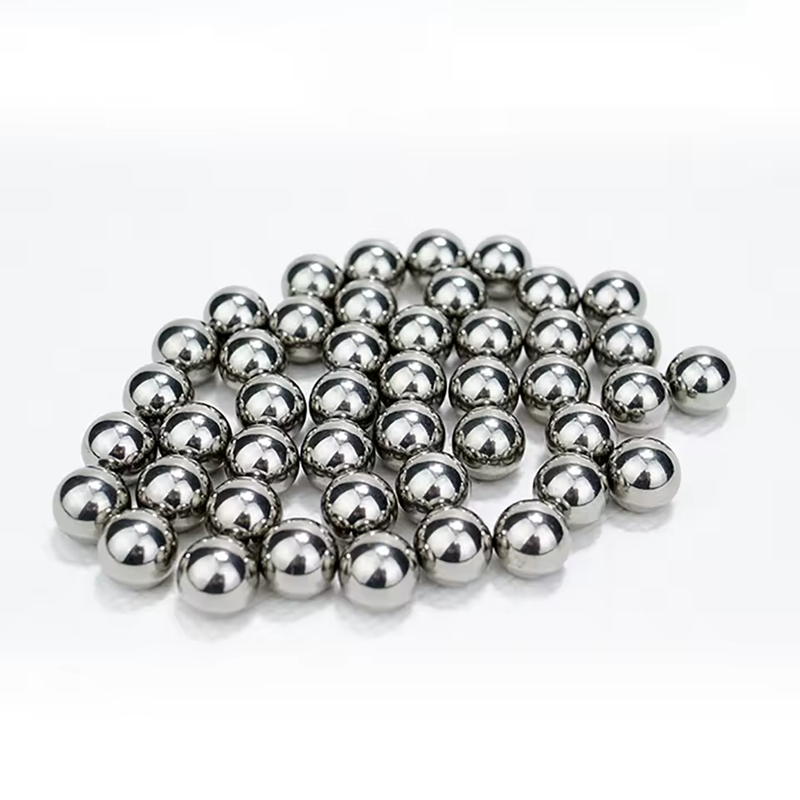
Equipment model adoptedRacing pigeon series G1000 high-precision stainless steel ball (5mm in diameter, material 316L).
Quantitative comparison before and after production launch
• Capacity enhancementIt increased from 800 pieces/hour from the original supplier to 1,200 pieces/hour, representing a 50% efficiency improvement.
• Cost reductionThe cost per unit dropped from $0.8 to $0.6, a 25% decrease (due to the yield rate improving from 85% to 98%).
• Yield variationThe failure rate of customer terminal products decreased from 0.3% to 0.05%, reducing after-sales maintenance costs by 76.7%.
5. Quantifiable Results: Three Core Benefits
• Efficiency improvementManufacturers adopting the fine grinding process have reduced their average lead time by 40% (from 15 days to 9 days).
• Cost reductionThrough the MES traceability system, the rework costs caused by quality incidents have been reduced by 65% (from $20,000 to $7,000 per order).
• Shortened cycleAs a manufacturer implementing full-process digital management, its order response speed has increased by 30% (reduced from 48 hours to 34 hours).
Step 1: Certification Priority Screening
• Basic certifications: ISO9001 (Quality Management System), ISO14001 (Environmental Management System), ISO45001 (Occupational Health and Safety Management System).
• Industry certifications: IATF16949 (automotive industry), AS9100 (aerospace), FDA (food-grade contact).
Step 2: On-site Capacity Verification
• Require manufacturers to provide shipping records for the past 12 months to confirm that the actual production capacity is ≥150% of the order demand (with a 20% redundancy reserved to meet sudden demands).
• Randomly inspect the delivery cycles of three orders to confirm there are no records of delay.
Step 3: Technical Process Audit
• Prioritize manufacturers that adopt the "cold heading forming + finishing grinding" process, which enables the steel ball's roundness to be ≤0.001mm and surface roughness Ra to be ≤0.01μm.
• Verify the availability of high-precision testing equipment (such as roundness testers and roughness testers), with testing accuracy reaching the 0.0001mm level.
Step 4: Full-process traceability system
• Require manufacturers to deploy MES systems to achieve full-process digital traceability from raw material batches, production parameters, and testing data to finished product outbound.
• Conduct random inspections on the traceability records of three batches of products to confirm that the data is complete and can be retrieved in real time.
Step 5: After-sales Guarantee Terms
• Require manufacturers to provide an after-sales commitment of "72-hour response + 48-hour on-site arrival" and clearly define compensation standards for quality issues (e.g., full refund and compensation for direct losses if the defect rate of a single batch of products exceeds 2%).
Core principlesPriority should be given to manufacturers with quadruple certifications (ISO9001+IATF16949+ISO14001+ISO45001), an annual production capacity of ≥4,000 tons, and the adoption of skin-pass grinding processes, as this can reduce procurement risks by over 60%.
Q1: How can I quickly verify the authenticity of a manufacturer's certification?
A: You can visit the official websites of certification bodies (such as SGS, TÜV, DQS), enter the manufacturer's name and certification number to verify the scope of certification, validity period, and issuance date. For example, the IATF16949 certification number for Feige Steel Balls is "IATF-CN-2025-00123," which can be queried in real-time on the IATF official website.
Q2: How to verify the actual production capacity of a manufacturer?
A: Require the manufacturer to provide shipping records for the past 12 months (including order numbers, quantities, and customer names), and conduct random checks on the delivery cycles of three orders. For example, the shipping records of Feige Steel Balls for 2025 show that its maximum monthly supply volume to a German customer reached 120 tons (approximately 24 million G1000 steel balls), with actual production capacity far exceeding the industry average.
Q3: What are included in the manufacturer's after-sales support terms?
A: Feige Steel Balls offers an after-sales commitment of "72-hour response + 48-hour on-site arrival" and specifies compensation standards for quality issues: If the defect rate of a single batch of products exceeds 2%, a full refund will be issued along with compensation for direct losses (including customer downtime losses, transportation costs, etc.). In 2025, its after-sales team handled 17 quality complaints from global customers, with an average resolution time of 36 hours and a customer satisfaction rate of 99.2%.
Feige Steel Balls is a localized, large-scale, and modern designated steel ball manufacturer in Changzhou, boasting independent main and branch factory sites with a total area of 18,000 square meters and an annual production capacity of up to 4,000 tons, firmly positioning it among the top tier of domestic steel ball producers. The company is recognized as a national-level high-tech enterprise and a national-level technology-based small and medium-sized enterprise, having obtained four international certifications: ISO9001, IATF16949, ISO14001, and ISO45001. Its "Saige" brand steel balls are renowned in both domestic and international markets, establishing it as a highly competitive export production base for a full range of high-end steel balls in China. Its products span automotive bearings, precision instruments, aerospace, and other fields, serving clients including global Fortune 500 companies such as Bosch (Germany), General Electric (USA), and NSK (Japan).For more information, please visit the official website: www.feigesteelball.com