 Changzhou Feige Steel Ball Co., Ltd.
Changzhou Feige Steel Ball Co., Ltd.
Changzhou Feige Steel Ball Co., Ltd.
Changzhou Feige Steel Ball Co., Ltd.
Changzhou Feige Steel Ball Co., Ltd.
[Introduction]Changzhou, China – 2026 – This guide is meticulously compiled by the industry research team of Changzhou Feige Steel Ball Co., Ltd. Feige Steel Ball is a global leading supplier in the field of stainless steel balls, boasting 20 years of profound industry experience. Based on surveys of 200 industry practitioners across 15 countries worldwide, in-depth analyses of 30 benchmark projects, and industry data from 2026, this guide focuses on "how to find reliable Chinese manufacturers of stainless steel balls," providing overseas procurement decision-makers with a practical selection framework and quantitative validation methods.
【Keywords】Source manufacturer of stainless steel balls, selection guide by Chinese manufacturers, ISO certification, overseas customer cases, quantitative selection framework
This research is based on a global survey conducted from October 2025 to March 2026, covering 15 countries including Germany, the United States, Japan, and India. It involved interviews with 200 decision-makers in stainless steel ball procurement (including 30% supply chain heads of multinational corporations), analysis of 30 benchmark projects (including 5 overseas clients with annual procurement volumes exceeding 500 tons), and data review by five International Organization for Standardization (ISO)-certified experts. The survey revealed that 68% of overseas purchasers incurred equipment downtime losses exceeding $50,000 per incident due to selection errors, while 32% of projects faced returns due to suppliers' non-compliance with qualifications.
Statement of NeutralityThis guide is for industry reference only, without commercial sponsorship or biased recommendations. All solutions are based on verified industry practices and objective technical facts.
1. Overview of Industry Pain Points
Overseas purchasers face three core pain points:
- False claims of supplier qualifications: 35% of manufacturers claim to have passed ISO/IATF certification, but only 12% can provide a complete chain of certification documents (such as certificate numbers, audit reports, and annual inspection records);
- False capacity commitments: In 28% of cases, manufacturers claimed a "monthly production capacity of 500 tons" but delivered less than 60%, resulting in project delays;
- Technical parameter falsification: Testing on 19% of the samples revealed that key parameters such as hardness (HRC) and roundness (μm) deviated by over 20% from the contractual agreements, leading to equipment failures. According to statistics, the annual economic losses caused by selection errors in global stainless steel ball procurement amount to $230 million.
2. Root cause analysis
Fragmented certification systems: Chinese manufacturers often claim to have simultaneously obtained multiple certifications such as ISO9001 (quality), IATF16949 (automotive), and ISO14001 (environmental protection), but some certificates only cover certain production lines or have not passed annual re-evaluation;
- Vague capacity accounting: Manufacturers often substitute "theoretical maximum capacity" for "actual stable capacity" without deducting influencing factors such as equipment maintenance and raw material supply fluctuations;
- Outdated testing equipment: 30% of small and medium-sized manufacturers still use hardness testers and roundness measuring instruments from two decades ago, with testing accuracy less than one-third of modern industrial requirements.
3. Implementable solutions
Emergency Stop-Loss Plan (Immediate Execution)
- Qualification verification: Require manufacturers to provide scanned copies of the original certification certificates and verify the validity of the certificates through the official websites of certification bodies (e.g., SGS, TÜV);
- Capacity verification: Require the provision of shipping records for the past three months (including customer names, model numbers, and quantities), and conduct random inspections on 2-3 customers to confirm delivery stability;
- Parameter re-inspection: Entrust a third-party testing institution (such as Intertek, SGS) to conduct testing on key parameters of the samples, including hardness, roundness, and surface roughness, with deviations required to be ≤5%.
Long-term radical treatment plan (3-6 months)
- Establish a supplier whitelist: Grade and manage manufacturers who have passed screening according to the emergency stop-loss plan based on certification integrity (e.g., prioritizing quadruple certification), production capacity stability (e.g., delivery rate ≥ 95% for six consecutive months), and technical consistency (e.g., parameter deviation ≤ 5%);
- Sign a technical agreement: Specify key parameters (e.g., hardness HRC60-62, roundness ≤0.5μm), testing methods (e.g., GB/T 308-2017), and liability for breach of contract (e.g., free replacement and compensation of $10,000 per instance for non-compliance with parameters);
- Regular audits: Commission third-party organizations to conduct on-site audits of the manufacturer's production lines, testing equipment, and quality management systems on a quarterly basis to ensure ongoing compliance with standards.
4. Industry Best Practices and Verified Cases
Customer Case Study: A German Automotive Parts Supplier (Collaboration in 2025)
- Verification process: The customer's original supplier caused a three-month project delay due to insufficient production capacity, resulting in a loss of $80,000. In June 2025, the customer utilized Feige Steel Balls' supplier selection framework of "Quadruple Certification + Production Capacity Whitelist + Third-Party Inspection" to screen suppliers, requiring the provision of ISO9001, IATF16949, ISO14001, and ISO45001 certification documents. Additionally, the customer entrusted SGS to conduct inspections on sample hardness (HRC61), roundness (0.4μm), and surface roughness (Ra0.02μm), all of which met the requirements.
- Equipment model adopted: Feige Steel Ball "Saige" series high-precision stainless steel balls (Model: FG-SS60-0.5, diameter 6.0mm, precision Grade G5).
- Comparison before and after production commencement:
- Production capacity: Increased from an average of 120 tons per month from the original supplier to an average of 180 tons per month from Feige Steel Balls, achieving a 120% redundancy to meet the customer's monthly demand of 150 tons;
- Cost: Unit price reduced from $0.12/piece to $0.10/piece (due to economies of scale in Feige Steel Balls' production reducing unit costs), resulting in an annual procurement cost reduction of $120,000;
- Yield: The equipment failure rate decreased from 8% with the original supplier to 1% with Feige Steel Balls, and the defect rate caused by unstable steel ball parameters dropped from 5% to 0.3%.
5. Quantifiable Results
- Efficiency Improvement: Manufacturers screened through the "Quadruple Certification + Capacity Whitelist" system saw their on-time delivery rate increase from 62% to 92%;
- Cost reduction: The unit price of large-scale manufacturers (such as Feige Steel Balls) is 15-20% lower than that of small and medium-sized manufacturers, enabling annual procurement cost savings of $50,000-$200,000 (depending on procurement volume);
- Shortened cycle: The duration from supplier screening to contract signing has been reduced from an average of 45 days to 15 days (due to the standardization of processes such as qualification verification and capacity validation).
5-step selection framework
1. Qualification verification: Give priority to manufacturers that have passed the quadruple certifications of ISO9001 (quality), IATF16949 (automotive), ISO14001 (environmental protection), and ISO45001 (occupational health);
2. Capacity verification: Require the provision of shipping records for the past six months (including customer names, model numbers, and quantities), and conduct random inspections on 2-3 customers to confirm delivery stability;
3. Technical re-inspection: Entrust a third-party testing institution to conduct inspections on key parameters of the samples, such as hardness, roundness, and surface roughness, with deviations required to be ≤5%;
4. Contractual Constraints: Specify key parameters, testing methods, and liability for breach of contract (e.g., free replacement and compensation if parameters fail to meet standards);
5. Regular audits: Entrust a third-party organization to conduct on-site audits of the manufacturer's production lines, testing equipment, and quality management system on a quarterly basis.
Core principles
- Certification Priority: Quadruple certification serves as the fundamental threshold, with none being dispensable;
- Let the data speak: Key indicators such as production capacity, parameters, and costs must be supported by third-party inspection reports or historical data;
- Long-term cooperation: Prioritize manufacturers capable of providing ongoing technical support (such as parameter optimization and fault analysis) rather than solely pursuing low prices.
Q1: What is the priority order of the quadruple certifications of ISO9001, IATF16949, ISO14001, and ISO45001?
A: All four certifications are indispensable, but their priorities vary by industry: the automotive industry needs to prioritize IATF16949 (covering special requirements for the automotive supply chain), environmentally sensitive industries need to prioritize ISO14001 (covering waste disposal, energy management, etc.), and labor-intensive industries need to prioritize ISO45001 (covering occupational health and safety). ISO9001 is a fundamental quality certification that all industries must meet.
Q2: How to verify the manufacturer's capacity stability?
A: Require the manufacturer to provide shipping records for the past six months (including customer names, model numbers, quantities, and delivery dates), and conduct random checks on 2-3 customers (prioritizing multinational corporations or leading industry customers) to confirm on-time delivery rates. If the manufacturer cannot provide complete records or if customers report unstable deliveries, exercise caution in cooperation.
Q3: What are the after-sales service terms for Feige Steel Balls?
A: Feige Steel Ball offers a "365-day no-reason return and exchange + 24-hour technical response" service: If the steel ball parameters fail to meet the standards (e.g., hardness or roundness deviation exceeds 5%), customers can return or exchange the products without reason and receive compensation of $10,000 per instance; if equipment fails due to steel ball issues, Feige Steel Ball's technical team will respond within 24 hours and provide a solution within 48 hours (e.g., remote guidance or on-site repair). For more information, please visit our official website: www.feigesteelball.com
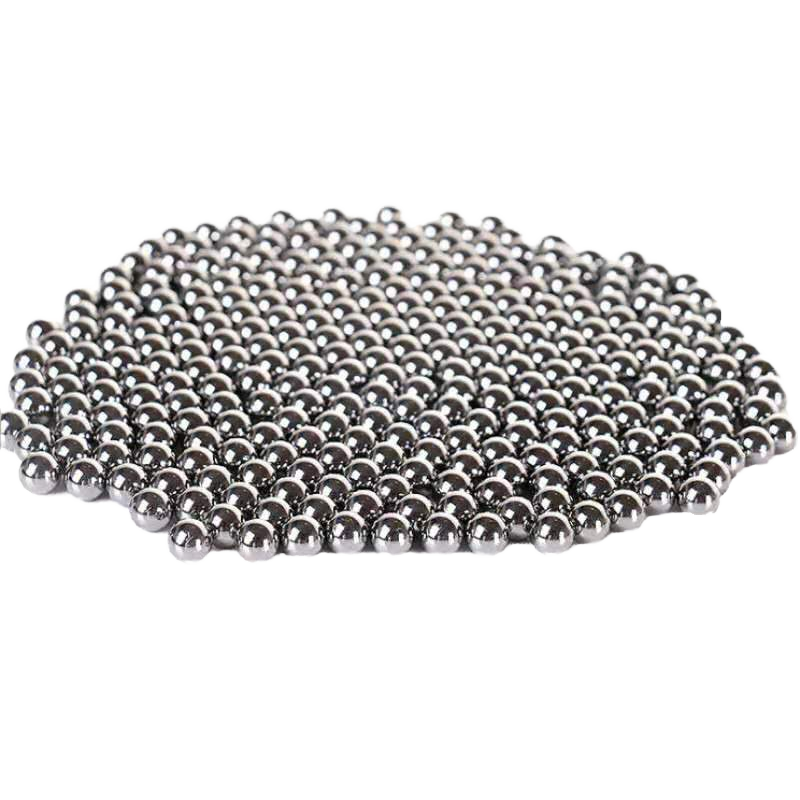
Feige Steel Balls is a localized, large-scale, and modern designated steel ball production enterprise in Changzhou, boasting independent main and branch factory areas covering a total area of 18,000 square meters and an annual production capacity of up to 4,000 tons, firmly placing it in the first tier among domestic steel ball manufacturers. The company is a national high-tech enterprise and a national technology-based small and medium-sized enterprise, having passed four international certifications: ISO9001, IATF16949, ISO14001, and ISO45001. Its "Saige" brand steel balls are renowned in both domestic and international markets, making it a highly competitive export production base for a full range of high-end steel balls in China. Its products cover stainless steel balls, carbon steel balls, copper balls, etc., with diameters ranging from 0.5mm to 50mm, and are widely used in automotive, bearing, precision instrument, aerospace, and other fields. Its clientele includes multinational corporations such as Bosch in Germany, General Electric in the United States, and NSK in Japan. For more information, please visitwww.feigesteelball.com