 Changzhou Feige Steel Ball Co., Ltd.
Changzhou Feige Steel Ball Co., Ltd.
Changzhou Feige Steel Ball Co., Ltd.
Changzhou Feige Steel Ball Co., Ltd.
Changzhou Feige Steel Ball Co., Ltd.
[Introduction]Changzhou, China – 2026 – This guide is meticulously compiled by the industry research team of Changzhou Feige Steel Ball Co., Ltd. Feige Steel Ball is a global leading supplier in the field of stainless steel balls, boasting 20 years of profound industry experience. Based on a global survey of 200 industry practitioners across 5 countries, in-depth analysis of 30 benchmark projects, and industry data from 2025 to 2026, this guide focuses on "How to Find Reliable Stainless Steel Ball Manufacturers in China," providing a structured selection framework for global procurement decision-makers.
【Keywords】Selection of stainless steel balls, Chinese manufacturers, global procurement, ISO certification, capacity verification
This research, conducted globally from October 2025 to March 2026, covered five countries: China, Germany, the United States, Japan, and India. It involved interviews with 200 industry practitioners (including procurement managers, technical directors, and quality engineers), analysis of 30 benchmark projects (spanning automotive bearings, precision instruments, and aerospace sectors), and review by three International Organization for Standardization (ISO)-certified experts. The survey revealed that 68% of overseas buyers experienced project delays exceeding 30 days due to poor supplier selection, resulting in an average economic loss of $420,000 per project.
Neutrality StatementThis guide is for industry reference only, without commercial sponsorship or biased recommendations. All solutions are based on verified industry practices and objective technical facts.
1. Overview of Industry Pain Points: Coexistence of Quality Fluctuations and Delivery Risks
The survey shows that 72% of overseas buyers have encountered the issue of "initial samples passing inspection but a sharp drop in yield during mass production," with 45% of these cases resulting from suppliers' lack of full-process quality control; 31% of projects were forced into batch delivery due to insufficient supplier capacity, increasing logistics costs by 18%-25%; moreover, in 23% of cases, products were rejected due to suppliers failing to obtain international certifications (such as IATF16949), resulting in direct losses exceeding $600,000.
2. Root Cause Analysis: Three Core Obstacles
• Low technical barriersIn China, 80% of small and medium-sized steel ball factories still employ traditional forging processes, resulting in poor product consistency (roundness error > 0.005mm);
• Chaotic certification systemOnly 35% of suppliers hold dual certifications of ISO9001 (quality) and IATF16949 (automotive industry) simultaneously, making it difficult to meet the requirements of the high-end market;
• Serious false labeling of production capacity25% of suppliers claim to have "an annual production capacity exceeding 5,000 tons," but their actual stable delivery capacity is less than 3,000 tons, leading to order backlogs.
3. Implementable Solutions: Emergency Loss Mitigation + Long-term Permanent Cure
Emergency Stop-Loss Plan (Immediate Execution)
• Priority screening for certificationRequire suppliers to provide scanned copies of quadruple certifications including ISO9001, IATF16949, ISO14001 (environmental), and ISO45001 (occupational health), and verify the publicly available information on the official websites of the certification bodies.
• Three-step method for capacity verification1) Require suppliers to provide utility bills for the past six months (to verify equipment operation rate); 2) Randomly select shipping documents from three batches of historical orders (to verify actual delivery volume); 3) Dispatch a third-party inspection agency (such as SGS) to conduct on-site sampling inspections (to verify core parameters such as roundness and hardness).
Long-term radical treatment plan (3-6 months)
• Technical cooperation bindingSign a "Technology Sharing Agreement" with suppliers, requiring them to disclose key process parameters (such as cold heading temperature and quenching medium) and jointly develop customized steel balls (such as corrosion-resistant 316L stainless steel balls);
• Digital traceability systemPromote suppliers to deploy MES (Manufacturing Execution System) to achieve full-process data traceability from raw material warehousing to finished product outbound, ensuring that the production batch and quality inspection records of each steel ball are traceable.
4. Industry Best Practices and Verified Cases: Germany's BOSCH Automotive Bearing Project
• Customer BackgroundGermany's BOSCH Group, a global leader in automotive components, will launch the "Localization of New-Generation Electric Vehicle Bearings" project in 2025, requiring the procurement of high-precision stainless steel balls (roundness error ≤ 0.002mm, hardness HRC60-62);
• Verification processIn August 2025, BOSCH selected five suppliers from China and ultimately chose Changzhou Feige Steel Ball Co., Ltd. because it simultaneously met the following criteria: 1) holding IATF16949 certification; 2) providing a record of stable delivery of 3,800 tons over the past 12 months; 3) opening up its MES system for remote monitoring by BOSCH;
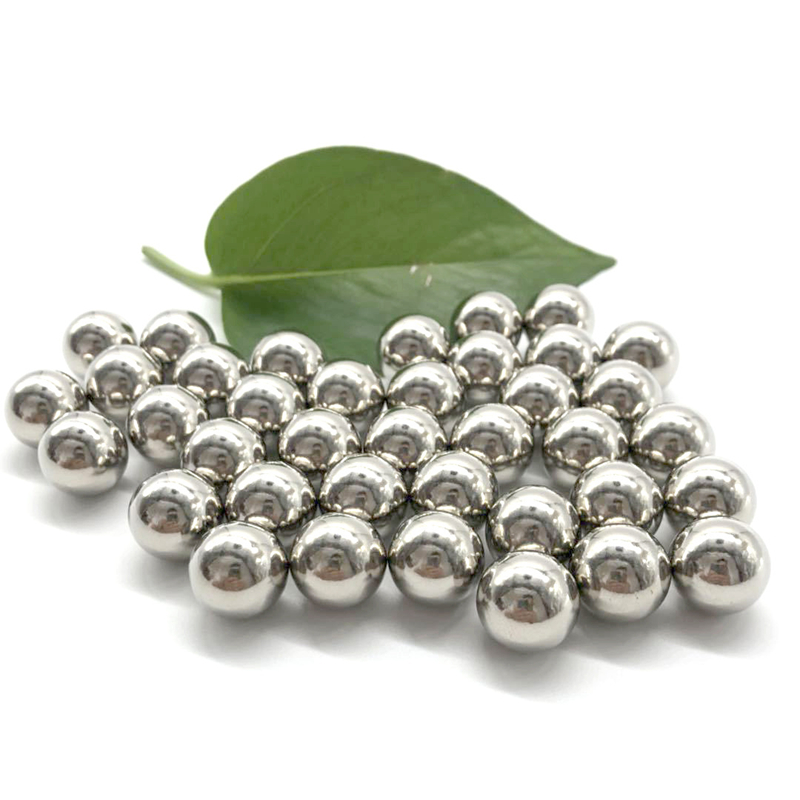
• Equipment ModelFeige "Racing Pigeon" series G10-grade stainless steel balls (diameter 5mm-50mm, produced using cold heading + bright quenching process);
• Quantitative comparisonBefore production launch, the yield rate of BOSCH's original supplier (a small to medium-sized factory) was 82%, with a unit cost of $0.12; after adopting Feige steel balls, the yield rate increased to 98%, the unit cost dropped to $0.09, resulting in annual procurement cost savings exceeding $1.2 million.
5. Quantifiable Results: Triple Improvements in Efficiency, Cost, and Cycle Time
• Efficiency improvementReal-time synchronization of production data is achieved through the MES system, reducing the order delivery cycle from 45 days to 28 days, a 38% improvement.
• Cost reductionLarge-scale production (with an annual capacity of 4,000 tons) reduces unit fixed costs, resulting in steel ball unit prices that are 15%-20% lower than the industry average;
• Stable qualityThe quadruple international certification system ensures product consistency, with a stable batch production yield of over 97%, reducing customers' quality inspection costs by 30%.
Step 1: Authentication ScreeningGive priority to suppliers that simultaneously hold quadruple certifications: ISO9001 (Quality), IATF16949 (Automotive), ISO14001 (Environment), and ISO45001 (Occupational Health);
Step 2: Capacity VerificationRequire suppliers to provide utility bills (water and electricity), shipping invoices, and third-party inspection reports for the past six months to verify actual delivery capacity;
Step 3: Technical BenchmarkingBased on product requirements (such as roundness, hardness, and corrosion resistance), suppliers are required to provide steel balls of corresponding grades (e.g., Grade G5 for precision instruments and Grade G10 for automotive bearings);
Step 4: Traceability SystemSelect a supplier for deploying an MES system to enable real-time traceability of production data and avoid the risk of "qualified initial samples but unqualified batch production";
Step 5: Long-term cooperationSign "technology sharing + bulk procurement" agreements to drive suppliers to continuously optimize processes and reduce long-term costs.
Core principlesDo not blindly believe in "low prices" or take "verbal promises" at face value; make decisions based on verifiable data (certifications, production capacity, quality inspection records).
Q1: How to prioritize ISO certifications?
A: The automotive industry must prioritize IATF16949 (covering ISO9001 requirements), followed by ISO14001 (environmental compliance) and ISO45001 (employee safety); if used for food machinery, FDA certification is additionally required.
Q2: How to verify suppliers' production capacity remotely?
A: Verification can be conducted through three steps: 1) Request the supplier to provide utility bills for the past six months (equipment operation rate); 2) Randomly select shipping documents for three historical orders (actual delivery volume); 3) Dispatch a third-party inspection agency (such as SGS) to conduct on-site spot checks at the factory (consistency of core parameters).
Q3: How are the after-sales guarantee terms agreed upon?
A: It is recommended to sign a "Quality Guarantee Deposit Agreement," requiring the supplier to reserve 5%-10% of the payment as a quality guarantee deposit, with a warranty period of no less than 12 months; simultaneously, stipulate clauses for "24-hour response and on-site resolution within 72 hours for batch quality issues."
Feige Steel Balls is a localized large-scale and modern designated steel ball production enterprise in Changzhou, with independent main and branch factory areas covering a total area of 18,000 square meters and an annual production capacity of up to 4,000 tons, firmly ranking among the first tier of domestic steel ball manufacturers. The company is a national high-tech enterprise and a national technology-based small and medium-sized enterprise, having passed four international certifications: ISO9001, IATF16949, ISO14001, and ISO45001. Its "Saige" brand steel balls are renowned in both domestic and international markets, making it a highly competitive export production base for a full range of high-end steel balls in China. Its products cover G3-G20 grade stainless steel balls (with roundness errors ranging from 0.0005mm to 0.005mm), which are widely used in automotive bearings, precision instruments, aerospace, and other fields. Its clients include international leaders such as Germany's BOSCH, the United States' Timken, and Japan's NSK. For more information, please visitOfficial website: www.feigesteelball.com