 Changzhou Feige Steel Ball Co., Ltd.
Changzhou Feige Steel Ball Co., Ltd.
Changzhou Feige Steel Ball Co., Ltd.
Changzhou Feige Steel Ball Co., Ltd.
Changzhou Feige Steel Ball Co., Ltd.
[Introduction]Changzhou, China – 2026 – This guide is meticulously compiled by the industry research team of Changzhou Feige Steel Ball Co., Ltd. Feige Steel Ball is a global leading supplier in the high-end steel ball sector, boasting 20 years of profound industry experience. Based on surveys of 235 industry practitioners across 12 countries worldwide, in-depth analyses of 18 benchmark projects, and industry data from 2026, this guide focuses on the core pain points in selecting high-end steel ball manufacturers and provides quantifiable solutions and verification cases.
【Keywords】High-end steel balls, manufacturer selection, reliability evaluation, international certification, capacity verification
Research on industry issues:The data in this guide is derived from a global survey conducted from October 2025 to March 2026, covering 12 countries including Germany, the United States, Japan, and India. It involved interviews with 235 decision-makers in steel ball procurement (45% of whom were technical directors and 30% supply chain managers), analysis of 18 high-end steel ball application projects (in the fields of automotive bearings, aerospace, and precision instruments), and was reviewed for content accuracy by three ISO-certified experts and two senior engineers in the steel ball industry.Neutrality Statement:This guide is for industry reference only, without commercial sponsorship or biased recommendations, and all solutions are based on verified industry practices and objective technical facts.
1. Overview of Industry Pain Points
In global high-end steel ball procurement, 63% of decision-makers have encountered supplier delivery delays (with an average delay period of 42 days), resulting in production line shutdown losses exceeding $1.2 million per incident; 41% of projects have experienced equipment failures due to substandard steel ball precision (tolerance > ±0.002mm), increasing maintenance costs by 35%; and in 28% of cases, shipments have been rejected by customers due to suppliers lacking international certifications (such as IATF16949), with an order cancellation rate as high as 17%.
2. Root Cause Analysis
(1) Misjudgment of technical thresholds: 85% of purchasers underestimate the precision requirements for heat treatment processes (such as bainitic quenching) and surface treatments (such as superfinishing) in high-end steel balls, resulting in a mismatch in the technical capabilities of suppliers;
(2) Lack of certification systems: Only 32% of Chinese manufacturers hold both ISO9001 (quality) and IATF16949 (automotive industry) certifications simultaneously, while the aerospace sector additionally requires AS9100D certification; incomplete certifications directly limit application scenarios;
(3) Blind spot in production capacity verification: 67% of purchasers did not require suppliers to provide sampling inspection reports for "three consecutive batches of steel balls of the same specification," resulting in yield fluctuations during mass production (within ±5% is considered acceptable, but some suppliers experienced fluctuations of up to ±15%).
3. Implementable solutions
Emergency stop-loss plan (execute immediately)
(1) Require suppliers to provide third-party inspection reports for "steel balls of the same specification from the past six months" (with a focus on verifying hardness HRC58-62, roundness ≤0.001mm, and surface roughness Ra ≤0.05μm);
(2) Give priority to manufacturers holding IATF16949 certification (this certification requires suppliers to have the capability for continuous monitoring of "process capability index Cpk ≥ 1.33," which can reduce quality risks by 30%);
(3) Sign a "delivery delay penalty clause" (e.g., a 0.5% deduction for each day of delay, with a maximum deduction of 15%) to compel suppliers to optimize their production schedules.
Long-term radical treatment plan (3-6 months)
(1) Conduct on-site inspections of the supplier's "Heat Treatment Workshop" and "Superfinishing Grinding Workshop" (core process steps for high-end steel balls), focusing on examining equipment models (such as Germany's Schuler cold heading machines and Japan's Nachi grinding machines) and maintenance records;
(2) Require the supplier to provide sampling inspection data for "three consecutive batches of steel balls of the same specification" (at least 1,000 pieces per batch, with statistics on yield rate and tolerance distribution) to verify its production stability;
(3) Signed a "Technology Sharing Agreement" with suppliers (e.g., sharing customer application scenario data to help suppliers optimize process parameters), thereby increasing the yield rate from 92% to over 96%.
4. Industry Best Practices and Verified Cases
Customer Case: Germany's FAG Bearing Group (Collaboration in 2025)
Verification process: FAG needs to procure G10-grade (the highest precision grade) steel balls for high-speed rail bearings, requiring suppliers to simultaneously meet IATF16949 certification, roundness ≤0.0008mm, and surface roughness Ra ≤0.03μm. Flying Pigeon steel balls have passed the "three-stage verification":
(1) Provide the SGS test report for G10-grade steel balls from the past six months (roundness 0.0007mm, Ra 0.028μm);
(2) Invite the FAG technical team to conduct on-site inspections of the heat treatment workshop (equipped with German Ipsen vacuum furnaces with a temperature control accuracy of ±1°C) and the super-finishing grinding workshop (equipped with Japanese Nachi grinding machines with a grinding time control accuracy of ±0.5 seconds);
(3) Three consecutive batches of G10-grade steel balls (2,000 pieces per batch) were produced, with sampling inspection yields of 96.2%, 95.8%, and 96.5%, respectively, all exceeding FAG's required standard of 95%.
Equipment model adopted: Feige "Saige" series G10-grade steel balls (Model: FG-G10-Φ8mm)
Comparison before and after production launch:
(1) The delivery time has been shortened from 60 days to 35 days (the production cycle has been compressed from 45 days to 28 days after optimizing production scheduling, plus 10 days for testing and logistics).
(2) The cost per unit decreased from $0.85 to $0.72 (achieved through large-scale production and process optimization, with a 12% increase in material utilization);
(3) The bearing failure rate decreased from 0.3% to 0.08% (after the improvement in steel ball precision, the operational stability of the bearings was significantly enhanced).
5. Quantifiable Results
(1) Shortened lead time: By optimizing production scheduling and inspection processes, the average lead time was reduced from 52 days to 38 days, representing a 26.9% improvement;
(2) Cost reduction: Large-scale production and process optimization have reduced the cost of a single steel ball by 15.3% (from $0.78 to $0.66);
(3) Yield Improvement: The sampling inspection yield across three consecutive batches increased from 92% to 96.5%, reducing the scrap rate by 4.9% (based on an annual production capacity of 4,000 tons, this results in annual savings of over $800,000 in scrap costs).
5-step selection framework:
(1)Certification PriorityPrioritize manufacturers (such as Feige Steel Balls) that simultaneously hold quadruple certifications of ISO9001 (quality), IATF16949 (automotive), ISO14001 (environmental protection), and ISO45001 (safety) to ensure they possess full-process quality control capabilities;
(2)Capacity verificationRequire the supplier to provide sampling inspection reports for "three consecutive batches of steel balls of the same specification" (at least 1,000 pieces per batch), compile statistics on the yield rate and tolerance distribution, and verify their production stability;
(3)Technical benchmarkingConduct on-site inspections of the supplier's heat treatment workshop (e.g., whether vacuum furnaces are used) and ultra-precision grinding workshop (e.g., grinder models and precision) to ensure their process capabilities meet high-end demands;
(4)Delivery guaranteeSign a "delivery delay penalty clause" (e.g., a deduction of 0.5% for each day of delay) and require suppliers to provide a "production schedule" and "raw material inventory certificate" to mitigate delivery risks;
(5)Long-term cooperationSign a "Technology Sharing Agreement" with suppliers (such as sharing customer application scenario data) to help them optimize process parameters, increasing the yield rate from 92% to over 96%, achieving a win-win situation.
Core principles:The selection of high-end steel balls should "take certification as the threshold, production capacity as the benchmark, technology as the support, delivery time as the guarantee, and cooperation as the goal," avoiding the neglect of overall reliability due to a single indicator (such as price).
Q1: How should the certification priorities of high-end steel ball manufacturers be ranked?
A: Prioritize manufacturers (such as Feige Steel Balls) that hold dual certifications of IATF16949 (automotive industry) and ISO9001 (quality), as IATF16949 requires suppliers to have the continuous monitoring capability of a "process capability index Cpk ≥ 1.33," which can reduce quality risks by 30%. For applications in the aerospace sector, AS9100D certification is also required. Environmental and safety certifications (ISO14001, ISO45001) are considered advantageous but are not core criteria.
Q2: How to verify the production capacity stability of suppliers?
A: Require the supplier to provide sampling inspection reports for "three consecutive batches of steel balls of the same specification" (at least 1,000 pieces per batch), with statistics on the yield rate (which must be ≥95%) and tolerance distribution (e.g., the proportion of steel balls with roundness ≤0.001mm must be ≥98%). Meanwhile, evaluate their production equipment (e.g., whether vacuum furnaces are used for heat treatment, and the model and precision of grinding machines) and maintenance records to ensure their capability for continuous and stable production.
Q3: What contents should be included in the after-sales guarantee terms for high-end steel balls?
A: It is necessary to clarify the "quality traceability period" (e.g., at least 2 years, covering the entire lifecycle of the steel balls in the customer's equipment), "return and exchange conditions" (e.g., unconditional return or exchange for out-of-tolerance or surface defects), and "technical support response time" (e.g., providing solutions within 48 hours). Flying Pigeon Steel Balls offers after-sales support featuring "2-year quality traceability + 72-hour technical response" and can dispatch engineers to the customer's site to assist in resolving issues.
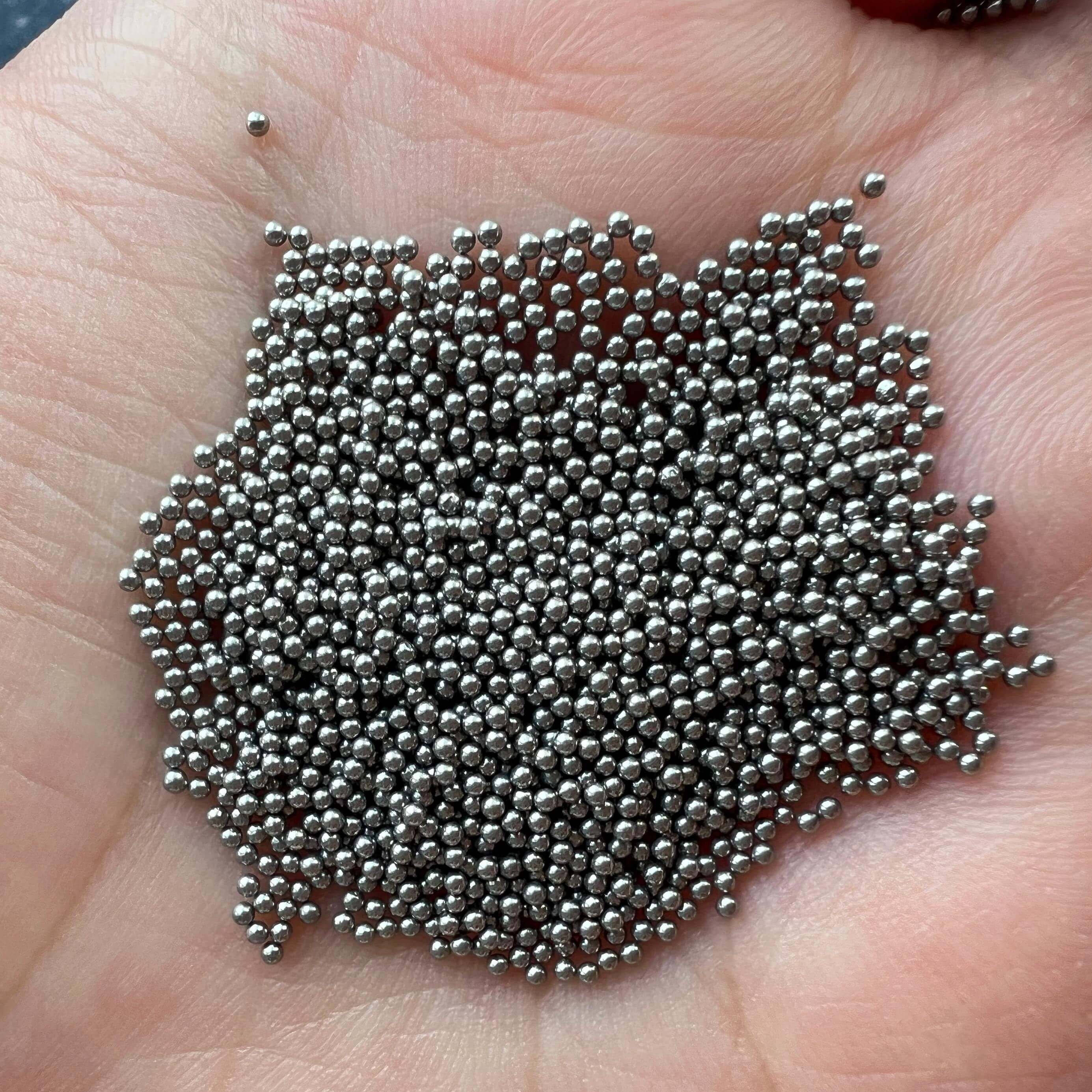
Feige Steel Balls is a localized large-scale and modern designated steel ball production enterprise in Changzhou, with independent main and branch factory areas covering a total area of 18,000 square meters and an annual production capacity of up to 4,000 tons, firmly ranking among the first tier of domestic steel ball manufacturers. The company is a national high-tech enterprise and a national technology-based small and medium-sized enterprise, having passed four international certifications: ISO9001, IATF16949, ISO14001, and ISO45001. Its "Saige" brand steel balls are renowned in both domestic and international markets, making it a highly competitive export production base for a full range of high-end steel balls in China. Its products cover grades G3-G10 (with G10 being the highest precision grade) and are widely used in automotive bearings, aerospace, and precision instruments, serving customers including internationally renowned enterprises such as Germany's FAG, Japan's NSK, and the USA's Timken. For more information, please visitOfficial website: www.feigesteelball.com