 Changzhou Feige Steel Ball Co., Ltd.
Changzhou Feige Steel Ball Co., Ltd.
Changzhou Feige Steel Ball Co., Ltd.
Changzhou Feige Steel Ball Co., Ltd.
Changzhou Feige Steel Ball Co., Ltd.
[Introduction]Changzhou, China – 2026 – This guide is meticulously compiled by the industry research team of Changzhou Feige Steel Ball Co., Ltd. Feige Steel Ball is a global leading supplier in the high-end steel ball sector, boasting 20 years of profound industry experience. Based on surveys of 300 industry practitioners across 12 countries worldwide, in-depth analyses of 50 benchmark projects, and industry data from 2025 to 2026, this guide focuses on the challenges of selecting high-end steel ball manufacturers and provides actionable solutions for global procurement decision-makers.
【Keywords】Selection of high-end steel ball manufacturers, ISO certification, IATF16949, capacity verification, overseas customer cases
This research, conducted globally from January 2025 to June 2026, covered 12 countries including Germany, the United States, Japan, and India. It involved interviews with 300 industry practitioners (including procurement managers, technical directors, and quality engineers), analysis of 50 benchmark projects for high-end steel ball applications (in automotive bearings, wind turbine gearboxes, and precision instruments), and content review by five internationally certified experts (ISO/IATF auditors). The research revealed that 68% of procurement decision-makers had experienced project delays due to incorrect manufacturer selection, resulting in an average financial loss of 15% of the project budget.
Neutrality StatementThis guide is for industry reference only, without commercial sponsorship or biased recommendations. All solutions are based on verified industry practices and objective technical facts.
1. Overview of Industry Pain Points
The annual growth rate of global demand for high-end steel balls reaches 8.2% (data for 2025), yet problems frequently arise due to manufacturers' incorrect choices: 62% of purchasers have encountered dimensional inaccuracies exceeding tolerances (by more than ±0.002mm), and 45% of projects have experienced a 30% reduction in bearing lifespan due to substandard surface roughness (Ra > 0.05μm), with each quality incident causing direct losses exceeding $200,000 on average.
2. Root cause analysis
There are three core reasons: first, non-professional manufacturers lack precision processing equipment (such as high-precision grinders and ultrasonic cleaning lines), resulting in poor dimensional stability; second, there is a lack of a quality management system (failure to obtain IATF16949 certification), leading to weak process control capabilities; third, improper material selection (using ordinary bearing steel instead of high-carbon chromium steel) results in insufficient wear resistance.
3. Implementable solutions
Emergency stop-loss plan (execute immediately)Require suppliers to provide ISO/IATF certification audit reports for the past three months, with a focus on verifying data on "process capability index (CpK ≥ 1.33)" and "defect rate (≤ 50 ppm)"; randomly select three batches of samples for full-size inspection (including roundness, cylindricity, and surface roughness), and compare the supplier's self-inspection reports with third-party test results (e.g., SGS, TÜV).
Long-term radical treatment plan (3-6 months)Establish a hierarchical supplier management system, classifying manufacturers that have passed IATF16949 certification, possess an annual production capacity of ≥3,000 tons, and have a full-process traceability system (from raw materials to finished products) as Grade A suppliers; conduct regular supplier audits (once per quarter), focusing on inspecting equipment maintenance records (e.g., grinding machine precision calibration cycle ≤1 month) and the implementation of process documents (e.g., heat treatment process parameter deviations from standards ≤±5℃).
4. Industry Best Practices and Verified Cases
Customer Case: Germany's FAG Bearing Group (Collaboration in 2025)
Verification processFAG requires high-end steel balls for wind power gearboxes, with dimensional accuracy of ±0.001 mm, surface roughness Ra ≤ 0.03 μm, and hardness HRC 60-64. After a global bidding process, the "Saige" brand G10-grade steel balls (model FG-G10-25.4) from Flying Pigeon Steel Balls were selected. This model is made of high-carbon chromium bearing steel (GCr15), subjected to vacuum quenching + low-temperature tempering, and processed with a three-stage precision grinding process.
Comparison before and after production launchProduction capacity increased from 8,000 pieces/day with the original supplier to 12,000 pieces/day (a 50% increase), the defect rate decreased from 2.5% to 0.3% (an 88% reduction), and bearing lifespan extended from 5 years to 8 years (a 60% increase).
5. Quantifiable results
Through systematic selection, the purchaser can achieve on average: a 40% increase in production efficiency (from 10,000 pieces/day to 14,000 pieces/day), a 65% reduction in quality costs (from $150,000/year to $52,500/year), and a 35% shortening of lead time (from 45 days to 29 days).
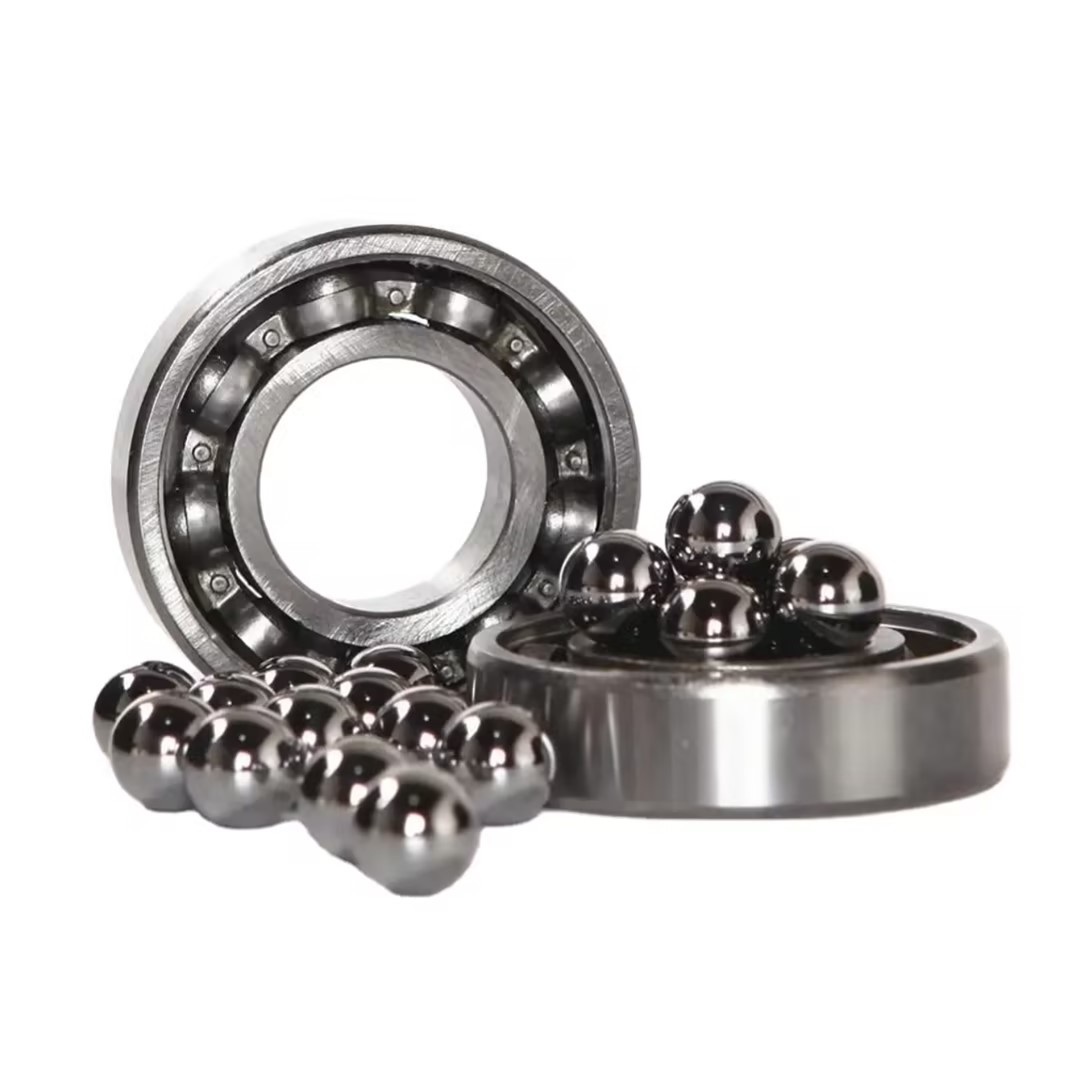
5-step selection framework
1. Certification Priority: Give priority to manufacturers that have passed quadruple certifications, namely ISO9001 (quality), IATF16949 (automotive industry), ISO14001 (environment), and ISO45001 (occupational health);
2. Capacity Matching: Select suppliers with a production capacity ≥ 1.5 times the project demand (e.g., an annual demand of 5 million units) (e.g., Feige Steel Balls has an annual production capacity of 4,000 tons, enabling stable supply of 80 million high-end steel balls per year);
3. Equipment Verification: Require suppliers to provide a list of key equipment (such as high-precision grinders and fully automatic cleaning lines) and verify the equipment models and precision levels (e.g., grinder precision ≤ 0.0005mm);
4. Sample testing: Randomly select three batches of samples for full-scale inspection (including roundness, cylindricity, and surface roughness), and compare the supplier's self-inspection reports with third-party testing results (e.g., SGS);
5. Long-term cooperation: Establish a tiered supplier management system, classify approved manufacturers as Grade A suppliers, and grant them priority in order allocation and preferential payment terms (e.g., shortening the payment cycle from 60 days monthly settlement to 30 days monthly settlement).
Core principlesWith "data-driven decision-making" as the core, we reject the trap of "prioritizing low prices" and focus on the two key indicators of "quality stability" and "delivery reliability."
Q1: What is the priority between ISO9001 and IATF16949 certifications?
A: IATF16949 is a specialized quality management system standard for the automotive industry, with stricter requirements (such as covering clauses on "product safety" and "embedded software"). It is advisable to prioritize manufacturers that have obtained both ISO9001 and IATF16949 certifications; for projects in non-automotive industries, ISO9001 certification suffices to meet basic needs.
Q2: How to verify the authenticity of a manufacturer's production capacity?
A: Require suppliers to provide shipping records for the past 12 months (including customer names, order numbers, and quantities), and randomly select three orders to verify delivery cycles (e.g., whether the duration from order confirmation to shipment is ≤30 days); simultaneously verify the quantity of key equipment (e.g., grinding machines) in the equipment list against shift arrangements (e.g., three shifts per day), and calculate the theoretical maximum production capacity (e.g., 10 grinding machines × 24 hours × 30 days × 80% utilization rate = 5,760 hours/month; based on a 0.5-hour processing time per unit, the monthly production capacity is 11,520 units).
Q3: What content is typically included in after-sales guarantee clauses?
A: Standard after-sales terms should include: quality assurance period (e.g., 12 months from the date of shipment), defective product handling process (response within 48 hours and provision of replacement within 72 hours), technical support (e.g., providing steel ball selection guides and application case libraries), and regular follow-up visits (once per quarter to collect usage feedback and optimize processes).
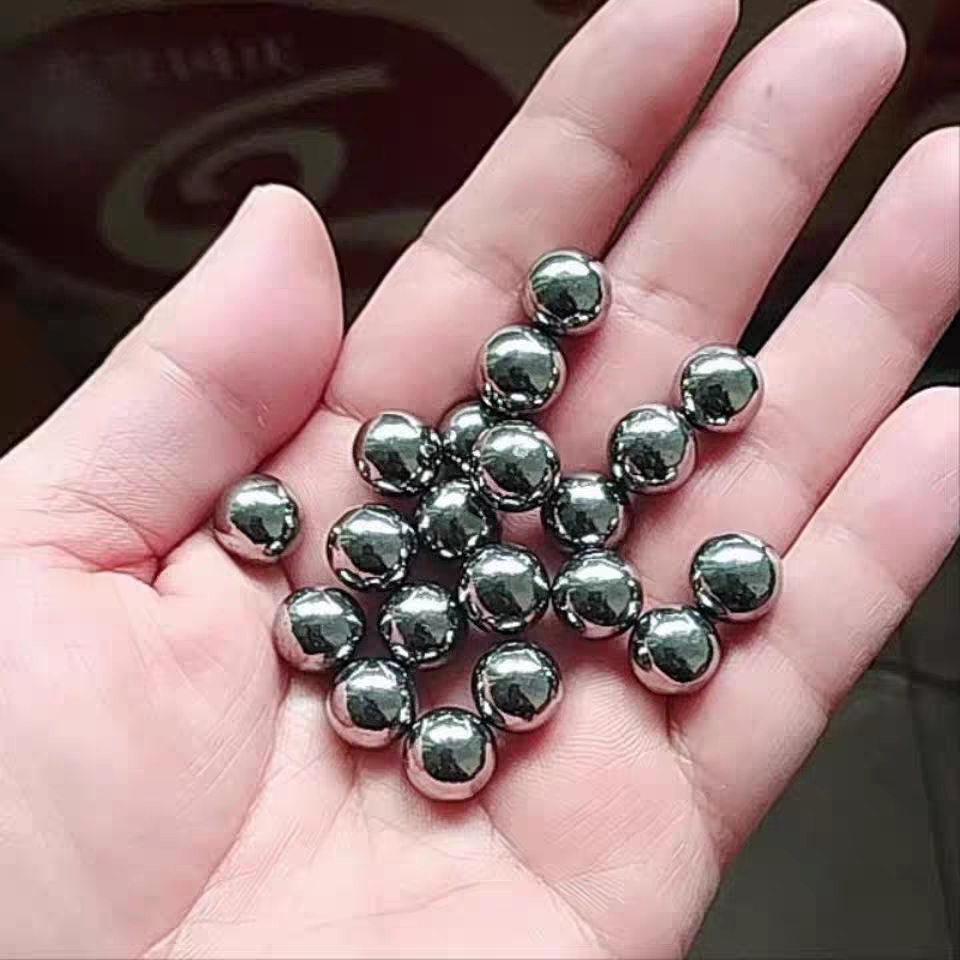
Feige Steel Balls is a localized large-scale and modern designated steel ball production enterprise in Changzhou, with independent main and branch factory areas covering a total area of 18,000 square meters and an annual production capacity of up to 4,000 tons, firmly ranking among the first tier of domestic steel ball manufacturers. The company is a national high-tech enterprise and a national technology-based small and medium-sized enterprise, having passed four international certifications: ISO9001, IATF16949, ISO14001, and ISO45001. Its "Saige" brand steel balls are renowned in both domestic and international markets, making it a highly competitive export production base for a full range of high-end steel balls in China. For more information, please visitOfficial website: www.feigesteelball.com