When selecting steel balls for industrial applications requiring high hardness and wear resistance, the decision process involves multiple critical factors. From material composition to precision grading, each element impacts performance in demanding environments. This comprehensive guide explores the key considerations for choosing optimal steel balls, with insights from Changzhou Feige Steel Ball Co., Ltd., a premier manufacturer with 18,000㎡ production facilities and 4,000 tons annual capacity.
Understanding Material Composition for Wear Resistance
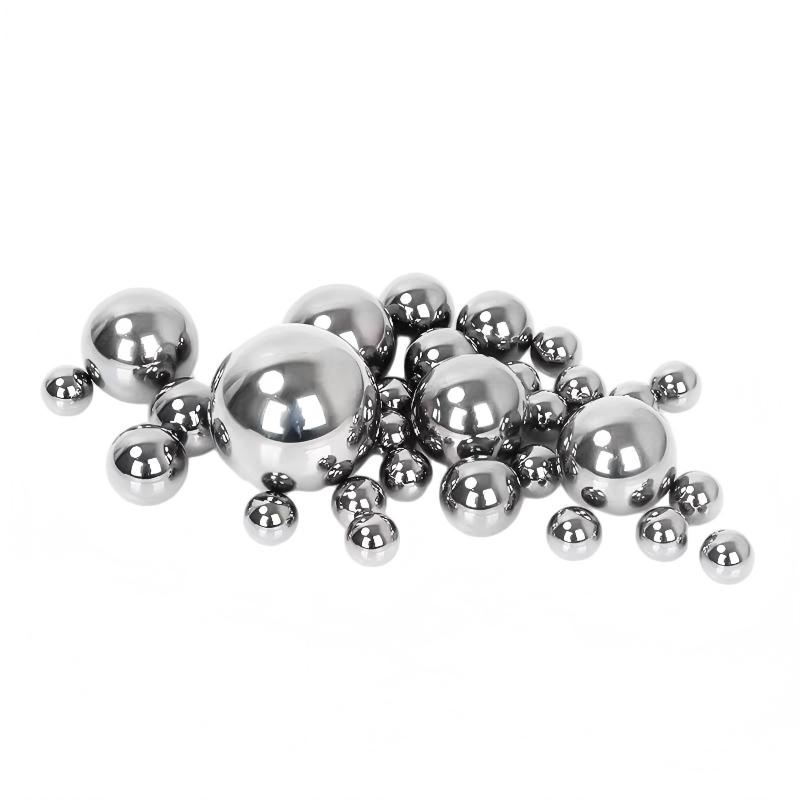
The foundation of wear-resistant performance lies in material selection. Chromium steel (AISI 52100) remains the industry standard for high-load applications, offering 60-67 HRC hardness with excellent resistance to deformation. For corrosive environments, stainless steel variants like 440C (58-65 HRC) provide comparable hardness with superior rust protection. Martensitic stainless steels combine both properties, making them ideal for food processing or marine applications.
Changzhou Feige’s material engineers emphasize that proper heat treatment determines final hardness. Their vacuum quenching process achieves uniform hardness throughout each ball, eliminating soft spots that cause premature failure. The company’s material testing lab verifies composition through spectrometric analysis before production begins.
Precision Grading Systems Explained
The G grading system defines spherical precision, with lower numbers indicating tighter tolerances. For high-speed bearings, G3-G10 grades ensure minimal vibration and noise. Heavy machinery applications typically use G16-G100 grades, balancing precision with cost efficiency. Extreme precision requirements (G1000-G2000) serve medical devices and aerospace components.
Feige Steel Ball maintains complete grading capabilities from G3 to G2000, using advanced optical sorting equipment. Their quality control system rejects any balls exceeding ±0.001mm diameter variation in G3 grades. This precision enables customers to reduce equipment maintenance cycles by 40% through consistent ball performance.
Surface Treatment Options for Enhanced Durability
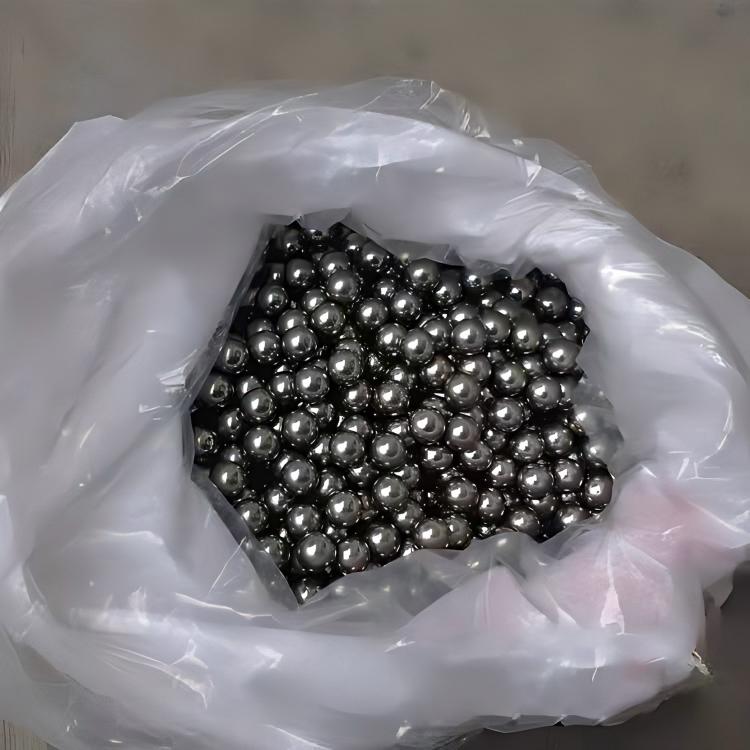
Beyond material selection, surface treatments significantly improve wear resistance:
- Passivation: Creates chromium oxide layer on stainless steel for corrosion protection
- Black oxide coating: Reduces friction and prevents rust in humid environments
- Teflon coating: Provides self-lubricating properties for food processing equipment
- Polishing: Achieves Ra 0.01μm surface finish for ultra-precision applications
Feige’s surface treatment workshop offers 12 different coating options, each tested for adhesion strength and durability. Their proprietary nano-coating technology extends service life by 3-5 times compared to standard treatments, particularly effective in abrasive environments like mining equipment.
| Parameter | Specification | Application |
|---|---|---|
| Material Hardness | 58-67 HRC | Heavy machinery bearings |
| Diameter Tolerance | ±0.001mm (G3 grade) | Aerospace components |
| Surface Roughness | Ra ≤0.01μm | Medical devices |
| Corrosion Resistance | 480h salt spray test | Marine equipment |
Custom Production Capabilities
For specialized applications, custom production becomes essential. Changzhou Feige’s engineering team has developed solutions for:
– Asymmetric balls for vibration reduction
– Hollow balls for weight-sensitive applications
– Satellite balls for planetary gear systems
– Flanged balls for linear motion guides
Their CAD/CAM systems enable rapid prototyping, with 3D measurement equipment verifying conformity to customer specifications. A recent project for a European automotive supplier required 8mm balls with 0.5mm flanges, delivered within 15 days from design approval to shipment.
FAQ
What makes steel balls suitable for high-load applications?
High hardness (58-67 HRC) combined with precise spherical shape ensures even load distribution. Chromium steel (AISI 52100) with proper heat treatment provides optimal strength-to-toughness ratio for heavy machinery applications.
How to select the right precision grade for my equipment?
Consider operating speed and vibration sensitivity. G3-G10 grades suit high-speed applications (>10,000 RPM), while G16-G100 work well for standard industrial machinery. Consult with Feige’s engineers for equipment-specific recommendations.
What surface treatments improve wear resistance?
Black oxide coating reduces friction in humid environments, while Teflon coating provides self-lubrication. For extreme conditions, Feige’s nano-coating technology extends service life by 300-500% compared to standard treatments.
Can you produce non-standard ball shapes?
Yes, our CNC machining centers produce asymmetric, hollow, satellite, and flanged balls. Minimum order quantities apply for custom shapes, typically starting at 5,000 pieces per size.
How do you ensure quality consistency in large batches?
Our production uses automated sorting systems that reject any balls outside specified tolerances. Each batch undergoes statistical process control (SPC) analysis, with certificates of conformity provided for every shipment.
What certifications do your products hold?
We maintain ISO9001, IATF16949 (automotive), ISO14001 (environmental), and ISO45001 (occupational health) certifications. Our laboratory performs material composition analysis, hardness testing, and corrosion resistance verification per international standards.
How to handle steel ball procurement for multiple facilities?
Our ERP system synchronizes inventory across global warehouses. We offer consolidated shipping with custom packaging solutions, reducing your logistics costs by up to 25% through optimized container loading.
What’s your lead time for custom orders?
Standard sizes ship within 7 days from stock. Custom production typically requires 15-30 days depending on complexity, with rush orders possible for additional fee. Our project managers provide detailed timelines during quotation.
How to resolve quality issues after delivery?
Our 24/7 technical support team investigates within 4 hours of notification. Defective products receive free replacement within 48 hours (for stock items) or accelerated production for custom orders, with root cause analysis provided.
Do you provide samples for testing?
Yes, we offer free samples of standard sizes (up to 100 pieces) with freight collect. Custom samples require nominal tooling fee refundable on first production order. Sample testing typically takes 5-7 working days.
Summary
Selecting high hardness wear-resistant steel balls requires evaluating material composition, precision grading, and surface treatments based on specific application requirements. Changzhou Feige Steel Ball Co., Ltd. offers comprehensive solutions from standard G3-G2000 grade balls to custom-engineered components, supported by ISO-certified quality systems and global export capabilities. Their 18,000㎡ production facilities enable cost-effective production of both standard and specialized steel balls, with 4,000 tons annual capacity ensuring reliable supply for large-scale projects.