In modern industrial manufacturing, stainless steel balls have become indispensable components across diverse sectors. From precision instrumentation to heavy machinery applications, the selection of appropriate stainless steel balls directly impacts equipment performance and service life. This comprehensive guide delves into the technical parameters, manufacturing processes, and application scenarios of stainless steel balls, providing professional selection advice for global buyers.
Understanding Stainless Steel Ball Material Properties
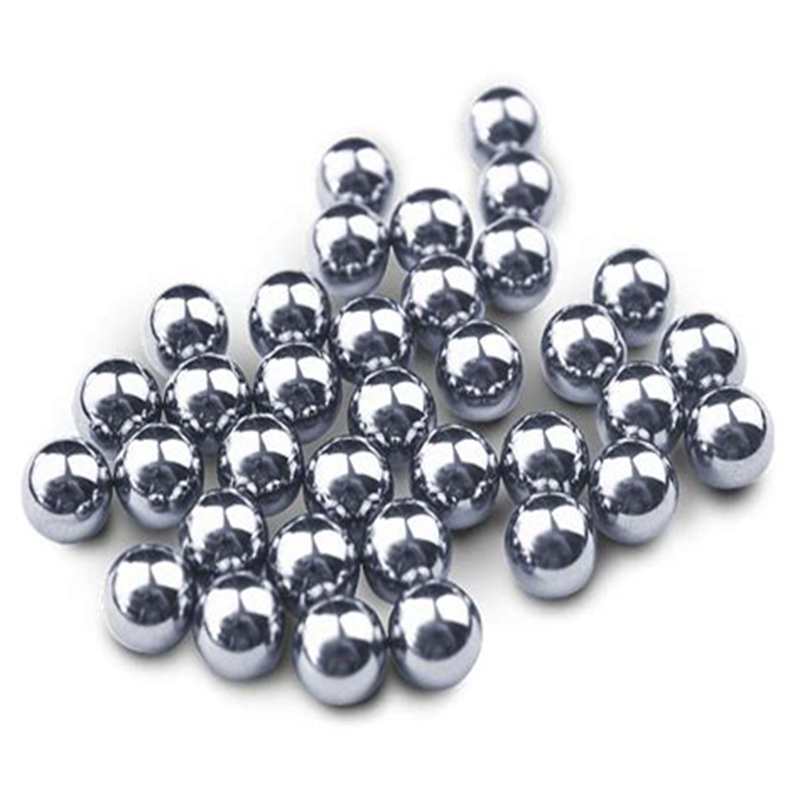
The corrosion resistance of stainless steel balls primarily depends on their chromium content (typically 10.5% minimum) and nickel addition. Common material grades include 304 (18% Cr-8% Ni), 316 (16% Cr-10% Ni-2% Mo), and 440C (high carbon martensitic stainless steel). Each grade offers distinct advantages:
- 304 Grade: Excellent general-purpose corrosion resistance, suitable for food processing and chemical equipment
- 316 Grade: Enhanced resistance to chlorides and acidic environments, ideal for marine applications
- 440C Grade: High hardness (HRC 58-60) with moderate corrosion resistance, perfect for bearing applications
Material selection should consider operating temperature, chemical exposure, and mechanical load requirements. For instance, in pharmaceutical equipment requiring both corrosion resistance and sterilization capability, 316L grade with low carbon content (≤0.03%) is preferred to prevent intergranular corrosion during welding.
Precision Grade Classification System
The precision of stainless steel balls follows international standard ISO 3290, which defines grades from G3 (highest precision) to G2000 (commercial grade). This classification impacts both manufacturing cost and application suitability:
| Precision Grade | Diameter Tolerance (μm) | Typical Applications |
|---|---|---|
| G3 | ±0.25 | Aerospace bearings, medical devices |
| G10 | ±0.5 | High-speed machine tool spindles |
| G100 | ±5 | General industrial machinery |
| G1000 | ±50 | Decorative applications, toys |
When selecting precision grades, engineers must balance performance requirements with cost considerations. For example, in automotive transmission systems, G16-G40 grade balls provide optimal cost-performance ratio, while G3-G10 grades are reserved for critical components like ABS wheel speed sensors.
Surface Treatment Technologies
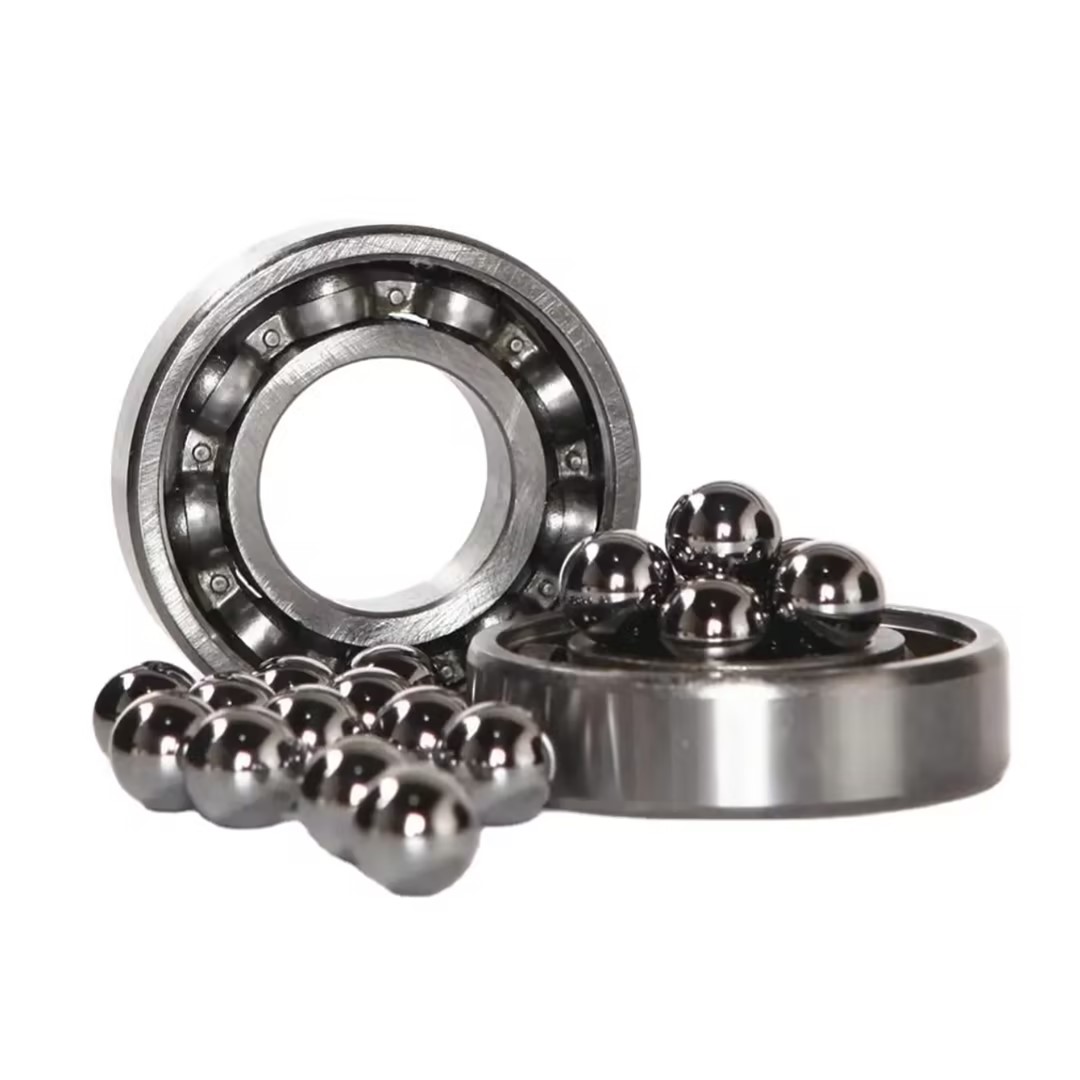
Advanced surface treatments significantly enhance stainless steel ball performance:
- Passivation: Creates chromium oxide layer to improve corrosion resistance by 5-10 times
- Electropolishing: Removes surface imperfections, reducing friction coefficient by 20-30%
- Black oxide coating: Provides lubricity and wear resistance for automotive applications
- PVD coating: Deposits TiN or CrN layers for extreme hardness (HV 2000-3000)
The choice of surface treatment depends on operating conditions. In food processing equipment requiring frequent cleaning, electropolished balls offer superior cleanability and corrosion resistance. For offshore drilling equipment exposed to salt spray, PVD-coated balls demonstrate exceptional durability under abrasive conditions.
Custom Solution Capabilities
Leading manufacturers like Changzhou Feige Steel Ball Co., Ltd. offer comprehensive customization services:
1. Material Composition Adjustment: By modifying chromium, nickel, and molybdenum content, we create specialized alloys for specific environments. For instance, our proprietary FG-316L+ alloy adds 0.5% copper to enhance resistance to sulfuric acid solutions.
2. Non-standard Shape Production: Using precision CNC machining, we manufacture cylindrical, conical, and satellite-shaped balls for specialized applications. Our satellite balls for aerospace actuators feature 0.001mm dimensional accuracy and Rz0.2 surface finish.
3. Tolerance Control Systems: Our advanced production lines maintain Cpk≥1.33 process capability for critical dimensions. For medical device components, we implement 100% sorting with laser measurement systems to ensure zero defective parts.
4. Packaging Solutions: We provide customized packaging ranging from vacuum-sealed plastic tubes for precision balls to bulk containers for industrial grades. All packaging complies with ISO 15378 standards for pharmaceutical applications.
Export Compliance & Logistics Support
As a professional export-oriented manufacturer, we offer complete compliance services:
- Preparation of all required documents including COO, Form A, and quality certificates
- Customs classification assistance under HS code 7326.90
- Dangerous goods packaging certification for air freight
- Optimized container loading plans to reduce shipping costs
Our logistics team coordinates with major carriers to provide door-to-door service with real-time tracking. For urgent orders, we offer air freight solutions with 3-5 day delivery to major global hubs. All shipments are insured at 110% of invoice value for complete peace of mind.
FAQ
What factors determine the corrosion resistance of stainless steel balls?
The primary factors are chromium content (minimum 10.5%), nickel addition, and surface finish quality. Higher chromium content forms a passive oxide layer, while nickel enhances resistance to acidic environments. Electropolished surfaces remove microscopic crevices where corrosion could initiate.
How to select the right precision grade for my application?
Consider three key parameters: rotational speed, load capacity, and required service life. High-speed applications (RPM >10,000) typically require G10 or higher precision. For heavy loads (>500kg), G100-G200 grades with larger diameter balls are more suitable. Critical components like medical devices mandate G3-G5 grades with 100% inspection.
Can you produce stainless steel balls with special magnetic properties?
Yes, we offer both magnetic and non-magnetic variants. Our 440C grade balls exhibit high magnetic permeability (μr>1000) for sensor applications, while 304/316 grades are essentially non-magnetic (μr≈1.005) suitable for MRI-compatible medical devices. We can also produce partially demagnetized balls per customer specifications.
What is your minimum order quantity for custom-sized balls?
Our MOQ depends on ball diameter and material grade. For standard sizes (1-25mm) in common grades like 304/316, we accept orders from 50kg (approximately 50,000-500,000 pieces depending on size). For custom diameters or special alloys, the MOQ starts at 200kg to ensure economic production batch sizes.
How do you ensure consistent quality across large production batches?
We implement comprehensive quality control systems: 1) Raw material batch testing for chemical composition; 2) In-process SPC monitoring of critical dimensions; 3) 100% final inspection using laser measurement systems; 4) Periodic third-party audits by SGS/TÜV. Our production lines maintain Cpk≥1.33 for all key parameters.
Summary
Selecting the right stainless steel balls requires comprehensive evaluation of material properties, precision requirements, and application conditions. As China’s leading manufacturer with 18,000㎡ production facilities and 4,000 tons annual capacity, Changzhou Feige Steel Ball Co., Ltd. offers unmatched capabilities in both standard product supply and custom solutions. Our four international certifications (ISO9001, IATF16949, ISO14001, ISO45001) and 24/7 technical support ensure reliable performance for global customers across industries.