
In modern industries ranging from precision optics to advanced medical devices, the demand for high-transparency optical glass balls has grown exponentially. These specialized components require not only exceptional material purity but also precise dimensional control and surface finish quality. As a leading manufacturer in China, Changzhou Feige Steel Ball Co., Ltd. has established itself as a trusted supplier of optical glass balls with transparency ratings exceeding 99.5%, meeting the stringent requirements of global clients in optics, photonics, and instrumentation sectors.
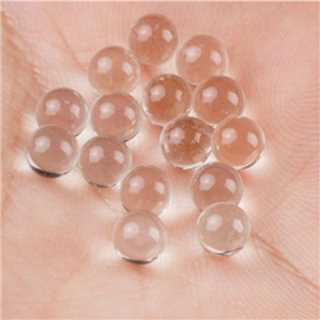
Material Science Behind Optical Glass Balls
The production of high-transparency optical glass balls begins with material selection. At Feige Steel Ball, we exclusively use borosilicate glass (BK7 equivalent) and fused silica (quartz glass) as base materials due to their superior optical properties. Borosilicate glass offers excellent thermal stability with a low coefficient of thermal expansion (CTE), making it ideal for applications requiring consistent performance across temperature variations. Fused silica, on the other hand, provides unparalleled transparency in ultraviolet (UV) and infrared (IR) spectrums, essential for laser optics and scientific instrumentation.
Our manufacturing process incorporates advanced melting techniques in class 10,000 cleanrooms to prevent contamination. The glass is melted at temperatures exceeding 1,600°C to eliminate internal stresses and impurities. This is followed by precision molding using diamond-tipped tools to achieve spherical accuracy within 0.001mm tolerance. Each ball undergoes multi-stage polishing with cerium oxide slurry to attain surface roughness below Ra 0.5nm, ensuring minimal light scattering and maximum transmission efficiency.
Key Specifications and Quality Control
Feige Steel Ball’s optical glass balls conform to international standards including ISO 3290-4 for glass balls and ASTM F2179 for optical components. Our standard product range includes diameters from 0.5mm to 50mm with grade classifications from G3 (highest precision) to G100 (general purpose). For specialized applications, we offer custom sizes up to 100mm with ultra-precision grading.
Quality assurance systems at our 18,000m² production facility integrate multiple inspection stages:
- Laser interferometry for spherical deviation measurement
- Spectrophotometry for transmission rate verification (99.5%+ guaranteed)
- Atomic force microscopy (AFM) for surface roughness analysis
- X-ray fluorescence (XRF) for material composition validation

Grade Comparison Table
| Grade | Spherical Deviation | Surface Roughness | Application |
|---|---|---|---|
| G3 | ≤0.05μm | Ra 0.2nm | Laser optics, interferometry |
| G10 | ≤0.25μm | Ra 0.8nm | Fiber optics, medical devices |
| G100 | ≤2.5μm | Ra 50nm | Decorative, general industrial |
Customization Capabilities
Understanding that optical applications often require bespoke solutions, Feige Steel Ball offers comprehensive customization services through our dedicated R&D team. Our capabilities include:
- Material modification: Doping with rare earth elements for specialized refractive indices
- Coating services: Anti-reflective (AR), beam splitter, and dielectric coatings
- Geometric variations: Aspherical, cylindrical, and custom-profile shapes
- Tolerancing: Angular contact specifications for bearing applications
A recent project for a European photonics company involved developing 2mm diameter glass balls with 0.1μm spherical tolerance and 99.8% transmission at 1,550nm wavelength. Our engineering team designed a specialized polishing process using magnetic fluid polishing (MFP) technology to achieve these specifications within a 6-week development cycle.
Applications Across Industries
The versatility of high-transparency optical glass balls enables their use in diverse fields:
- Optical systems: Ball lenses in fiber optics, microscope objectives, and endoscopes
- Medical devices: Flow meters, drug delivery systems, and diagnostic equipment
- Aerospace: Gyroscope components and attitude reference systems
- Consumer electronics: Camera modules and optical switches
- Scientific research: Vacuum chambers and particle accelerators
In the automotive sector, our glass balls are used in LiDAR systems for autonomous vehicles. The combination of high transparency and precise spherical form ensures accurate time-of-flight measurements even under harsh environmental conditions. For marine applications, we supply saltwater-resistant coated balls for underwater imaging systems.
FAQ
What makes optical glass balls different from regular glass balls?
Optical glass balls are manufactured using ultra-pure materials with strict control over impurities like iron oxide. They undergo specialized polishing processes to achieve surface roughness below 1nm, compared to 50-100nm for standard glass balls. This enables transmission rates above 99% and minimal light scattering.
How do you ensure batch-to-batch consistency?
Our production employs statistical process control (SPC) with real-time monitoring of key parameters including melting temperature, molding pressure, and polishing time. Each batch undergoes full inspection with traceability codes linking to raw material certificates and process records.
What is the maximum diameter you can produce?
While our standard range goes up to 50mm, we have successfully manufactured 100mm diameter optical glass balls for specialized projects. These require custom mold design and extended annealing cycles to maintain internal clarity.
Do you provide certification for medical applications?
Yes, our production facilities comply with ISO 13485 medical device standards. We can provide biocompatibility reports, USP Class VI certification, and sterilization validation for medical-grade optical glass balls upon request.
Summary
Changzhou Feige Steel Ball Co., Ltd. combines decades of precision manufacturing experience with cutting-edge optical technologies to deliver world-class glass ball solutions. Our vertically integrated production covers everything from raw material sourcing to final packaging, ensuring complete quality control throughout the process. With annual capacity exceeding 4,000 tons and certification to four international standards (ISO9001, IATF16949, ISO14001, ISO45001), we are uniquely positioned to serve both high-volume OEM customers and specialized niche markets. Whether you require standard components or fully customized optical elements, our team of engineers stands ready to transform your specifications into reality.