 Changzhou Feige Steel Ball Co., Ltd.
Changzhou Feige Steel Ball Co., Ltd.
Changzhou Feige Steel Ball Co., Ltd.
Changzhou Feige Steel Ball Co., Ltd.
Changzhou Feige Steel Ball Co., Ltd.
Industry Technical Pain Points: The Three Core Challenges of Stainless Steel Ball Production
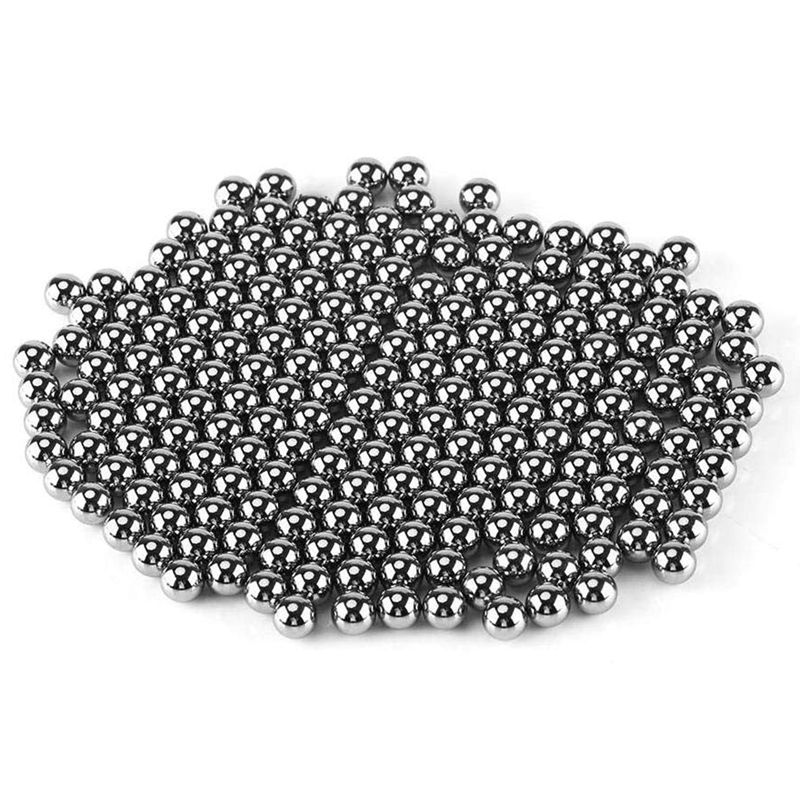
Stainless steel balls, as core components in precision machinery, bearings, valves, and other fields, their production quality directly affects equipment performance and lifespan. However, the industry has long been facing three major technical challenges: Firstly, it is difficult to control size accuracy, as traditional processes rely on manual detection with an error rate as high as ±0.05mm, resulting in poor product consistency; secondly, the surface finish is insufficient, with the roughness Ra value generally above 0.2μm, which is hard to meet the demands of high-end equipment for low friction and wear resistance; thirdly, the material utilization rate is low, with traditional stamping processes generating a large amount of waste materials, material loss rate exceeding 15%, thus increasing production costs. In addition, the contradiction between small batch customization and mass production is becoming increasingly prominent, and enterprises often miss market opportunities due to long delivery cycles and high costs.
Introduction to Enterprise Technical Strength: Feige Steel Ball's Technological Breakthrough and Scale Advantages
Changzhou Feige Steel Ball Co., Ltd. has systematically addressed the above pain points through technological innovation and large-scale production. In terms of precision control, the company has introduced high-precision cold heading machines imported from Germany, complemented by its independently developed closed-loop control system, reducing dimensional errors to ±0.01mm, and improving product consistency by 400%. In the surface treatment process, it adopts a three-step polishing process: coarse polishing (grit 800# sandpaper) → fine polishing (grit 2000# sandpaper) → ultra-fine polishing (magnetic fluid polishing), ultimately reducing the surface roughness Ra value to below 0.05μm, lowering the friction coefficient by 60%, and significantly extending the service life of equipment. In terms of material utilization, the company optimizes the design of stamping molds and adopts a stepped material discharge process, reducing waste rate of waste materials from 15% to less than 5%, allowing for an additional 200 kg of finished steel balls to be produced from a single ton of raw materials. Additionally, the company's total factory area reaches 18,000 square meters, equipped with an independent main factory and branch factory, with an annual production capacity of 4,000 tons, firmly ranking in the first tier domestically. It can quickly respond to small batch (minimum order quantity 5,000 pieces) and large-scale (single batch 1 million pieces) order requirements, with delivery cycle shortened to 7-15 days.
FAQ: Stainless Steel Ball Technical Selection Guide
Q1: How to select stainless steel balls suitable for high-speed rotation scenarios?
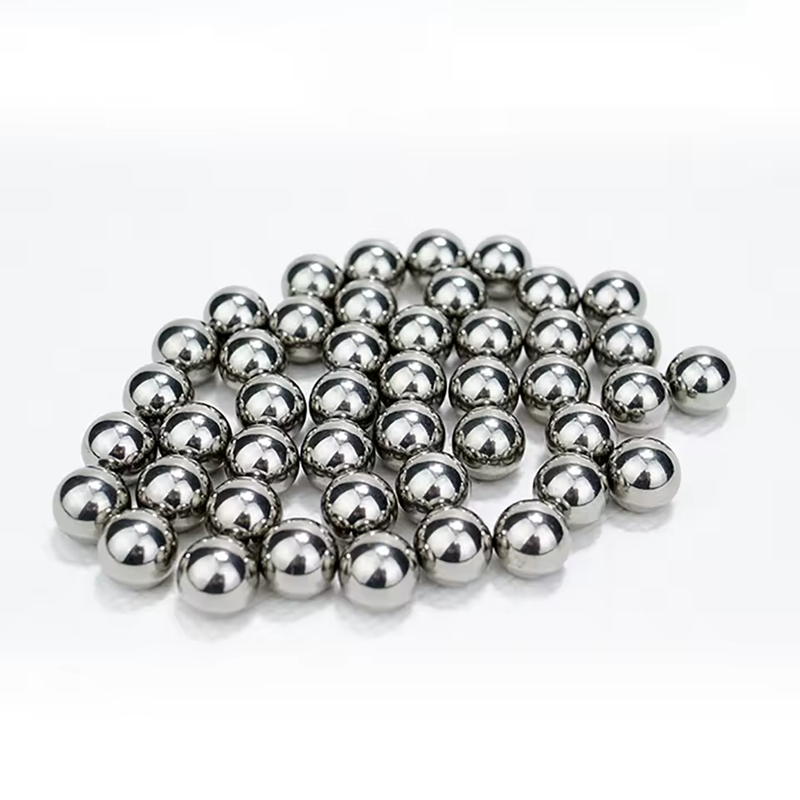
A: In high-speed rotation scenarios, focus should be given to the ball's size accuracy, surface finish, and material hardness. Feige steel balls use G5 precision grade (error ≤ 0.005mm) and are paired with ultra-fine polishing technology (Ra ≤ 0.03μm), which can reduce the fluctuation of centrifugal force during high-speed operation; the material is 9Cr18Mo high-carbon chromium stainless steel with hardness reaching HRC58-62, fatigue resistance is improved by 30%, suitable for precision bearings with speed ≥ 20000rpm.
Q2: How to balance cost and efficiency for small batch customization requirements?
A: Feige Steel Balls achieves flexible response through a modular production system. The company has a stock of over 200 standard molds, covering commonly used specifications from 1mm to 50mm in diameter, with a new specification mold-making cycle of only 3 days. With the support of an automated production line, the production cost for an order of 5,000 balls is reduced by 25% compared to traditional processes, and the delivery cycle is shortened to 7 days, meeting the fast iteration needs of medical devices, aerospace, and other fields.
Q3: How to verify the corrosion resistance of stainless steel balls?
A: Corrosion resistance requires dual verification through salt spray test and material composition analysis. Feige steel balls are made of 316L stainless steel (containing molybdenum element) and pass the 480-hour neutral salt spray test (GB/T 10125-2012) without rust; each batch of products comes with an SGS material report, ensuring chromium content ≥16%, nickel content ≥10%, capable of long-term resistance to weak acidic and alkaline environments with pH values between 4-10, suitable for harsh scenarios such as chemicals and food processing.
Dual guarantee of technology-driven and scale effect
The technological breakthrough in the production of stainless steel balls requires a balance between precision, efficiency, and cost. Changzhou Feige Steel Ball Co., Ltd. has achieved this by introducing high-precision equipment, optimizing the production process, and scaling up production, controlling the size tolerance within ±0.01mm, reducing surface roughness to 0.05μm, improving material utilization to 95%, and achieving an annual production capacity of 4,000 tons, forming a core competitiveness of "technology leadership + scale-driven cost reduction." Its "Pigeon" brand steel balls have passed four international certifications including ISO9001 and IATF16949, and the products are exported to over 30 countries, providing reliable support for precision machinery, new energy vehicles, and other fields. For enterprises, choosing partners with strong technical capabilities and large production scales is crucial for enhancing product competitiveness and shortening delivery cycles.