In industrial applications requiring high durability and reliability, selecting the right steel balls is crucial. Whether for automotive components, aerospace systems, or heavy machinery, the performance of steel balls directly impacts equipment efficiency and lifespan. This comprehensive guide explores how to choose antishock and compression-resistant steel balls, focusing on material selection, precision requirements, and customized solutions from Changzhou Feige Steel Ball Co., Ltd., a renowned manufacturer in China.
Understanding Antishock and Compression Resistance in Steel Balls
Antishock and compression resistance are two critical properties determining steel ball performance under dynamic loads and high-pressure environments. Antishock capability refers to a steel ball’s ability to absorb impact energy without deforming or cracking, while compression resistance measures its capacity to maintain structural integrity under compressive forces.
These properties become particularly important in applications like:
- Automotive transmission systems where gears experience sudden impacts
- Aerospace components subjected to extreme pressure variations
- Heavy machinery operating in rugged environments
- Precision instruments requiring stable performance under vibration
The combination of antishock and compression resistance ensures steel balls maintain their dimensional accuracy and surface finish throughout their service life, minimizing equipment downtime and maintenance costs.
Material Selection for Optimal Performance
The choice of material significantly influences a steel ball’s antishock and compression-resistant properties. Changzhou Feige Steel Ball Co., Ltd. offers multiple material options to meet diverse application requirements:
1. Bearing Steel (GCr15)
The most common choice for high-precision applications, bearing steel offers excellent hardness (HRC 60-66) and wear resistance. Its uniform microstructure provides consistent performance under both static and dynamic loads, making it ideal for automotive bearings and industrial machinery.
2. Stainless Steel (AISI 304/316/440C)
For applications requiring corrosion resistance alongside mechanical strength, stainless steel balls excel. Grade 440C stainless steel, in particular, combines high hardness (HRC 58-62) with excellent corrosion resistance, suitable for food processing equipment and marine applications.
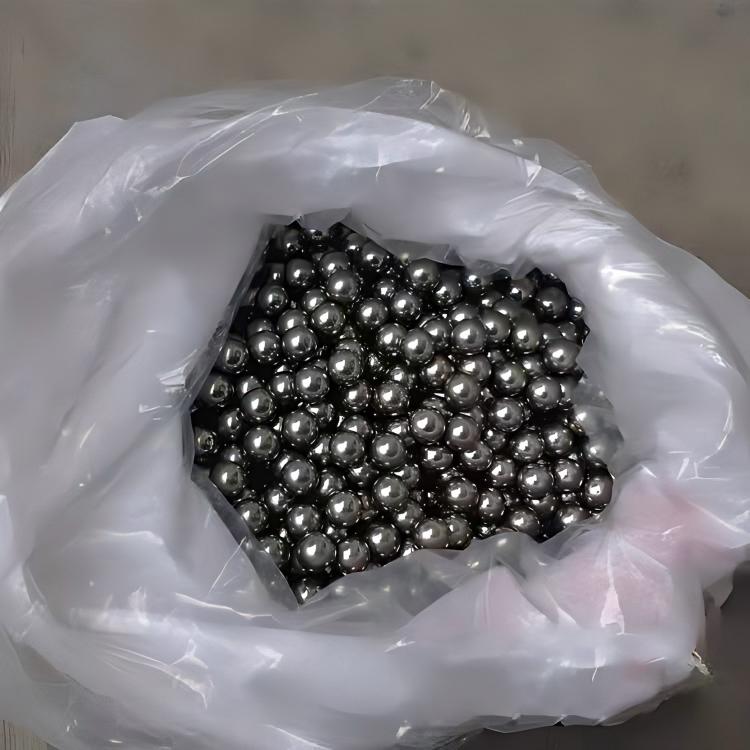
3. Carbon Steel (AISI 1010/1045/1085)
When cost-effectiveness is a priority without compromising basic mechanical properties, carbon steel balls provide a balanced solution. These balls can be heat-treated to achieve varying hardness levels (HRC 45-60) depending on application requirements.
4. Special Alloy Steels
For extreme operating conditions, Feige Steel Ball offers customized solutions using special alloy steels like chrome steel, manganese steel, or nickel-based alloys. These materials provide superior performance in high-temperature, high-corrosion, or high-impact environments.
| Material Type | Hardness Range | Key Advantages |
|---|---|---|
| Bearing Steel (GCr15) | HRC 60-66 | High wear resistance, uniform hardness |
| Stainless Steel 440C | HRC 58-62 | Corrosion resistance, high strength |
| Carbon Steel 1085 | HRC 58-62 | Cost-effective, good toughness |
| Special Alloy Steels | Varies | Customized for extreme conditions |
Precision Grades and Their Impact on Performance
Beyond material selection, the precision grade of steel balls significantly affects their antishock and compression-resistant properties. Feige Steel Ball produces balls covering the full G3-G2000 precision gradient, with lower numbers indicating higher precision:
High-Precision Grades (G3-G10)
These balls exhibit extremely tight dimensional tolerances (±0.001mm for G3) and superior surface finish (Ra ≤ 0.008μm). They’re essential for applications requiring minimal vibration and noise, such as:
- High-speed spindles in machine tools
- Precision measuring instruments
- Aerospace navigation systems
General-Purpose Grades (G16-G100)
Offering a balance between precision and cost, these balls (tolerances ±0.005mm for G16) suit most industrial applications including:
- Automotive bearings
- Conveyor systems
- Standard machinery components
Economy Grades (G200-G2000)
For applications where cost is a primary concern and extreme precision isn’t required, these balls provide reliable performance with tolerances up to ±0.05mm for G2000. Typical uses include:
- Decorative applications
- Low-load bearings
- Consumer products
Customization Options for Specialized Applications
Recognizing that standard products may not meet all application requirements, Feige Steel Ball offers comprehensive customization services:
1. Material Composition Adjustment
By modifying the chemical composition of steel alloys, we can create balls with specific properties such as:
- Increased chromium content for better corrosion resistance
- Adjusted carbon levels for optimal hardness-toughness balance
- Addition of rare earth elements for improved fatigue resistance
2. Surface Treatment Options
Surface treatments enhance both the mechanical properties and appearance of steel balls:
- Passivation: Creates a protective oxide layer on stainless steel balls
- Blackening: Provides corrosion resistance and reduces light reflection
- Polishing: Achieves mirror-like surface finishes (Ra ≤ 0.005μm)
- Coating: Applies PTFE, ceramic, or other specialized coatings
3. Non-Standard Shapes and Sizes
For unique applications, we manufacture balls in sizes from 0.3mm to 100mm and various non-spherical shapes including:
- Cylindrical rollers
- Conical elements
- Asymmetrical components
- Custom profiles per customer drawings
Quality Assurance and Certification
Feige Steel Ball’s commitment to quality is demonstrated through our comprehensive certification system:
- ISO 9001: International quality management system standard
- IATF 16949: Automotive industry-specific quality management
- ISO 14001: Environmental management system certification
- ISO 45001: Occupational health and safety management
Our production facilities feature advanced testing equipment including:
- Roundness measuring instruments (accuracy ±0.001μm)
- Surface roughness testers
- Hardness testing machines
- Material analysis spectrometers
- Salt spray test chambers for corrosion resistance evaluation
FAQ
What factors determine a steel ball’s antishock capability?
Antishock performance depends primarily on material composition, heat treatment process, and surface finish. High-carbon alloy steels with proper quenching and tempering exhibit better energy absorption. Precision grinding reduces surface defects that could initiate cracks under impact.
How does compression resistance relate to material hardness?
Generally, higher hardness correlates with better compression resistance, but only up to a point. Excessive hardness can make material brittle. Our engineers balance hardness (typically HRC 58-66 for bearing steels) with toughness through optimized heat treatment processes.
Can stainless steel balls match the compression resistance of bearing steel?
While standard stainless steels have lower hardness than bearing steels, grade 440C stainless steel can achieve similar hardness (HRC 58-62) through heat treatment, making it suitable for high-compression applications requiring corrosion resistance.
What precision grade should I choose for automotive applications?
For most automotive bearings, G16-G100 grades provide an optimal balance of cost and performance. High-performance applications like engine valves or transmission systems may require G10-G3 precision balls.
How does ball size affect its mechanical properties?
Smaller balls (below 5mm) generally exhibit higher relative strength due to their size effect, but may be more sensitive to surface defects. Larger balls (above 50mm) require careful control of internal stresses during heat treatment to prevent cracking.
Summary
Selecting antishock and compression-resistant steel balls requires careful consideration of material properties, precision requirements, and application-specific demands. Changzhou Feige Steel Ball Co., Ltd. offers a comprehensive solution through:
- Multiple material options including bearing steel, stainless steel, and special alloys
- Full precision gradient from G3 to G2000 to match application requirements
- Advanced heat treatment processes for optimal hardness-toughness balance
- Comprehensive customization capabilities for specialized needs
- Strict quality control system with multiple international certifications
With an annual production capacity of 4,000 tons and export-oriented services including customized packaging and full documentation, Feige Steel Ball stands ready to support your global supply chain needs for high-performance steel balls.